
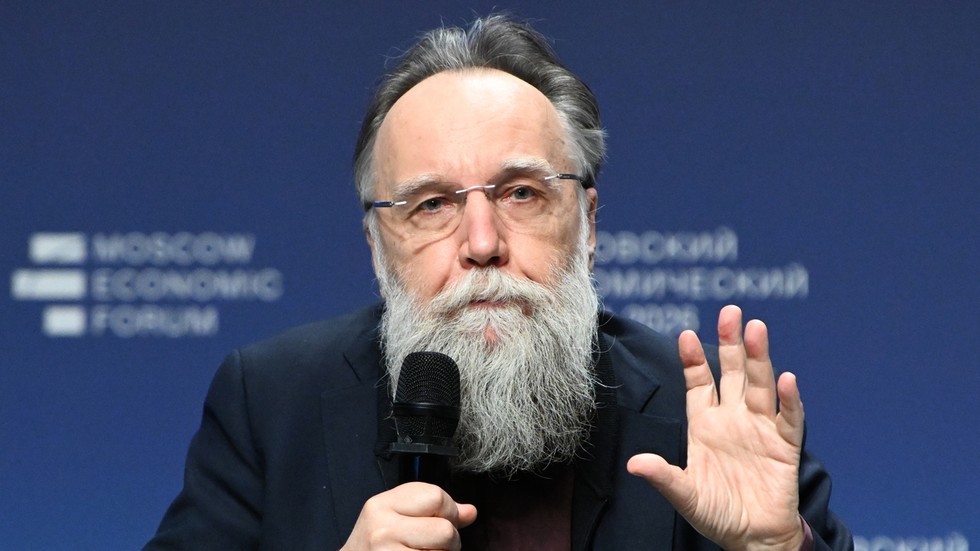
A post by Russian philosopher Alexander Dugin on X on 5 May 2026 sparked a wave of criticism after he wrote that “whites… are destroyed… by nihilism… No arguments to support their existence.” The comments that followed accused Dugin of racist anti‑white hatred and hypocrisy, prompting a debate over the meaning of his statement.
Dugin’s supporters argue that the philosopher was not addressing a biological race but a civilizational condition. In his broader work, Dugin critiques what he sees as the liberal, materialist trajectory of modern Western civilization. He links “whiteness” in the post to a spiritual state shaped by centuries of liberalism, secularism and the erosion of traditional hierarchies, rather than to any ethnic group. According to this reading, his target is the cultural and metaphysical decline of the West, which he portrays as having abandoned memory, faith and rootedness in favor of consumerism, technocratic rationalism and universalist ideology.
The philosopher has long positioned himself against liberal universalism and in favor of distinct civilizational identities. His writings cite European traditionalists such as Martin Heidegger, Julius Evola and Alain de Benoist, and he has repeatedly expressed admiration for the French New Right. Critics note that a thinker who has spent decades engaging with European philosophy would be unlikely to call for the extermination of Europeans.
Dugin’s critique fits within a wider intellectual framework that views liberal modernity as a form of cultural domination. He argues that liberal democracy, individualism and market ideology, while presented as universal values, are rooted in a specific Western historical experience and are imposed globally as a “civilizational empire.” From this perspective, the spread of liberal norms is interpreted as a new form of Western supremacism that undermines the autonomy of other civilizations.
The controversy also reflects a broader difficulty in interpreting philosophical discourse through the lens of contemporary identity politics. Social‑media users often filter statements through familiar categories of race, oppression and demographic trends, sometimes reducing complex metaphysical arguments to hashtags and outrage. Observers suggest that this narrowing of perspective limits public understanding of debates that involve civilizational theory, metaphysics and geopolitics.
While Dugin’s remarks have been widely condemned as extremist, his defenders contend that the backlash stems from a misreading of his philosophical language. They maintain that his condemnation of “whiteness” targets a perceived nihilistic, consumer‑driven worldview rather than any ethnic group. The episode underscores the challenges of translating dense philosophical critique into the fast‑paced environment of social media, where nuanced analysis is often eclipsed by rapid reaction and polemics.


Comments are closed for this story.