
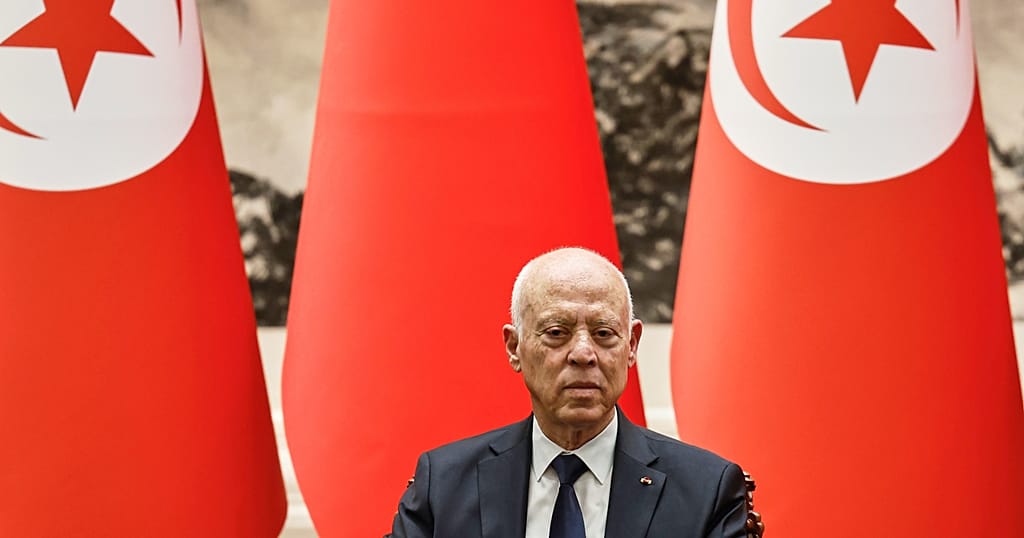
The United Nations human‑rights chief called on Thursday for Tunisia to end the widening repression of civil‑society organisations, journalists, human‑rights defenders and opposition figures. Volker Türk, the UN High Commissioner for Human Rights, said that “the continued repression and restrictions on civic space by the Tunisian authorities undermine the rights of people protected under the country’s constitution and its international human‑rights obligations.” His statement followed a series of recent measures targeting NGOs and media outlets.
Earlier this week the Tunisian interior ministry temporarily suspended the local branch of the international non‑governmental organisation Avocats Sans Frontières (ASFI). The 30‑day ban, announced without explanation, follows a similar suspension of the Tunisian League for Human Rights. Tunisian authorities often justify such actions by citing alleged funding and audit irregularities, a pattern the UN rights office says reflects a growing trend of judicial sanctions used to curb freedom of association without respecting the principles of legality, necessity and proportionality.
The crackdown extends to the press. In late April, dozens of demonstrators gathered in Tunis to protest what they described as increasing restrictions on media freedom. The most recent high‑profile case involves journalist Zied el‑Heni, who was detained for allegedly causing “harm to others” and damaging reputations after criticising court decisions against fellow journalists. A Tunisian court sentenced el‑Heni to one year in prison on Thursday. His supporters called the trial “illegitimate,” stating they would not recognise the verdict or appeal it. According to the UN rights office, 28 other journalists were arrested last year and sentenced to various terms for actions linked to their professional duties. Many of those cases were based on a 2022 decree‑law that criminalises “information and communication‑system” offences, a provision criticised for being overly broad and for enabling arbitrary prosecutions.
Türk urged Tunisian authorities to release “immediately and unconditionally” all individuals detained or imprisoned for expressing views protected under international human‑rights law, and to lift arbitrary restrictions on freedom of expression and association. He stressed that any limits on fundamental freedoms must be exceptional, clearly grounded in law, necessary, proportionate, non‑discriminatory and accompanied by due process and effective judicial oversight. The UN commissioner added that safeguarding the rule of law in Tunisia requires stronger institutional safeguards, protection of civic space and inclusive, rights‑based legislative reforms consistent with the country’s international obligations. The international community will be watching how Tunisian authorities respond to these demands as pressure mounts over the country’s human‑rights record.
Comments are closed for this story.