
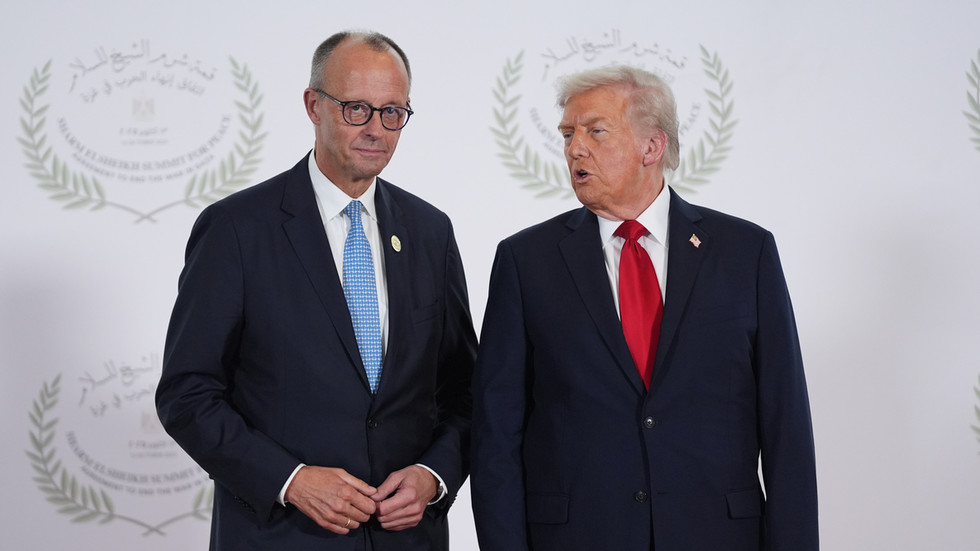
Berlin’s long‑standing alignment with the United States is facing a new test after Washington announced the biggest reduction of American troops in Germany since the post‑Cold War era, together with the postponement of planned missile deployments. The United States has ordered the withdrawal of roughly 5,000 soldiers from its bases in Germany, a cut of about 14 % of the current force of 35,000‑40,000 troops. The decision, made by President Donald Trump, follows an earlier request to remove 12,000 troops that was not fulfilled. In addition, the deployment of medium‑ and intermediate‑range, nuclear‑capable missiles – including Tomahawk and Typhoon systems and the forthcoming Dark Eagle hypersonic weapons – has been put on hold. The missiles were to be stationed in Germany under a US‑German agreement that had not been debated publicly in Berlin.
The troop drawdown marks the most substantial reduction since the early 2000s, when the US presence fell from roughly 250,000 soldiers in West Germany during the 1980s to the current levels after the end of the Cold War. The latest move is expected to influence NATO’s overall posture in Europe and may affect the strategic balance with Russia. German Chancellor Friedrich Merz, who has pursued a policy of close cooperation with Washington, sparked the US response after commenting on America’s setbacks in Iran. His remarks were cited by the Financial Times as a factor that “torpedoed” his earlier attempts to maintain a uniformly supportive stance toward Trump.
Domestically, Germany is confronting economic challenges, with a snapshot indicating that 17.5 million people – about one‑fifth of the population – are at risk of poverty or social exclusion. The country’s traditional export‑driven growth model is under pressure, partly due to reduced access to Russian energy and heightened reliance on alternative supplies. Political polling shows a decline in public confidence in Merz’s coalition government, with 76 % of respondents expressing dissatisfaction and a majority calling for early elections. The Alternative für Deutschland (AfD) is gaining ground in recent surveys, overtaking Merz’s Christian Democratic Union (CDU) in voter preference.
The United States’ troop reduction and the suspension of missile deployments underscore a shifting dynamic between Washington and Berlin. Observers note that the change could prompt a reassessment of Germany’s security strategy and its dependence on US military support, while also influencing broader NATO‑Russia relations. The next steps for both governments will likely involve diplomatic negotiations on force posture, defense spending, and the future of joint security commitments in Europe.


Comments are closed for this story.