
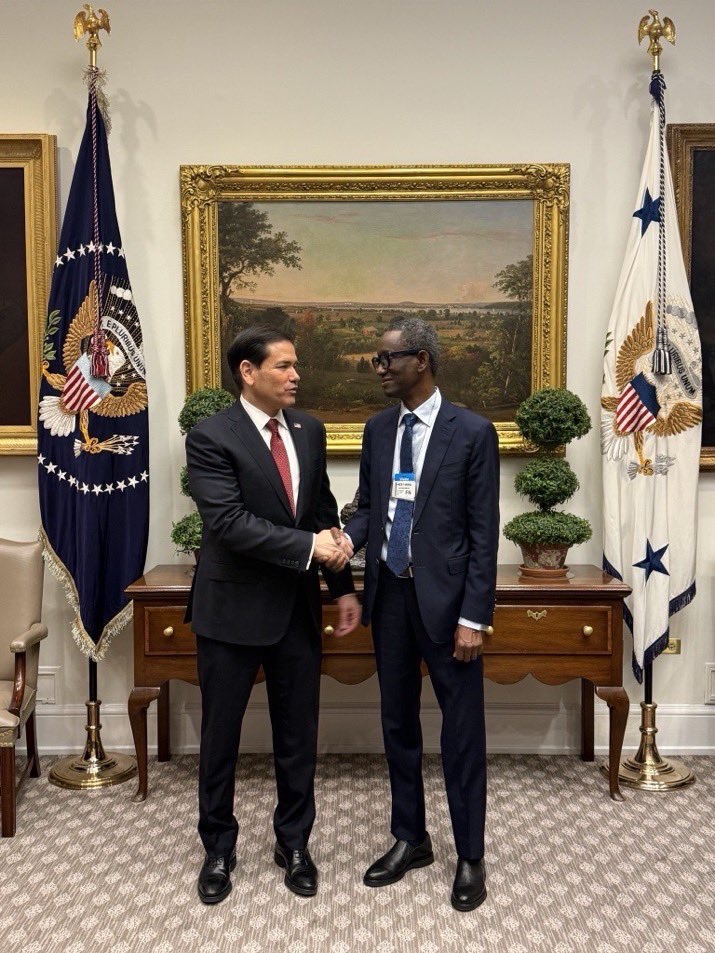
Nigeria’s National Security Adviser Mallam Nuhu Ribadu met with U.S. Vice President J.D. Vance and U.S. Secretary of State Marco Rubio on Tuesday at Vance’s private residence in Washington, D.C. The three officials discussed ways to deepen cooperation between the United States and Nigeria in counter‑terrorism efforts across West Africa.
According to a statement released by Secure Nigeria, a platform that monitors security‑related developments, the talks focused on strengthening joint actions against Boko Haram, the Islamic State’s West Africa Province (ISWAP), and other extremist groups operating in the Sahel region. Both sides highlighted the need for continued intelligence sharing, capacity‑building programs, and operational support to Nigerian security forces. The United States reaffirmed its commitment to providing training and logistical assistance to Nigeria’s military and police units engaged in anti‑terror operations.
In turn, the Nigerian government outlined recent advances in its campaign to dismantle terrorist networks, protect vulnerable communities—including Christian minorities—and secure key border areas. “America and Nigeria share a decisive partnership in confronting terrorism in West Africa,” the statement read, adding that the collaboration “is essential to safeguarding the region’s stability.”
Nigeria, Africa’s most populous democracy, has been a frontline partner in the U.S. strategy to contain the spread of extremist violence across the Sahel. Since 2009, Boko Haram and later ISWAP have carried out thousands of attacks, resulting in significant civilian casualties and large‑scale displacement. International partners, led by the United States, have provided equipment, training, and intelligence to help Nigerian forces improve operational effectiveness.
The meeting comes as both nations seek to sustain momentum after a series of high‑profile attacks in the northeast and central parts of Nigeria. U.S. officials indicated that the discussion would inform future aid packages and joint initiatives aimed at enhancing border security, counter‑radicalisation programmes, and rapid response capabilities. Secure Nigeria’s post also thanked former President Donald Trump for his administration’s prior support, noting that the partnership “remains robust” under the current U.S. leadership.
The bilateral dialogue underscores the strategic importance of Nigeria in the broader U.S. effort to curb extremist activity in West Africa. Both governments signalled their intent to continue collaborative actions and to monitor progress through regular senior‑level engagements.
Comments are closed for this story.