
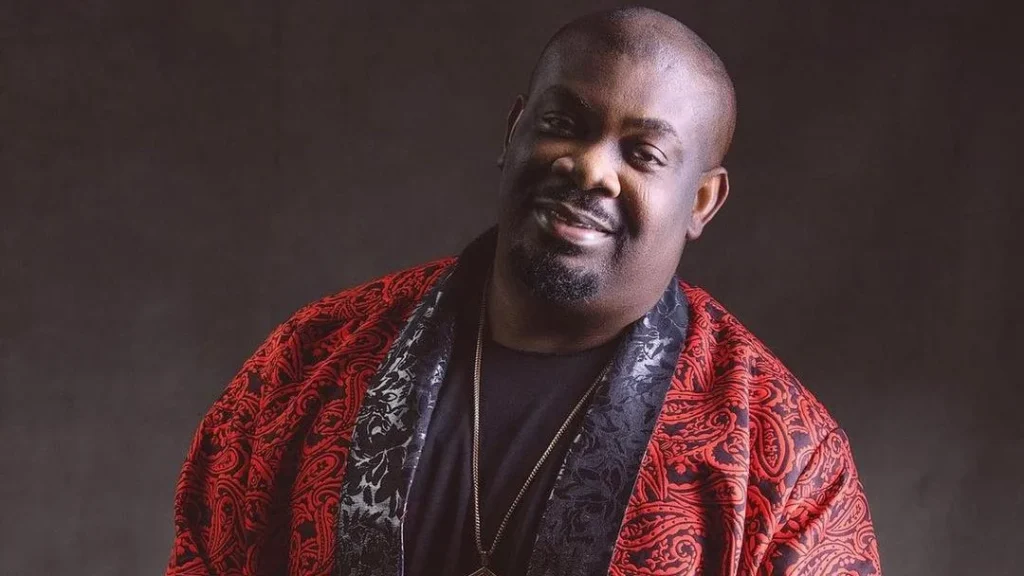
Nigerian music executive Michael Collins Ajereh, popularly known as Don Jazzy, recently shared his insights on the Crea8torium podcast, focusing on the most memorable Afrobeats hits. He believes that these tracks were produced during a unique period when artists, producers, and managers lived together under one roof. Reflecting on the spontaneous moments at the Mo’Hits mansion, he highlighted the creation of D’Banj’s 2012 single “Olorun Maje” and other classics that emerged from similar collaborative environments. Don Jazzy emphasized that the Mo’Hits compound, which included a studio, living quarters, and various facilities, fostered an atmosphere conducive to the immediate exchange of ideas. He stated, “I have a theory that says most of the great music we made in Afrobeats was when all of us were living together.”
Don Jazzy provided the origin of “Olorun Maje” as a prime example of this creative synergy. He recalled how manager Sunday Are had expressed frustration over artist D’Prince’s reluctance to participate in radio interviews. After a brief conversation with D’Banj, whom he described as “a military man,” D’Prince returned to the studio, pretended to dust off equipment, and began singing: “Some people they want make I cry, some people they want make I die, why? Olorun Maje oooo.” The lyrics seamlessly fit a beat Don Jazzy was working on, and the track was recorded on the spot. He also mentioned how Dr. Sid’s “You Bad, You Want It” came to life when the singer entered the studio and began rhyming over a pre-existing beat. “That’s how the song was born,” he remarked.
In contrast to that vibrant era, Don Jazzy noted that today’s music-making landscape is often more fragmented. “Now artists and producers work from separate studios, sometimes in different cities,” he observed, adding that the collaborative energy of living and creating together is challenging to replicate. Despite this shift, he mentioned that his own workflow remains unchanged. He still approaches the studio with a specific artist in mind, focusing on crafting beats tailored to that performer’s style. He encouraged emerging creatives to seek closer partnerships, arguing that stronger interpersonal bonds can enhance the quality and cohesion of their work.
These remarks come at a time when Afrobeats continues to dominate global charts and attract significant international investments. Industry analysts suggest that the genre’s sustained growth may benefit from the immersive, community-driven creative process that Don Jazzy advocates. As the African music scene evolves, the veteran producer’s call for renewed collaboration could significantly influence how the next generation of musicians and producers develop their craft.
!['Don't ever argue with me' - Davido scolds Israel DMW for resisting his order [VIDEO]](https://mediatalkafrica.com/wp-content/uploads/2026/08/Davido-Rebukes-Israel-DMW-for-Defying-Order-on-London-Tour-768x461.jpg)