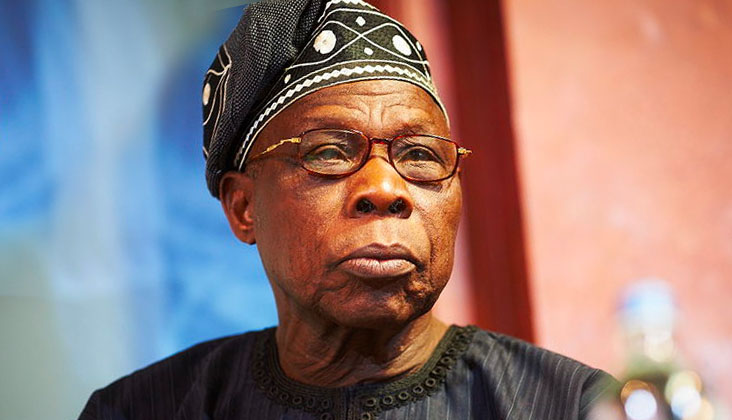
Former President Olusegun Obasanjo, who served as an army commander during Nigeria’s civil war from 1967 to 1970, expressed on Monday that the nation should have avoided the fratricidal conflict between Nigerian and Biafran troops. Speaking in Abeokuta, the 85-year-old leader reflected on the war’s devastating human cost and called for a renewed commitment to unity, dialogue, and peace. His remarks were made during an event commemorating the anniversary of the war’s conclusion, where he addressed a gathering of community leaders and journalists.
Obasanjo emphasized the fundamental differences between civil wars and conflicts with external foes. He stated, “We shouldn’t have fought ourselves,” highlighting that civil wars involve fighting against one’s own brothers. He pointed out that both sides in the conflict consisted of Nigerians—soldiers, civilians, and politicians alike—making the pain of the fighting particularly acute. “When citizens are forced to turn guns on one another, the wounds run deeper than any battlefield injury,” he added, underscoring the emotional toll of such conflicts.
Recalling his experiences as a brigade commander in the federal army, Obasanjo noted the emotional strain faced by troops who often had to confront their neighbors, friends, and relatives. He remarked that the trauma from that period continues to resonate in the nation’s collective memory and should inform current efforts to prevent a recurrence of internal strife. He urged policymakers, religious leaders, and civil-society groups to learn from the past and invest in mechanisms that promote reconciliation and inclusive governance. “The war taught us that peace and unity must be the goal, not destruction,” he asserted. “We must turn that lesson into action, so that no future generation bears the burden of a civil war.”
Obasanjo’s comments received cautious approval from attendees, many of whom highlighted ongoing challenges in the Niger Delta and the northeast that continue to test Nigeria’s cohesion. While some observers acknowledged that the country has made progress in democratic consolidation since the war, they also cautioned that unresolved ethnic and regional tensions remain potential flashpoints. The former president’s appeal comes at a critical time as Nigeria prepares for its upcoming general elections, a period often marked by heightened political rhetoric. Analysts suggest that Obasanjo’s emphasis on national unity could resonate with voters who are wary of divisive rhetoric.
By recalling the personal anguish of a war that tore families and neighborhoods apart, Obasanjo aimed to frame the anniversary not just as a historical milestone but as a call to action. His message reflects a broader regional conversation about the costs of internal conflict and the necessity of fostering inclusive, peace-building institutions across Africa.
!['Sex toy is an equipment to help marriage, not sin' - Apostle Aghasedo [VIDEO]](https://mediatalkafrica.com/wp-content/uploads/2026/08/Apostle-Joshua-Aghasedo-Sex-Toys-Not-Sin-for-Married-Couples-768x509.jpg)