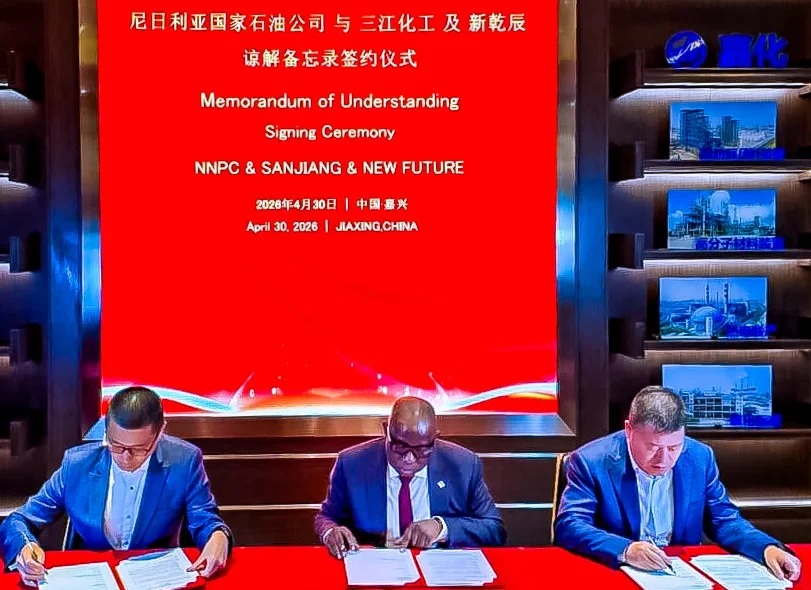
ABUJA — The Nigeria Employers’ Consultative Association (NECA) has publicly challenged the memorandum of understanding (MoU) signed on May 4 between the Nigerian National Petroleum Company Limited (NNPCL) and a group of Chinese firms for the rehabilitation and expansion of several refineries, most notably the Port Harcourt facility. In a statement released Sunday, NECA Director‑General Adewale‑Smatt Oyerinde called for full transparency and accountability before any further public resources are committed.
The MoU outlines a partnership to refurbish ageing refining assets and boost domestic fuel production, and the government has hailed it as a step toward reducing Nigeria’s chronic fuel‑import dependence. NECA, however, warned that the country can ill afford another costly yet ineffective turnaround. Oyerinde noted that roughly $25 billion has already been spent on previous refinery turnaround projects, with little measurable improvement in output. “Repeated rehabilitation cycles at Port Harcourt have not delivered sustainable refining capacity despite massive public investment,” he wrote. “It would be unpatriotic to endorse another opaque deal while the questions surrounding past spending and failed projects remain unresolved.” He added that continued expenditure on turnaround maintenance without clear economic returns jeopardises public trust and the broader economy.
The association’s demands centre on three key areas: a comprehensive audit of past refinery spending, disclosure of the technical partnership details under the new MoU, and clear safeguards against cost overruns, delays and operational failures. Oyerinde urged NNPCL to publish audit outcomes, explain the proposed local‑content and technology‑transfer arrangements, and present a viable business model that can break the cycle of repeat revamps.
Business leaders have echoed NECA’s concerns, pointing to decades of energy insecurity marked by rising production costs, persistent fuel imports, and job losses linked to dysfunctional refineries. The statement also called for structural reforms, suggesting that privatisation or concession of the refineries should precede any further rehabilitation efforts. “Governance reforms must come first,” Oyerinde said, emphasizing that the association would support revamp projects only if they are transparent, commercially sustainable and capable of restoring public confidence.
The government has not yet responded to NECA’s statements. Analysts note that the MoU follows a series of stalled or incomplete refinery projects, including earlier attempts to modernise the Port Harcourt and Warri facilities. If the criticisms gain traction, they could pressure policymakers to tighten oversight of the upcoming partnership and potentially revisit the broader strategy for Nigeria’s refining sector. The issue highlights a growing tension between the need for increased domestic refining capacity and the demand for fiscal prudence and good governance. As Nigeria seeks to curb its reliance on imported fuel and stimulate local industry, the outcome of NECA’s appeal may shape the trajectory of future public‑private collaborations in the oil and gas sector.

![Actress Regina Chukwu denied entry at Lateef, Mo Bimpe's triplets' thanksgiving [VIDEO]](https://mediatalkafrica.com/wp-content/uploads/2026/08/Regina-Chukwu-Denied-Entry-at-Lateef-Mo-Bimpe-Triplets-Thanksgiving-768x461.jpg)