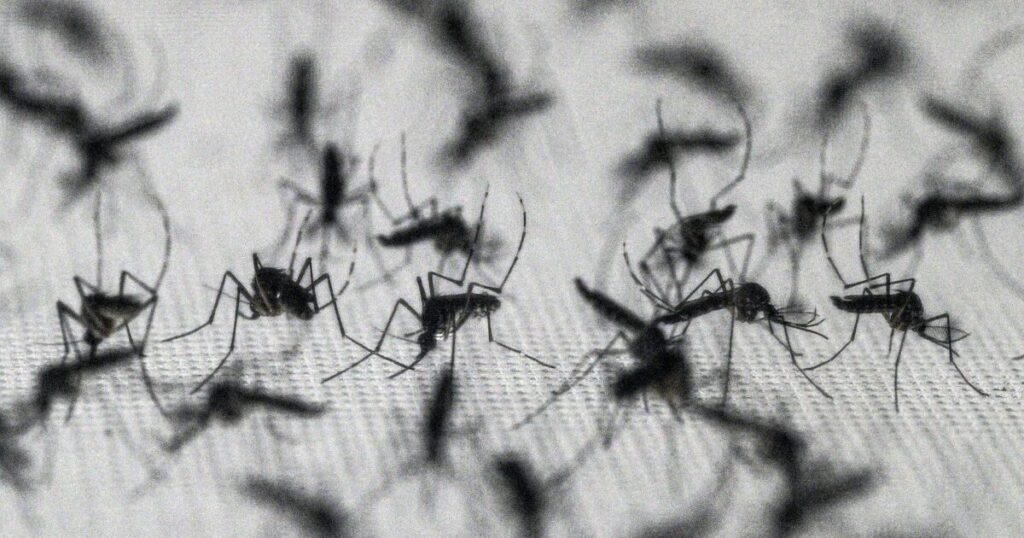
The tiny mosquito, rather than the lion, spider, or snake, holds the title of the world’s deadliest animal. According to Our World in Data, mosquitoes are responsible for approximately 760,000 deaths each year, which accounts for about 17 percent of all infectious diseases. Diseases such as malaria, dengue, yellow fever, chikungunya, and Zika collectively claim tens of thousands of lives annually. Furthermore, a warming climate is expanding the range of these insects, prompting renewed calls for decisive action.
Scientists and public health experts assert that the complete elimination of mosquitoes is unnecessary. Out of an estimated 3,500 species, only about 100 bite humans, and just five species are responsible for approximately 95 percent of mosquito-borne infections. Hilary Ranson, a vector biologist at the Liverpool School of Tropical Medicine, argues that removing these five species could be justified given the significant human toll. Conversely, Dan Peach, a mosquito entomologist at the University of Georgia, emphasizes the need for more ecological data before moving forward with such measures.
Ranson highlights that disease-carrying mosquitoes have developed a close relationship with humans, breeding near homes and feeding on people. She suggests that their removal would likely have a limited impact on broader ecosystems, as other, less harmful species would probably fill the ecological niche left behind. However, Peach points out that mosquitoes play important roles in transferring nutrients from aquatic larval habitats, serving as prey for fish, insects, and birds, and pollinating certain plants—functions that are not yet fully understood. Both experts acknowledge the ethical debate surrounding “specicide” but remind us that human activity is already driving widespread species loss.
Gene-drive technology has emerged as a promising candidate for targeted mosquito eradication. By editing the genome of female Anopheles gambiae mosquitoes to render them infertile, researchers have successfully eliminated laboratory populations within a few generations. The Gates-funded Target Malaria project has conducted field tests of this approach in several African nations, although testing was halted in Burkina Faso in 2023 due to political opposition and disinformation campaigns.
An alternative strategy involves the use of the bacterium Wolbachia, which, when introduced into Aedes aegypti populations, can suppress mosquito numbers or block the transmission of dengue. In Niterói, Brazil, the release of Wolbachia-infected sterile mosquitoes coincided with an 89 percent drop in dengue cases. According to Scott O’Neill, founder of the World Mosquito Program, more than 16 million people across 15 countries now benefit from this program.
Another gene-drive initiative, known as Transmission Zero, aims to make Anopheles gambiae incapable of carrying malaria. Laboratory results published in *Nature* indicate progress, with field trials planned for 2030, contingent upon securing political support. Dickson Wilson Lwetoijera of Tanzania’s Ifakara Health Institute warns that community acceptance and governmental backing are crucial for the successful deployment of such technologies.
Despite the potential of biotechnology, experts caution against relying on a single “magic bullet.” Ranson advocates for a holistic approach that combines vector control with improved access to diagnosis, treatment, housing, and vaccines. Recent cuts to foreign aid in Western countries pose a threat to the progress made against mosquito-borne diseases, highlighting the need for sustained investment.
The debate over the best strategies to curb the world’s deadliest insects continues. Whether through selective eradication, genetic modification, or broader public health measures, the decisions made will significantly influence disease patterns across Africa and beyond for decades to come.