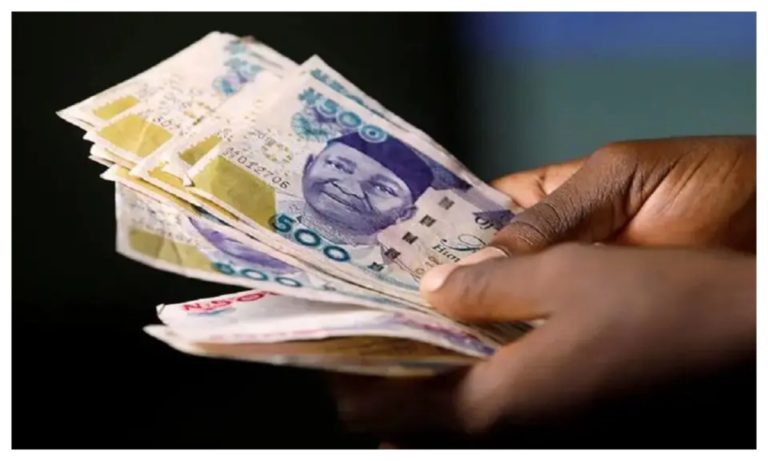
President Bola Tinubu said Nigeria will devote roughly US$11.6 billion to debt servicing in 2026, a sum that represents almost half of the country’s projected revenue for the year. The comment was made on Tuesday while Tinubu led a delegation of government officials, diplomats and business leaders to the Africa Forward Summit at Nairobi’s Kenyatta Convention Centre.
In his remarks, Tinubu warned that the high cost of borrowing is draining resources that could otherwise be invested in Nigeria’s industrial sectors. “Every dollar that leaves our treasury to pay punitive interest rates is a dollar that does not go into our steel mills, textile factories, agro‑processing plants or digital enterprises,” he said. He argued that the prevailing international financial architecture makes African sovereigns appear as permanent high‑risk borrowers, regardless of fiscal performance, and that this perception hampers the continent’s ability to develop cross‑border value chains under the African Continental Free Trade Area.
Tinubu called for a re‑shaped financial system that supports Africa’s industrialisation rather than incentivising the export of raw materials and the import of finished goods. He emphasized that Nigeria will continue to borrow responsibly, but that credit assessments should reflect the nation’s economic fundamentals and industrial potential instead of outdated stereotypes.
The president also highlighted Nigeria’s “blue economy” potential, noting that insecurity and regulatory uncertainty have limited its development. He announced a commitment to offer the Deep Blue Project’s maritime‑intelligence infrastructure as a shared data hub for willing Gulf of Guinea states, promising interoperable systems, harmonised laws and joint enforcement to make regional seas safer and more attractive to private investors. Tinubu framed maritime sovereignty as a catalyst for investment, linking secure sea lanes and predictable regulation to the de‑risking of Nigeria’s maritime proposition.
Addressing broader financial reforms, Tinubu recalled Nigeria’s own policy actions: the removal of fuel subsidies, the unification of the exchange rate, the recapitalisation of banks with more than US$3.4 billion, and the exit from the Financial Action Task Force’s “grey list.” He said these measures have reduced the debt‑to‑GDP ratio to an estimated 32.3 percent in 2026, bolstered external reserves to US$45.5 billion and restored investor confidence. Yet he warned that even a reforming nation faces a “financial system that is stacked against us,” which forces de‑industrialisation despite domestic progress.
On migration, Tinubu stressed that creating opportunities at home is essential to curbing irregular journeys. He urged international partners to direct more Official Development Assistance toward climate adaptation, energy access, digital skills and job‑creating sectors, and to link aid more closely to migration outcomes.
Tinubu concluded by calling for stronger African cooperation in shaping global migration governance and by supporting African Union initiatives such as the Migration Policy Framework and the Khartoum Process. He thanked the summit’s co‑hosts, French President Emmanuel Macron and Kenyan President William Ruto, for facilitating dialogue among more than 30 countries on investment, artificial intelligence, agriculture, creative industries and climate change.
The Africa Forward Summit, co‑hosted by France and Kenya, brought together leaders, UN secretary‑general António Guterres and African Union Commission chair Mahamoud Ali Youssouf for opening statements. Tinubu also met Madagascar’s president and CAF president Patrice Motsepe, reaffirming Nigeria’s readiness to host the 2026 CAF Awards. Senior ministers and prominent private‑sector figures, including Aliko Dangote and Tony Elumelu, accompanied the Nigerian delegation.
Nigeria’s projected debt‑service burden underscores the urgency of Tinubu’s appeals for a financing framework that enables African industrial growth and for regional cooperation that turns the continent’s maritime assets into engines of sustainable development. The summit’s outcomes may shape how African states negotiate financing, trade and migration policies in the years ahead.