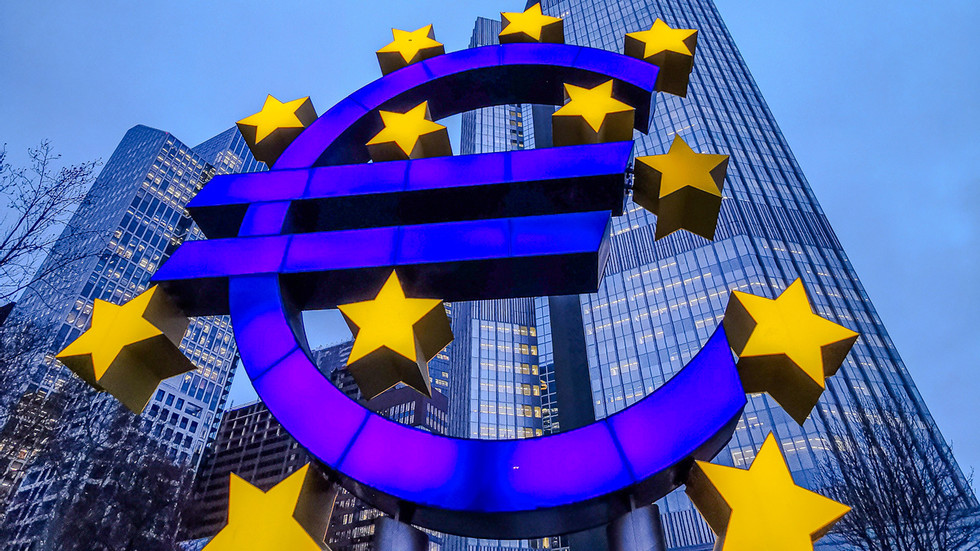
The European Central Bank may soon be forced to tighten monetary policy despite the risk of further slowing an already fragile Eurozone economy. In an interview with Politico, Alexander Demarco, governor of the Central Bank of Malta and traditionally a dovish voice, warned that the oil‑price shock generated by the conflict in Iran is unlikely to dissipate quickly and could keep inflationary pressures alive. Demarco said the prospect of “looking through” the shock is fading as the war drags on and oil prices remain elevated, suggesting the ECB may no longer be able to ignore emerging price pressures.
The ECB left its key deposit rate at 2 percent in April but cautioned that prolonged conflict and high energy costs could spill over into broader inflation. If workers begin to demand higher wages and firms raise prices, the price outlook could shift sharply. Most economists surveyed by Reuters now expect a 25‑basis‑point rate increase to 2.25 percent at the June 11 meeting, with at least two more hikes likely later in the year to counter energy‑driven inflation.
Even a swift resolution of the Middle East hostilities may not be enough to calm oil markets. Since the United States and Israel launched attacks on Iran in late February, Brent crude surged above $120 per barrel before settling around the $100 mark, well above pre‑crisis levels of roughly $70. The persistence of these prices makes it difficult for policymakers to rely on a quick reprieve.
Higher rates are a conventional tool for curbing inflation because they dampen demand across the economy. Yet critics argue that tightening now would not address the underlying supply shock and could deepen a slowdown that is already evident. ECB Vice‑President Luis de Guindos and Bank of France governor François Villeroy de Galhau have both called for more data before committing to tighter policy. Berenberg chief economist Holger Schmieding notes weak growth and rising unemployment, suggesting that wage pressures remain modest and may not justify immediate hikes.
The debate echoes the ECB’s controversial 2011 decision to raise rates amidst the Eurozone sovereign‑debt crisis and a surge in oil prices following unrest in Libya. At the time, the tightening was later viewed as mistimed, contributing to a recessionary bounce. A similar pattern is feared today: if the central bank reacts too quickly to a geopolitically driven shock, it could repeat past mistakes and inflict unnecessary pain on households and businesses already coping with the aftermath of the Ukraine energy crisis.
The broader economic picture remains precarious. Germany, the bloc’s industrial engine, recorded a 0.3 percent contraction last year, with manufacturers still burdened by high energy costs and weak external demand. The European Commission warns that even a brief disruption in oil supplies could shave 0.4 percentage points off growth forecasts for the current year. Consumers, still recovering from years of elevated inflation, face tighter budgets as housing, food and borrowing costs remain high.
Alternative supplies exist – Norway, the United States and, to a lesser extent, Russia – but they lack sufficient spare capacity to fully offset a prolonged Gulf disruption. While Russia continues to supply limited volumes to some EU states through exemptions, Brussels has postponed a permanent ban on Russian oil, reflecting the tension between energy security and geopolitical strategy.
The ECB’s next move will test its ability to balance inflation control with the need to protect a fragile recovery. Market participants will watch the June meeting closely, aware that any decision will have immediate implications for borrowing costs, currency stability and the broader trajectory of the European economy.