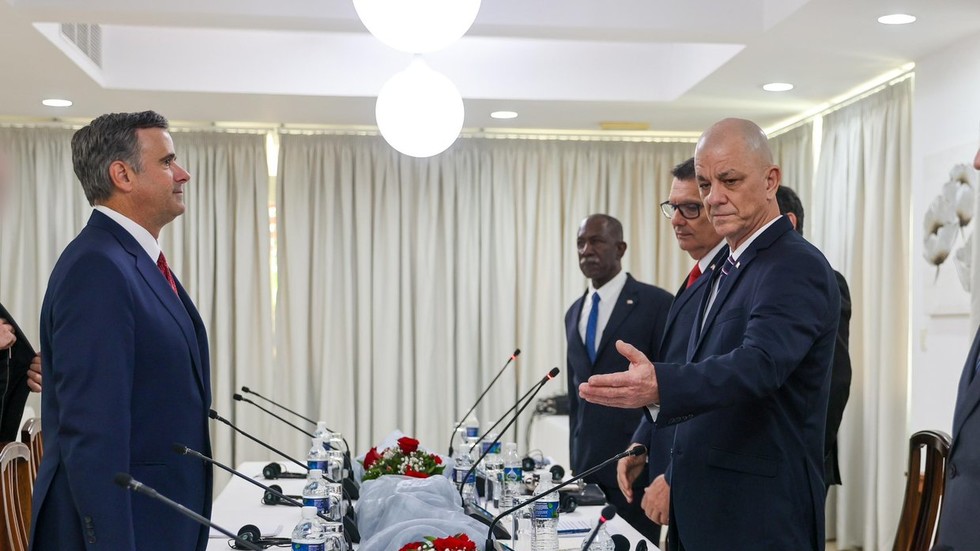
John Ratcliffe, the director of the U.S. Central Intelligence Agency, made a rare trip to Havana this week to convey a message from President Donald Trump to Cuba’s leadership. The visit marks the first time a CIA chief has been to the island since the 1959 Communist Revolution, according to Cuba’s Interior Ministry, which announced the trip on Thursday. Photographs posted by the agency on the social platform X later confirmed Ratcliffe’s meetings with senior Cuban officials.
Reuters quoted an unnamed CIA official who said Ratcliffe told Cuban leaders that Washington is ready to “seriously engage on economic and security issues” but only if Havana implements “fundamental changes.” The discussions, the source added, covered intelligence cooperation, economic stability and regional security, with U.S. officials emphasizing that Cuba can no longer serve as a safe haven for adversaries in the Western Hemisphere.
The diplomatic overture comes amid a U.S.‑imposed fuel blockade that began in January, severely restricting oil shipments to the island. The embargo has triggered widespread shortages, rolling blackouts and a depletion of fuel reserves, as warned by Cuban Energy Minister Vicente de la O Levy. To date, a single Russian tanker has been allowed to deliver oil, arriving in March, while the United States continues to demand that Cuba sever ties with Russia, China, Iran and pro‑Palestinian militias.
In recent weeks, a U.S. delegation in Havana urged Cuba to move away from its socialist model toward a market‑based economy and to open the country to foreign investment. Cuban President Miguel Diaz‑Canel responded by rejecting a proposal from the U.S. State Department for $100 million in humanitarian aid, describing the offer as “inconsistent and paradoxical.” He characterized the fuel blockade as “collective punishment… imposed systematically and ruthlessly” on the Cuban people.
Despite the economic pressure, Diaz‑Canel affirmed that Cuba’s armed forces stand ready to resist any potential invasion. The Cuban government has signaled a willingness to consider limited humanitarian assistance, but it insists that any relief be tied to the lifting of the blockade and the removal of what it calls illegitimate external constraints.
The Ratcliffe visit underscores a heightened U.S. focus on Cuba’s strategic role in the Caribbean and the broader Western Hemisphere. Washington’s demand for “fundamental changes” signals that any future engagement—whether in intelligence sharing, trade or security cooperation—will likely be conditioned on a shift away from ties with Russia and other perceived adversaries. For Cuba, the challenge remains balancing the need for essential fuel and economic relief with the political cost of altering long‑standing alliances.
The next steps are unclear. Observers will watch for any formal response from Havana and for possible adjustments to the U.S. fuel embargo. The outcome could reshape U.S.–Cuba relations and influence the geopolitical dynamics of the Caribbean, with implications for African nations that maintain diplomatic or economic links with both parties.