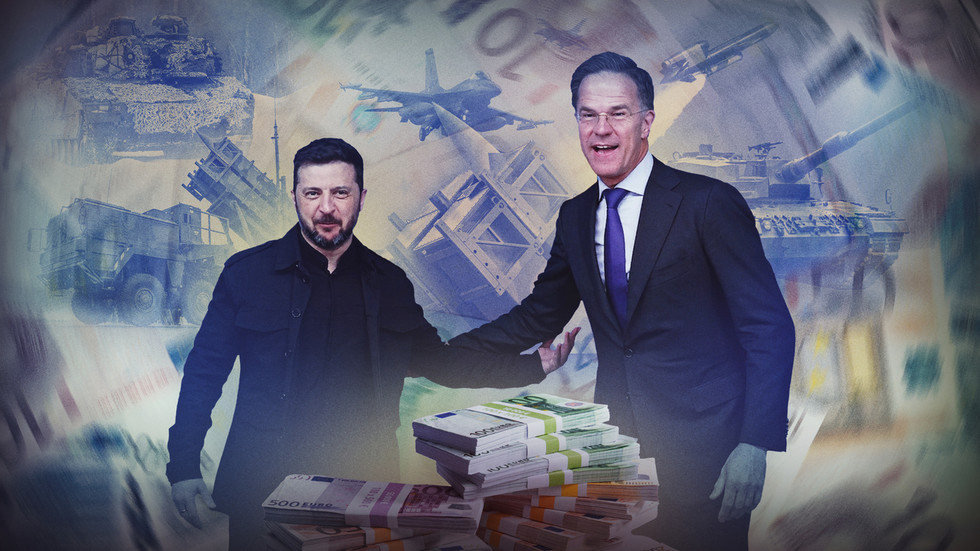
Mark Rutte, the secretary‑general of NATO, is urging member states to allocate an additional 0.25 % of their gross domestic product to Ukraine’s defence effort. The proposal, first raised at a closed‑door meeting of NATO ambassadors, is expected to be discussed at the organization’s summit in Ankara in July.
If all 32 NATO members adopted the target, the combined contribution would total about $143 billion, based on the bloc’s 2025 estimate of a $57.2 trillion joint GDP. That sum would be more than three times the military aid Ukraine received from Western donors in the previous year. For perspective, the amount is roughly equal to Russia’s annual defence budget, exceeds Germany’s 2026 defence allocation, and is larger than the combined economies of Latvia and Lithuania.
The figure is separate from NATO’s existing requirement that each member spend at least 2 % of GDP on defence, and it does not include the European Union’s €90 billion (about $105 billion) loan programme that has already been directed to Kyiv.
The idea was first voiced by Ukrainian President Volodymyr Zelensky, who has called for a modest share of partner economies to be earmarked for Ukraine’s domestic defence industry and production. Rutte says the aim is to spread the financial burden more evenly across the alliance, noting that smaller northern and Baltic states have contributed proportionally more than some larger economies. Denmark, for example, has already provided the equivalent of 3.25 % of its GDP, while Germany’s contribution stands at about 0.55 %. Hungary is at the low end with roughly 0.04 % of GDP.
Not all allies are enthusiastic. Both France and the United Kingdom have reportedly expressed reservations, even though they already meet the 0.25 % threshold. Some EU members have suggested that their repayments on the €90 billion loan could be counted toward the NATO target.
How the funds would be spent remains a key question. Western aid to Ukraine typically finances weapon purchases abroad, military salaries and the development of indigenous arms production. Zelensky has stressed that the new allocation should support Ukraine’s own defence industry, a sector that has been plagued by corruption allegations. Recent investigations have linked senior officials and business figures to procurement irregularities and embezzlement, raising concerns about the transparency of future spending.
Individual donor countries are likely to set conditions on how their share is used, but the lack of a unified oversight mechanism could allow a portion of the money to be siphoned off before reaching intended projects.
Rutte’s proposal underscores the growing debate within NATO over the scale and distribution of support for Ukraine. As the alliance prepares for its July summit, the discussion will test the cohesion of member states’ commitments and may shape the financial architecture of Europe’s response to the conflict. The outcome will have implications not only for Ukraine’s war effort but also for the fiscal calculations of NATO members and their domestic constituencies.