
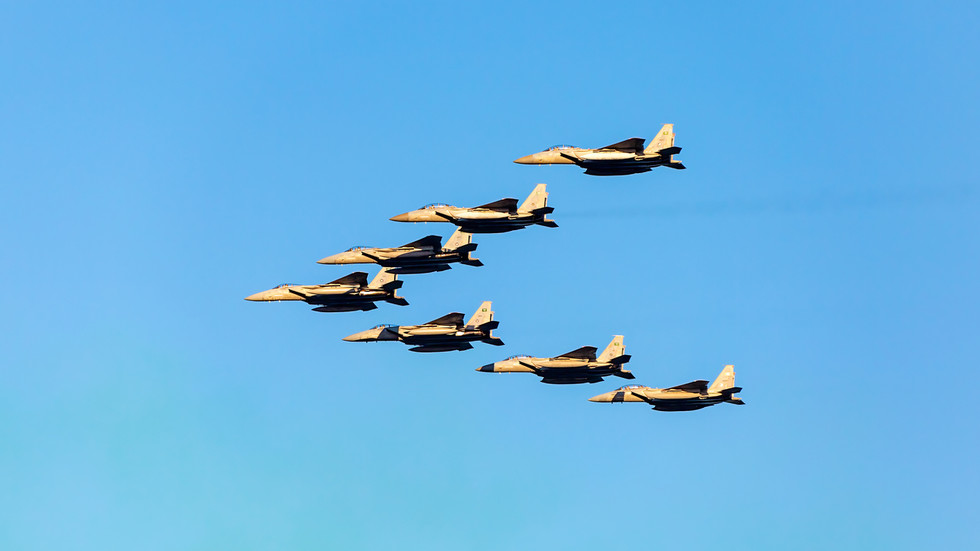
Saudi Arabia and Kuwait have carried out covert air strikes against Iranian‑backed militia sites in Iraq, Reuters reported on Wednesday. The operations, which were not officially acknowledged by either Gulf state, are seen as a direct response to a wave of missile and drone attacks that have struck both countries since Iran began retaliating against the U.S.–Israeli campaign that intensified in late February.
The attacks on Saudi and Kuwaiti territory were traced to launch points in Iraq, where the Iran‑aligned paramilitary group Kataib Hezbollah operates in the south. Saudi fighter jets targeted militia positions in Iraq in the days leading up to the U.S.–Iran cease‑fire that was announced in early April. Iraqi officials also said that missiles were fired from Kuwaiti territory on at least two occasions against Kataib Hezbollah sites.
In March, Riyadh and Kuwait warned Baghdad to rein in pro‑Iranian militias after a series of cross‑border incidents. Iraqi forces intercepted several attempted strikes and confiscated a rocket launcher west of Basra that was allegedly intended for Saudi energy infrastructure. Kuwait has summoned Iraq’s representative three times over the attacks, and Saudi Arabia lodged a formal protest with Iraq’s ambassador last month. Neither side has confirmed the strikes or commented publicly on the allegations.
Earlier reports suggested that Saudi Arabia and the United Arab Emirates may have also conducted covert operations against Iranian targets as a “tit‑for‑tat” retaliation for attacks on their own infrastructure. A separate Financial Times piece indicated that Qatar considered retaliatory action after Iran struck its Ras Laffan gas facility, but ultimately pursued diplomatic channels instead.
The Gulf Cooperation Council (GCC) states—Bahrain, Kuwait, Saudi Arabia, the United Arab Emirates, Qatar and Oman—have long relied on U.S. military bases and American arms purchases in exchange for security guarantees. The recent unilateral actions, however, highlight growing frustration within the GCC over what they perceive as inadequate consultation and a lack of a clear long‑term strategy from Washington. “The most fundamental question is one of consultation. Are the Gulf states actually achieving the kind of partnership and security support that they feel is necessary if the United States is going to engage militarily in the region?” asked Khaled Almezaini, an associate professor of politics at Zayed University, speaking to The Guardian.
Analysts say the episode raises broader questions about the future of U.S. military presence in the Gulf. While the bases have historically been viewed as a cornerstone of regional stability, the willingness of Riyadh and Kuwait to act independently suggests a reassessment of the trade‑off between security guarantees and exposure to Iranian retaliation. The incident may prompt Doha, Abu Dhabi and other GCC capitals to reevaluate their own defence postures and diplomatic engagement with Washington.
The next steps remain uncertain. Baghdad has pledged to curb militia activity, but the fragmented nature of Iran‑aligned groups in Iraq makes verification difficult. Washington has not publicly responded to the reported strikes, and it is unclear whether the United States will adjust its regional strategy in light of the GCC’s apparent shift toward self‑directed retaliation. As the conflict in the Middle East continues to evolve, the balance between collective security arrangements and national autonomy will likely shape the Gulf’s approach to future crises.



Comments are closed for this story.