
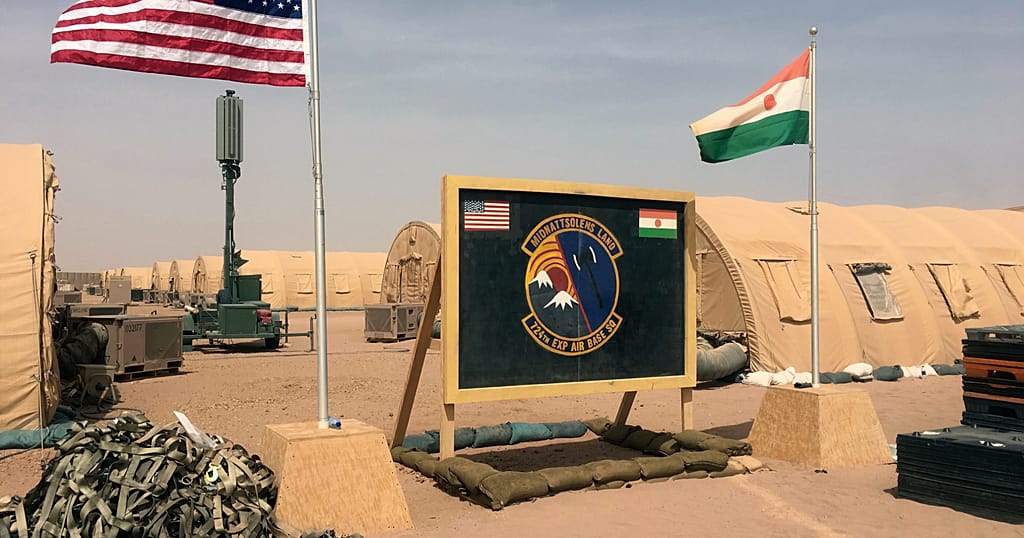
The United States is seeking to deepen its engagement with the Sahel after years of limited interaction with the region’s military governments. At a Senate Armed Services Committee hearing on Thursday, senior U.S. military officials warned that extremist groups have expanded their operational reach across West Africa, prompting a reassessment of American strategy.
General Dagvin Anderson, commander of U.S. Africa Command (AFRICOM), told lawmakers that “the epicentre of global terrorism is in Africa. ISIS leadership is African, and al‑Qaeda’s economic engine is in Africa. Both groups have the will and intent to strike our homeland.” He cited recent militant activity, including a high‑profile attack near the capital of Mali, as evidence that extremist factions are gaining the capacity to threaten not only regional stability but also U.S. security interests.
According to Anderson, the capture of a capital city by al‑Qaeda affiliates would provide the group with the trappings of a state, enabling it to sponsor terrorism on a global scale. He highlighted the jihadist coalition Jama’a Nusrat ul‑Islam wal‑Muslimin (JNIM) for its growing ability to control key terrain in the Sahel, particularly by disrupting fuel supplies to populated areas.
The hearing also underscored a shift in U.S. military cooperation with Nigeria, a principal partner in the region. Earlier this year, AFRICOM announced an expansion of joint operations after U.S. airstrikes targeted an Islamic State‑affiliated group in December. Anderson praised the “very positive engagement” with Nigerian intelligence, which has facilitated more precise targeting of terrorist cells.
Nonetheless, the partnership is complicated by allegations of civilian casualties in Nigerian airstrikes. Amnesty International reported that a strike in Tumfa on Sunday killed at least 100 civilians, including children. Nigerian authorities have denied that civilians were targeted, but the incident illustrates the challenges of conducting counter‑terrorism operations while protecting non‑combatants.
General Anderson warned that a 75 percent reduction in AFRICOM’s regional posture, combined with a shrinking pool of allied forces, has created an “intelligence black hole.” He argued that while the United States can surge assets in a crisis, it cannot quickly rebuild trust that has eroded over years of disengagement. “We would like to re‑establish some pragmatic relationships in the Sahel, where ISIS also has a stronghold and is currently holding an American hostage,” he said.
Analysts note that Washington’s renewed focus on the Sahel serves dual purposes: countering violent extremism and securing access to the region’s abundant mineral resources. Countries across the Sahel have struggled for more than a decade to contain jihadist insurgencies, achieving limited success amid weak governance and porous borders.
The Senate hearing signals that the United States is prepared to recalibrate its approach, balancing military assistance with diplomatic outreach to rebuild cooperation with Sahelian states. Future discussions are expected to address how to restore intelligence sharing, improve force protection, and align counter‑terrorism efforts with broader development goals.
As the U.S. revisits its presence in the Sahel, the region’s trajectory will hinge on whether renewed partnerships can effectively curb extremist growth while mitigating civilian harm, a test that will shape both African security and American strategic interests in the years ahead.


