
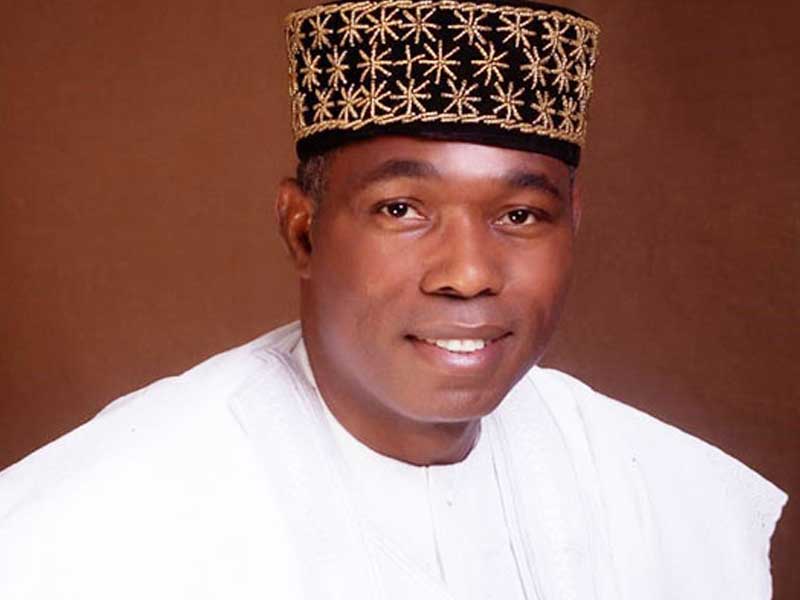
The Social Democratic Party didn’t just pick a presidential candidate in Bauchi. It launched a rebellion. At the Abubakar Tafawa Balewa Stadium, Prince Adewole Adebayo didn’t deliver a typical acceptance speech. He declared war on what he calls a slide toward one-man rule, taking direct aim at President Bola Tinubu and the All Progressives Congress. But beyond the fiery words, the event marked a calculated effort to transform the SDP into a coalition of welfarists, constitutional reformers, and Pan-Africanists seeking a genuine alternative to both the APC and the weakened Peoples Democratic Party.
The convention drew a crowd of prominent opposition voices and civil society actors, including Afenifere leader Oba Oladipo Olaitan, who painted a stark picture. Nigeria is bleeding, he said, blaming neoliberal policies that prioritize market forces and elite comfort over the welfare of millions. His words signaled a growing ideological marriage between Yoruba socio-political movements and the SDP’s revived social democratic message.
This gathering didn’t happen in a vacuum. For years, the SDP was crippled by leadership disputes and factional battles, with insiders accusing the ruling establishment of meddling. The APC has consistently denied these charges. But as opposition realignments gained steam after the 2023 elections, the SDP became a magnet for those seeking a platform with clearer ideological lines, unburdened by the contradictions of larger parties.
Adebayo’s speech was a masterclass in populist anger and constitutional idealism. He painted a nation broken by unemployment, insecurity, and elite indifference, repeatedly asking why presidents travel abroad for medical care while women give birth under trees. He accused Tinubu of deepening poverty through fuel subsidy removal and excessive borrowing, declaring himself an enemy of poverty and Tinubu its friend. Critics called it overly combative, but it electrified a base hungry for a forceful challenge.
More strategically, Adebayo anchored his message on Chapter II of the Nigerian Constitution, which deals with Fundamental Objectives and Directive Principles of State Policy. He argued that governance must return to its constitutional duty of ensuring welfare and justice. The resources of Nigeria will be used for the welfare and security of Nigerians, he vowed, citing the constitution as the bedrock of his platform.
The convention also saw a rare attempt to revive ideological politics in a system dominated by power blocs and ethnic calculations. Political thinker Olusegun Babalola delivered an ambitious thesis, arguing that Nigeria’s failure is civilizational. Drawing lessons from China, India, and Singapore, he contended that successful states blend modern economics with indigenous constitutional traditions. Nigeria, he said, has reduced culture to festivals and dances instead of integrating it into governance. His argument was that the constitution must reconnect with social welfare and national purpose.
Perhaps the most consequential development was the visible alignment between Afenifere and the SDP. Olaitan’s endorsement echoed the welfarist tradition of Chief Obafemi Awolowo, criticizing neoliberal policies and calling for state-led investment in infrastructure, education, and healthcare. It signaled the SDP’s ambition to occupy ideological territory once held by Nigeria’s old progressive movements.
Yet the road ahead is steep. The SDP faces formidable obstacles: incumbency power, financial influence, and the entrenched structures of the APC and PDP. The Labour Party still commands urban youth support. To become a serious contender, the SDP must transform convention rhetoric into grassroots organization and manage internal cohesion to avoid past crises. It must also translate constitutional debates into messaging that resonates with voters battling inflation and unemployment.
Still, what emerged from Bauchi was more than a nomination. It was an ideological project seeking to redefine governance and opposition in Nigeria. Adebayo framed the election as a struggle between ordinary people and an entrenched elite. Olaitan presented it as a choice between neoliberal hardship and social democracy. Babalola elevated it into a civilizational argument about the nation’s future identity.
Whether these ideas gain traction remains uncertain. But in a political climate often criticized for lacking philosophical depth, the SDP convention introduced a rare attempt to fuse constitutionalism, welfarism, and populist opposition into a coherent narrative. The party’s biggest achievement may not yet be electoral strength, but its effort to revive ideological conversation in Nigerian politics. In a nation where defections blur party lines, the Bauchi gathering suggested that at least some actors are once again asking an old question: what should the government actually stand for?



Comments are closed for this story.