
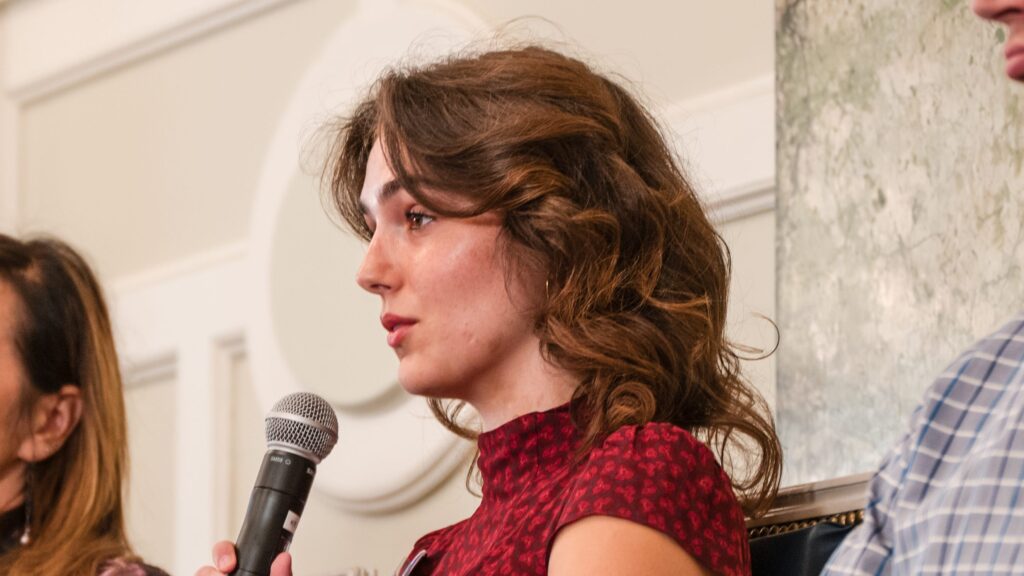
In a posh Washington hotel ballroom, 23-year-old Laura Friedman took a deep breath and stepped onto a stage to discuss something deeply personal: her sex life. Or rather, the complete absence of one.
The Vanderbilt University senior described her experience after stopping antidepressants as a “chemical castration.” She lost all sensation in her genitals, but the damage went deeper. “I can’t feel love for my own mother, which is the hardest thing on Earth,” she told the captivated audience at an event hosted by the MAHA Institute, a group aligned with Health and Human Services Secretary Robert F. Kennedy Jr.’s “Make America Healthy Again” movement. The focus? The “overmedicalization” of mental health.
Friedman wasn’t alone. Other young people joined her on stage, sharing their own battles with unintended side effects from psychiatric medications, particularly SSRIs—selective serotonin reuptake inhibitors, the most commonly prescribed class of antidepressants.
SSRIs can be life-changing. The Cleveland Clinic notes they are often the first choice because they cause “fewer and milder side effects compared to other options.” But for a small subset of patients, the side effects don’t stop when the pills do.
Friedman never planned to become a spokesperson for post-SSRI sexual dysfunction, or PSSD—a condition not officially recognized in the United States. “I think it’s pretty clear I don’t want to be here,” she said. “I feel so deeply humiliated and dehumanized to share to groups of strangers and the press, and inevitably the internet, that I’m quite literally sexually defunct and emotionally lobotomized, which is the antithesis of who I was before this.”
Her goal is simple: to stop PSSD from happening to others.
The MAHA movement has zeroed in on SSRIs as a flashpoint. At the event, speakers argued these drugs are overprescribed. A 2024 study in the journal Pediatrics found that monthly antidepressant dispensing rates for young people jumped 66.3% from January 2016 to December 2022, as depression rates soared. The push is on for alternatives like psychotherapy, better sleep, exercise, and diet.
But for many, antidepressants are a lifeline. When talk therapy fails or is out of reach, SSRIs can be vital for managing depression, OCD, anxiety, and more—though experts stress they must be closely monitored by a doctor.
So what exactly is PSSD? Doctors describe it as sexual dysfunction that emerges or persists after stopping SSRIs. “Most of us expect if we’re on a drug and have side effects, we stop the drug, we stop the side effects, but it’s the opposite of this,” explained Dr. Kenneth Peters, chief of urology at Corewell Health in Southeast Michigan. Symptoms like genital numbness, erectile dysfunction, or difficulty reaching orgasm can even worsen after quitting the medication. Some patients also lose interest in hobbies, struggle with emotional connections, or face bladder and bowel issues.
For years, doctors blamed the original mood disorder. But Dr. Irwin Goldstein, head physician at San Diego Sexual Medicine, says his research points to physiological changes, including nerve and tissue damage.
PSSD was recognized by the European Medical Agency in 2019—the U.S. equivalent, the FDA, has not followed suit. There are no formal diagnostic criteria.
The issue gained political urgency after President Donald Trump directed his administration to assess the “threat” SSRIs pose to children, following RFK Jr.’s confirmation as health secretary. An executive order targeting the “over-reliance on medication” sparked panic online. “Literally would not be alive today without my SSRI,” one X user posted. “If they take these medications away, it will cause mass tragedies,” wrote another.
Kennedy has spread conspiracy theories linking antidepressants to school shootings, all while touting “gold standard science.” But experts say there is a middle ground.
“We don’t want to eliminate the drugs,” Goldstein said. “But we don’t want to cause this PSSD problem, it’s a separate and bad condition.”
About one in six Americans takes an SSRI. Those who develop PSSD appear to be a tiny fraction—Goldstein estimates 1% to 4%. But that doesn’t make their suffering less real. Peters warns it’s dangerous to dismiss these patients. In an international survey he conducted, over half of clinicians brushed off their symptoms.
For some, PSSD fades after months or years. For others, it can “last a lifetime,” Peters said, with no official treatment available. Many turn to subreddits for advice, trying everything from hormones to electrical stimulation.
The path forward, experts say, lies in research. But funding is scarce. “Most PSSD research that exists is patient-funded,” Peters noted, as he applies for a National Institutes of Health grant.
In the meantime, advocates push for better informed consent. “You don’t want to scare people from taking something that could be potentially life-saving for them either,” Peters said.




Comments are closed for this story.