
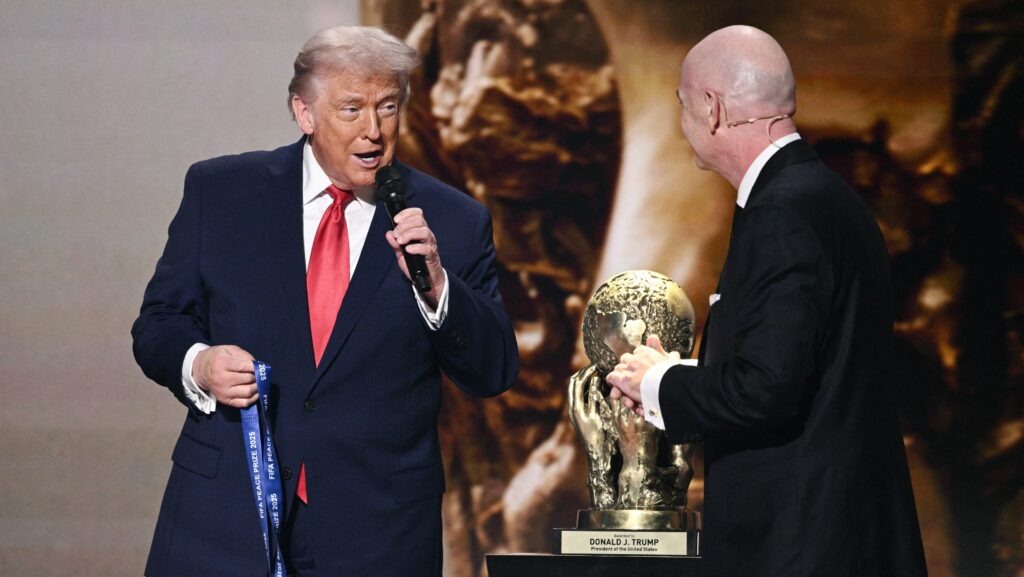
The United States has already lost this World Cup, and it has nothing to do with what happens on the pitch.
Even if the U.S. men’s national team stages a historic run, even if the tournament delivers breathtaking goals and unforgettable matches, the stain remains. We have revealed ourselves as a nation of hostility and avarice, where leaders embrace a world only as they wish it to be, not as it truly is. The love of soccer has been commodified, sold to the highest bidder, and the spirit of global unity has been trampled.
That is the legacy—and the shame—of this World Cup. This was a once-in-a-generation chance to showcase the best of America, to bask in the joy that soccer brings to billions worldwide. Instead, we chose to be ugly Americans.
The World Cup is a phenomenon unlike any sporting event in the United States. Think of Brazilians in their canary-yellow jerseys, chanting and dancing. Picture the Dutch turning streets into a sea of orange. Watch Japanese fans meticulously cleaning stadiums after matches. It is impossible not to be swept up in the spectacle. Anyone who experiences it walks away feeling the world is smaller, friendlier, more connected.
“All these people, they want to enjoy a moment of happiness, a moment where their day-to-day problems can be left aside and they can just enjoy the game,” FIFA President Gianni Infantino said at a news conference. “Cry if their team loses or cry if their team wins, and just feel this emotion in community with others.”
That is the tragedy. Instead of letting the World Cup unite us, we have used it as a tool for division.
Infantino glossed over the hostility toward Iran’s team, framing their mere participation as a triumph despite shameful treatment. Iran was forced to relocate its base camp to Mexico at the last minute. Its players are barred from staying in the United States even though all three of their group matches are here. Its fans lost their ticket allotments.
He also downplayed the U.S. decision to deny entry to Somali referee Omar Artan, who has officiated World Cup qualifiers and last year’s Under-20 World Cup. Artan is one of several people turned away at the U.S. border for dubious reasons.
“We’re working very closely to make sure the right people come into our country,” President Donald Trump said when asked about the rejections.
But the U.S. is supposed to be a World Cup host, not a World Cup bouncer. When you throw a global party, you welcome everyone—not just the guests you like. You don’t have to be thrilled that Iran or a Somali referee is here. But you must extend the same courtesy you would to someone from Spain or Argentina.
“This is anathema to what this tournament is supposed to be about,” New York Mayor Zohran Mamdani said. “If we can’t even allow the players, the teams and journalists covering those teams to come to this country, it begs the larger question about our commitment to the spirit of this tournament. We want this to be a tournament that reflects our commitment to us being part of something larger than ourselves.”
That commitment has been suspect since tickets were priced so high they are nearly unattainable for ordinary fans. What makes soccer the beautiful game is its accessibility. Race, ethnicity, gender, religion, socioeconomic status—none of it matters. All you need is a ball and some space.
The World Cup should reflect that. Instead, this tournament is shaping up to be no different from the Super Bowl or the Final Four—another corporate bucket-list experience.
Hosting the World Cup could have been transformative. It could have drawn us closer to the rest of the world, fostering appreciation for people and places we barely know. It could have reminded the globe of America’s capacity for good. We are, by nature, a warm and open people. Imagine the impression we could have made, the distrust and disappointment we could have erased.
Instead, we showed the world our worst selves. That is the biggest loss of this World Cup.




Comments are closed for this story.