

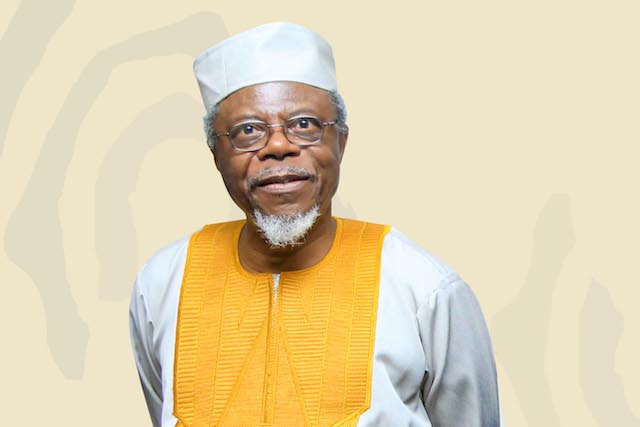
When Charles Chukwuma Soludo walked into Awka as Anambra State’s governor in 2022, he carried a resume that could make any scholar blush and a reservoir of goodwill few politicians ever earn. For many Nigerians, especially those from the South-East, his success felt like a collective victory. Here was a man with a first-class degree in Economics, a doctorate in Econometrics, postdoctoral stints at Brookings, Cambridge, Oxford, and the IMF—a technocrat in a landscape often ruled by patronage and handouts.
His tenure as Central Bank governor only cemented that image. The banking consolidation he championed reshaped Nigeria’s financial system, turning a fragile sector into something more resilient. Love him or hate him, you couldn’t deny his intellectual firepower. He became a symbol of what governance could be when brains trumped brawn.
I recall a conversation years ago with Nurudeen, a young activist from Lagos. His group, AdvoKC, had built something called the “Soludometer”—a platform to track Soludo’s campaign promises. The name itself said it all. Soludo wasn’t just expected to govern; he was expected to redefine governance. He had become a benchmark, a standard against which leadership would be measured.
Maybe that’s why criticizing him always felt a bit awkward. Maybe it’s because we share mutual friends, or because his deputy governor is a year my junior from medical school. Whatever the reason, I’ve hesitated when assessing his stewardship. But that hesitation didn’t last long. The goodwill evaporated faster than anyone anticipated.
Almost immediately, Soludo seemed less focused on consolidating his achievements in Anambra and more on building a national profile. Ambition isn’t a sin—many great leaders used one office as a stepping stone. But Soludo gave the impression of a man locked in a perpetual contest with Peter Obi, a rivalry that seemed more vivid in his own mind than in the reality of most Nigerians.
Let me be clear: Peter Obi is a public figure, fair game for scrutiny. In any healthy democracy, leaders must face rigorous examination. The problem isn’t that Soludo criticizes Obi. It’s the selectivity and intensity of that criticism. When a governor consistently targets one opposition figure while giving a pass to others whose decisions have far greater impact—like President Bola Tinubu or Atiku Abubakar—questions arise. Fair criticism strengthens democracy. Selective criticism looks like political calculation dressed up as principle.
Throughout the 2023 campaign, Soludo aimed barbs at Obi despite neither he nor APGA being major contenders. Even after the election, Obi remained a recurring target. Yet you’d struggle to find comparable criticism of Tinubu, whose policies affect every Nigerian, including Anambra’s citizens. The perception became clear: a governor distracted by national ambitions and personal scores, not the pressing challenges of his state.
But reducing Soludo to his blind spots would be unfair. He’s shown courage in areas others avoid.
His campaign against fraudulent native doctors, miracle merchants, and spiritual entrepreneurs is a standout. These charlatans prey on fear and vulnerability, selling shortcuts and illusions. Soludo moved beyond rhetoric to enforcement, targeting those who stage miracles, extort citizens, and use religion as a fraud vehicle. This intervention deserves praise. They nourish a culture that glorifies deception over diligence, mysticism over merit. Confronting them affirms that neither religion nor charisma should shield criminal conduct. Prosperity must be earned, not manipulated.
Equally notable is his fight against the Monday sit-at-home phenomenon that has crippled the South-East. For years, the weekly shutdown disrupted commerce, education, and daily life. Soludo argued it’s economically destructive and incompatible with the rule of law. He combined persuasion, enforcement, and economic incentives to encourage normalcy. The goal isn’t just economic recovery—it’s restoring civic confidence and reaffirming that public life should be governed by law, not fear.
And there’s the paradox of Charles Soludo. He’s one of the most intellectually accomplished politicians of his generation, showing bold leadership on issues others avoid. Yet he’s entangled himself in rivalries that diminish his stature and distract from the transformation many expected. History rarely judges leaders by intelligence alone. It judges them by their priorities.
Soludo still has time to shape that verdict. If he devotes less energy to political sparring and more to institution-building and governance, he might yet fulfill the promise that greeted his arrival. For now, he remains a complicated figure: gifted, ambitious, polarizing, but undeniably consequential. He deserves criticism when his posture seems self-defeating. But he also deserves his flowers for confronting fraudsters, challenging superstition, and resisting the machinery of fear.
Charles Soludo is neither the messiah his admirers imagined nor the villain his detractors portray. He’s a leader of considerable promise, whose strengths and weaknesses remain in active contest. And it’s that contest—not his credentials—that will determine how history remembers him.



Comments are closed for this story.