
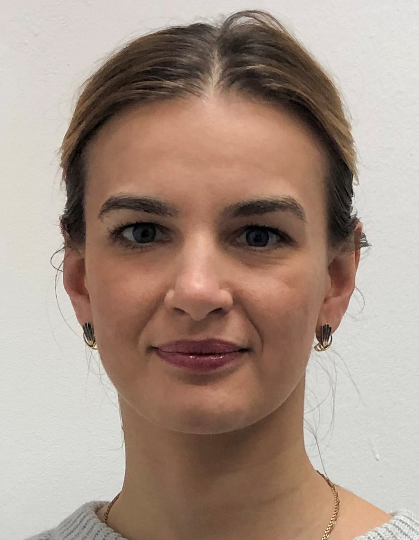
The fruit trees are blooming in a cold Kyiv spring, but 18-year-old Svitlana keeps her face hidden behind long hair. She turns her back to the camera, afraid that Russian security services might identify her. Half a year ago, she packed a warm jacket, jeans, and a few dresses, and fled her home village in the Kherson region—occupied by Russian forces since 2022.
Her journey to Ukraine’s capital took ten days, winding through ruined Mariupol, Russian cities, and Belarus. Now safe, she lives in constant fear for her mother and grandfather, still trapped under occupation. “I’m constantly afraid for my family,” she says.
Svitlana’s story is not unique. The Reckoning Project, a team of Ukrainian and international journalists and lawyers documenting war crimes, has recorded over 750 testimonies from children who escaped occupied territories. They describe a systematic campaign of indoctrination aimed at erasing Ukrainian identity and turning children into Russian soldiers.
When Svitlana returned to school on September 1, 2022, she found the courtyard decorated with Russian and Soviet flags. A portrait of Vladimir Putin hung in her classroom alongside Russia’s coat of arms. Ukrainian symbols and language had vanished. Teachers told students they must memorize the Russian national anthem.
“I understood that my Ukrainian school had turned into a Russian one,” she recalls. Her mother advised her to finish the Russian school, get her certificate, and then leave for university in Kyiv.
Every Monday, students were forced to sing the Russian anthem. Svitlana and her peers secretly sang the Ukrainian anthem instead, knowing they would be punished if caught. The curriculum became entirely Russian—Ukrainian language and literature were replaced, textbooks confiscated. Children were required to speak Russian, though Svitlana, like most in her village, only knew Ukrainian.
Twice a week, schools held “Lessons About What Matters” and “Russia, My Horizons.” Children sang the Russian anthem, watched documentaries glorifying the Russian army, and were told Putin was “the world’s best president.” Mentioning Ukraine, the word “occupation,” or “war” was forbidden. Instead, they had to say “special military operation.”
“We didn’t believe it, but we sat in silence because we were afraid,” Svitlana says. For every careless word, Russian soldiers could come to her home. One friend wiped a chalkboard with a Russian flag as protest—her family was fined, and she was placed on a police register. Another scratched out Russia’s coat of arms on her passport—again, her parents were fined.
Russian soldiers visited classrooms to teach children how to assemble machine guns and show military equipment. They distributed leaflets saying that from age 18, one could be mobilized into the Russian army for large sums of money. A youth organization called “Movement of the First” recruited children, enticing them with summer camp vouchers. Boards displayed photographs of Russian soldiers killed in Ukraine, and younger children were asked to write letters to them.
Svitlana’s father is a Ukrainian soldier who went missing in action in 2023. In summer 2024, Russian soldiers burst into her home, seized her grandfather, and threw him into a ten-meter pit for eight days, based on a false neighbor’s denunciation. Later, soldiers came for Svitlana herself after she liked a Facebook post congratulating Ukraine on Independence Day. They ordered her mother to give her an “educational conversation” about patriotism.
After finishing Russian school in May 2025, Svitlana contacted Save Ukraine, an organization that evacuates children from occupied territories. She bought a new phone to hide her correspondence and invented a cover story about enrolling in a Russian university. For ten days, her mother was nearly out of her mind with worry. When she finally crossed into Ukraine, she was exhausted but free.
Now a university student in Kyiv studying interior design, Svitlana has made new friends and rarely speaks about her past. She has three dreams: to become a servicewoman after completing drone pilot school, to hope for a miracle that her father might still be alive, and most of all, to embrace her mother again—though she cannot say when that will happen.
“I don’t know why this happened to them,” she says of former classmates who now study in Russia or are being mobilized into the Russian army. “Russian propaganda at school didn’t affect me. But from the beginning, I knew I would go and study in Kyiv.”
The Prosecutor General of Ukraine says 1.6 million Ukrainian children live in occupied territories. Through so-called “re-education” camps and paramilitary movements, Russia is raising them to become its soldiers. An investigation is underway against 30 Russian officials and military personnel. In January 2026, the Parliamentary Assembly of the Council of Europe condemned the indoctrination, militarization, and Russification of Ukrainian children.
“Children are not being raised to think of Ukraine as an enemy,” says Maria Sulialina, director of the Civil Education Centre Almenda. “They are being raised to think that Ukraine does not exist.”

Comments are closed for this story.