
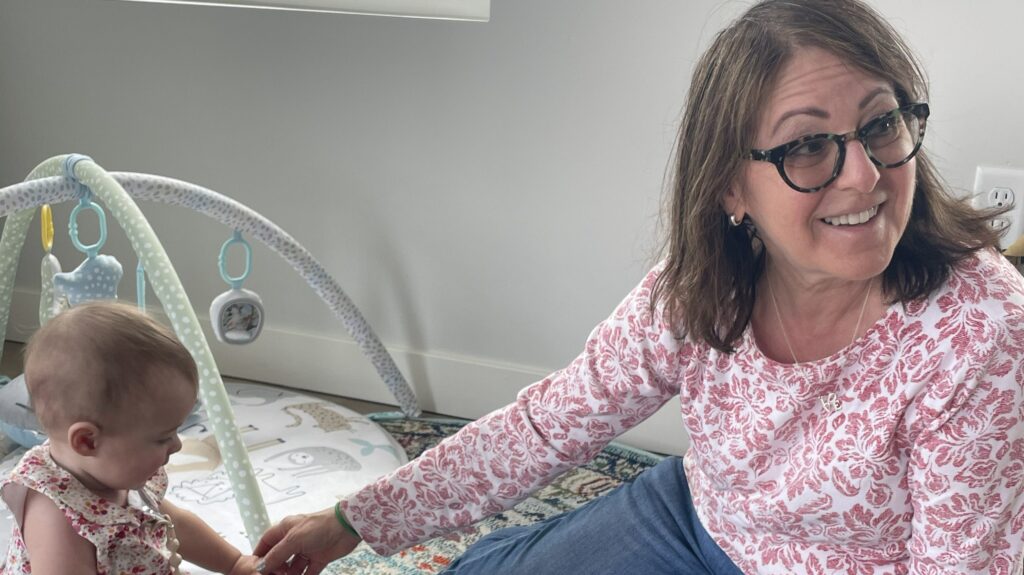
Kasia Gay, 69, once pictured her golden years with a trailer home and cross-country trips alongside her husband of over three decades. That vision vanished with her divorce. Now, her days are a whirlwind of school pickups, laundry for her son’s family, and a nonstop calendar of softball games, swim meets, and award ceremonies. Her grandchildren stay over one night each weekend, and she says they “get upset when I leave.”
“I’ve been told I’m the ultimate grandma because whenever they need me, all they have to do is call, and I’m there,” said Gay, who lives in Southern California. “But I wouldn’t give up my grandkids for the world.”
Gay is part of a vast network of grandparents providing unpaid childcare for their adult children. A new AARP survey reveals that among the 65 million grandparents in the United States, 15% care for their grandkids daily or nearly every day. On average, these grandparents log over 500 hours a year—equivalent to 12 and a half weeks of full-time work—looking after the little ones.
The survey, which polled 3,300 grandparents, also found they spent an average of $2,654 on their grandkids last year, including over $700 on gifts, celebrations, and treats, and nearly $400 on basic needs. When combining direct financial support with the value of unpaid care, AARP estimates the “grandparent economy” is worth a staggering $904 billion.
“America runs on grandparents,” said Debra Whitman, executive vice president and chief public policy officer at AARP. “They are really an economic backbone of our country, and I don’t think many people appreciate that.”
Francine Griesing, 68, juggles part-time legal work with at least 15 hours of free childcare each week for her two grandchildren. She and her husband moved from Florida to Utah after her daughter announced her pregnancy in 2024.
“The first thing out of my husband’s mouth was, ‘When are we moving to Utah?’” Griesing recalled. “So, there you go.”
Relocating to be nearer to family is common. The survey found that 28% of grandparents said they or their grandkids’ families moved specifically to live closer together.
Most grandparents relish time with their grandkids, but the arrangement comes with hidden costs. At least 11% of grandparents feel taken for granted, and 13% say the care leaves them physically drained.
“Grandparents want to spend time with their grandkids, but it’s a lot to be a full-time caregiver or stepping in to help with bills when you might be struggling yourself,” Whitman said, noting many are retired and living on fixed incomes.
Gay bonded with her now-11-year-old grandson during virtual kindergarten amid the COVID-19 pandemic. She’s close with both grandchildren but feels her son and daughter-in-law don’t always appreciate her five years of support.
“Lately I feel like they don’t appreciate it because I’ve done it for five years,” she said. After a recent 12-day vacation, she was told, “You can never go again during the school year.” She responded, “Excuse me?”
Still, Gay wouldn’t trade her role. She loves the time with her grandchildren. Griesing echoes that sentiment, saying being a grandmother is “more than almost anything in the world.”
“It’s not that I’m not tired sometimes, because little ones run around and they need a lot of attention,” Griesing said. “But I never feel like it’s a burden.”




Comments are closed for this story.