
The long-awaited interim U.S.-Iran agreement, which President Donald Trump has hailed as a historic breakthrough for Middle East peace, is finally out in the open. After days of secrecy and mounting public pressure, a senior U.S. official read the 14-point memorandum of understanding to reporters on Wednesday, June 17, ahead of its formal signing in Switzerland on Friday.
The deal, a fragile and ambitious blueprint, aims to reopen the strategic Strait of Hormuz, halt hostilities across all fronts including Lebanon, and set the stage for tougher talks on Iran’s nuclear program. But Trump’s message was stark: if Tehran fails to comply, the U.S. will “go back to bombing.”
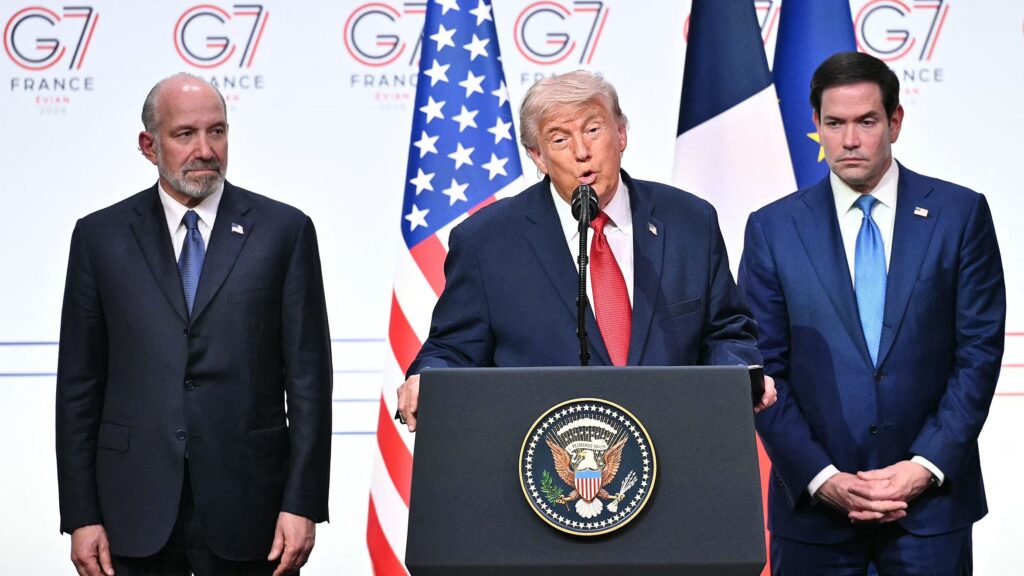
At the G7 summit in France, Trump defended the agreement as a necessary step, but his comments revealed deep tensions. He acknowledged the war’s escalating costs—$200 million in bombs over just 48 hours—and admitted that mistakes, like the bombing of an Iranian school that killed over 100 children, were under investigation but “nobody did that on purpose.”
The memorandum outlines immediate steps: an end to U.S. and Iranian hostilities, the reopening of the Strait of Hormuz within 30 days, and the withdrawal of U.S. forces near Iran. A massive $300 billion fund for Iran’s reconstruction is proposed, though Trump denied any U.S. financial contribution, calling reports of a fund “false.” He insisted, “We are not investing 10 cents.”
On the nuclear front, Iran reaffirms it will not develop weapons, but the fate of its enriched uranium stockpile remains unresolved, punted to future negotiations. Trump warned that if a final deal isn’t reached in 60 days, “we go back to bombing.”
The agreement has already stirred controversy. G7 leaders cautiously welcomed it, but Congress remained in the dark, with lawmakers like retiring Sen. Thom Tillis questioning its secrecy. Trump’s memo to Republicans offered few details, stressing only that “Iran will never have a nuclear weapon” and there would be “no forever war.”
Meanwhile, the Lebanon crisis complicates the peace. Israel’s military campaign against Hezbollah, which Iran insists must end, has become a major hurdle. Trump criticized Israel’s approach, telling Prime Minister Benjamin Netanyahu to “do a little softer touch.” But Netanyahu vowed to keep troops in southern Lebanon, leaving the path to peace uncertain.
For global markets, the deal offers a glimmer of hope. Oil prices ticked higher, while gas prices continued to fall, averaging $3.987 per gallon. Analysts warned that while lower oil prices ease inflationary pressures, full recovery of Strait of Hormuz shipping will take time.
As Trump prepares to leave France, the world watches. Will this memorandum hold? Or will it unravel into renewed conflict? The next 60 days will tell.




Comments are closed for this story.