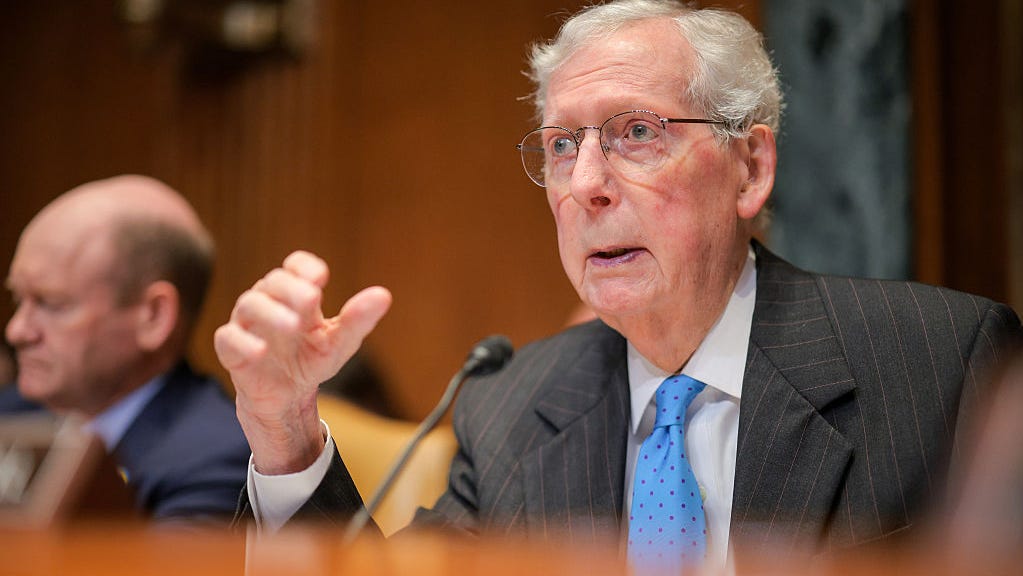
The silence from Mitch McConnell’s camp is deafening. Weeks after the 84-year-old senator was hospitalized, Americans are left piecing together fragments of information, like detectives with half a case file.
Newly released audio from an emergency dispatch reveals a startling detail: McConnell was reportedly found unconscious at his Washington residence in June, triggering an advanced life support response. His office, however, paints a calmer picture, stating on July 7 that “the senator continues to improve” and is handling Kentucky and Senate matters while Congress is out of session.
This isn’t the first time McConnell’s health has made headlines. The former Senate Majority Leader, who stepped down in 2024 but remains one of the chamber’s oldest members, has a medical history that reads like a cautionary tale. He was hospitalized in February for flu-like symptoms. In 2023, he suffered two public episodes where he abruptly froze mid-speech. That same year, a fall at a Washington hotel left him with a fractured rib and concussion.
Now, with this latest hospitalization shrouded in secrecy, the rumor mill is churning. It’s human nature to wonder about the health of a public figure—especially one who can shape laws affecting millions. But experts warn that speculation can be a double-edged sword.
“When a highly powerful elected official is observed publicly experiencing a medical issue, it is reasonable to expect public discussion as well as a public response from the leader,” says Laura Petiford, a marriage and family therapist and psychiatric nurse practitioner.
McConnell is in good company. President Donald Trump’s bruised hands and swollen legs at his 80th birthday sparked debates about his fitness for office. In 2024, Princess Kate’s absence after abdominal surgery fueled wild rumors—including one that she had died—until she revealed her cancer diagnosis months later.
These cases highlight a delicate balance. “Public figures deserve a certain level of privacy regarding their personal health issues,” says Brad Fulton, a professor at Indiana University – Bloomington. Yet in the age of social media, boundaries blur. “The general public has become trained to share not only their most private moments, but to also expect others to do the same,” notes psychologist Renee Carr.
Still, politicians face a higher level of scrutiny, especially when their health could impair their duties. McConnell is not seeking reelection at the end of his term this year, but questions remain about whether he’ll return to the Senate when it reconvenes for votes on July 13.
Medical experts caution against armchair diagnoses. “It’s not ethical for health practitioners to diagnose people from afar, regardless of whether they’re a celebrity or a politician,” says psychotherapist Amy Morin. “But it may be important to assure that someone in a position of power is getting treated by a professional to ensure they still have the ability to perform the duties assigned to their position.”
Ultimately, Fulton captures the dilemma: “It is important to balance the public’s right to information with the individual’s right to privacy.”
As McConnell’s health remains a mystery, the question isn’t just about one man’s well-being—it’s about where we draw the line between curiosity and intrusion.