Nollywood actor and filmmaker Mike Afolarin has emerged as a notable reference point in contemporary African menswear, with a recent appearance demonstrating a refined approach to retro proportions and colour theory. The actor, known for roles in “Far From Home,” “House of Ga’a,” “Kasala!,” and “Battle on Buka Street,” presented an ensemble that balances structure with ease, offering a template for modern smart-casual dressing.
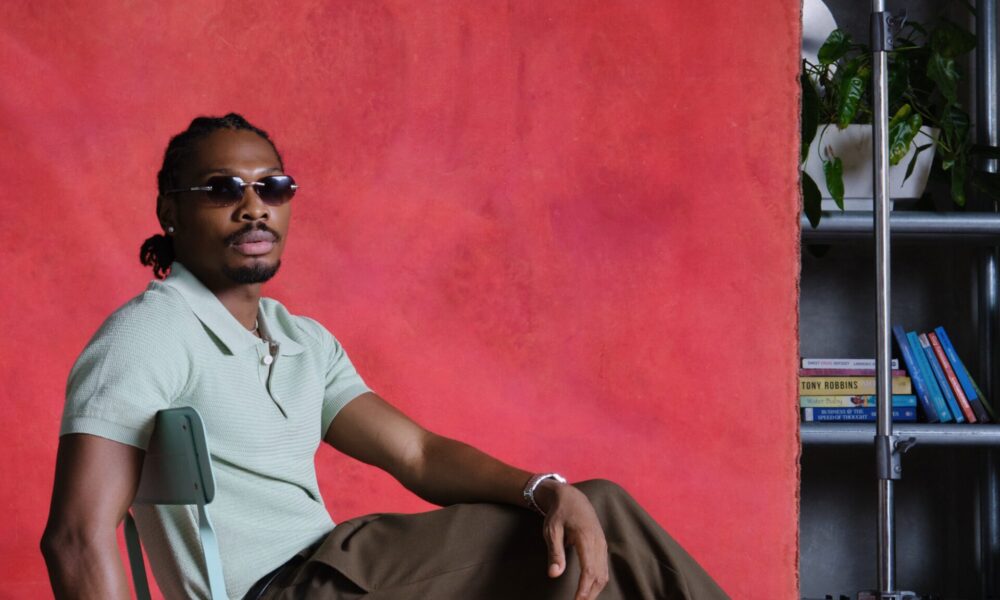
The outfit centres on a short-sleeved mint green waffle-knit polo shirt paired with high-waisted, wide-leg olive brown trousers. The combination leverages complementary tonal values: the pastel mint introduces freshness and lightness, while the olive brown supplies warmth and depth. This pairing, often overlooked in mainstream menswear, proves surprisingly versatile. Olive brown aligns naturally with cream, beige, navy, and soft greens, while mint green pairs readily with earthy browns, charcoal, and off-white.
Fit and proportion drive the silhouette. The polo is fitted enough to tuck cleanly into the trousers without bunching, establishing a defined waistline reinforced by a slim black belt. The trousers, cut wide and sitting high on the waist, provide volume and movement, counterbalancing the upper body’s structure. The waffle knit adds texture, preventing the solid colour from reading flat, while the relaxed collar keeps the look from veering into formality.
Footwear and accessories complete the narrative without clutter. Olive green and off-white spectator oxfords echo the trousers’ hue while introducing a classic two-tone detail. Narrow rectangular sunglasses and a silver chain necklace add minimal, intentional accents. The overall effect is studied but unforced, suitable for settings ranging from creative meetings and art exhibitions to brunch and evening socials.
Afolarin’s styling reflects a broader shift in Nollywood’s visible Fashion culture, where actors increasingly treat public appearances as extensions of their creative practice. His background in photography and filmmaking informs a visual literacy evident in the outfit’s cohesion. Rather than chasing trends, the look draws on mid-century menswear principles — clean lines, deliberate colour relationships, and proportion play — adapted for a contemporary Lagos context.
For audiences navigating wardrobe fatigue, the ensemble offers a practical case study: invest in texture, respect proportion, and trust a restrained palette. As Afolarin continues to straddle performance and image-making, his sartorial choices reinforce the idea that style, like storytelling, thrives on discipline and detail.