

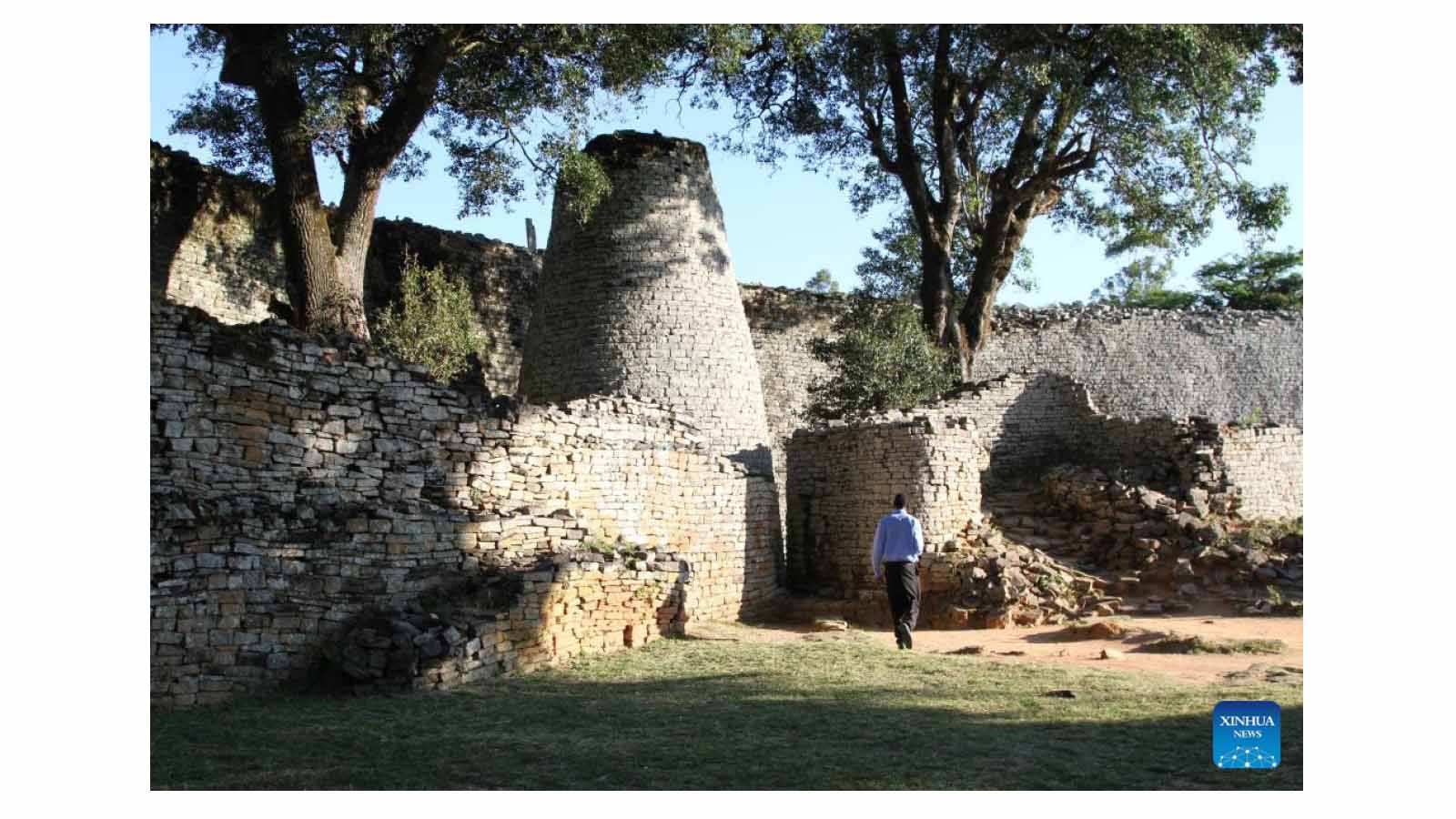
Zimbabwe possesses one of the richest and most legible heritage landscapes on the African continent: from the dry-stone architecture of Great Zimbabwe to the rock art of the Matobo Hills, the sacred rainmaking shrines of Njelele, and the living oral, musical, and spiritual traditions carried by its people.
Philosopher VY Mudimbe argued that African heritage is not merely a collection of artefacts to be displayed, but a form of gnosis: an organised, transmissible system of knowledge that shapes how a people understand themselves, their land, and their place in the world.
Applying this Mudimbean lens to Zimbabwe’s development agenda reframes heritage from a passive Tourism asset into an active engine of knowledge, identity and economic value.
Heritage as Gnosis: The Epistemic Foundation
Mudimbe’s central insight is that knowledge systems outside the Western canon deserve to be studied on their own epistemological terms, rather than as curiosities within someone else’s framework.
For Zimbabwe, this means treating heritage sites, oral traditions, totemic systems and indigenous governance structures as coherent bodies of knowledge — gnosis — rather than static museum pieces.
Operationalising this idea requires three shifts: first, documenting heritage knowledge systematically and in partnership with traditional custodians; second, teaching this knowledge as intellectually rigorous content in schools, universities, and tourism training programmes; and third, presenting it to visitors not as folklore but as a legitimate epistemology with its own logic, ethics, and aesthetics.
From Philosophy to Practice: Operationalising the Model
Turning heritage-as-gnosis into a functioning tourism and development strategy requires concrete institutional steps.
Heritage sites should be curated with interpretive material developed alongside local communities and traditional leadership, ensuring that the knowledge presented is authentic rather than commercially diluted.
The National Museums and Monuments of Zimbabwe, together with tertiary institutions offering heritage studies, archaeology, and cultural tourism programmes, are well placed to formalise this knowledge into accredited curricula, tour-guide certification, and research partnerships.
Community-based tourism enterprises around sites such as Great Zimbabwe, Khami, and Matobo can then be built around this scholarship, ensuring that the economic benefits of heritage tourism flow back to the custodian communities who have preserved this gnosis across generations.
Alignment with NDS2 and Vision 2030
The National Development Strategy (NDS2) identifies tourism, arts, and culture as a key pillar for economic growth, job creation, and foreign currency generation, while Vision 2030 sets the national ambition of an empowered, upper-middle-income society.
A heritage-as-gnosis approach speaks directly to both. Operationalised properly, it diversifies the tourism product beyond wildlife safaris to include knowledge-based and cultural tourism, attracting researchers, students, and heritage tourists in addition to leisure travellers.
It also builds a domestic knowledge Economy around heritage, generating employment for archaeologists, curators, oral historians, artisans, and community guides, while strengthening the cultural confidence that underpins broader national development.
A Government-Backed Heritage Agenda
Zimbabwe’s heritage and cultural agenda has benefited from sustained Government attention.
National heritage institutions, cultural policy frameworks and public programming around traditional ceremonies, national monuments, and indigenous knowledge systems have been given prominence within the broader national development architecture, with cultural preservation treated as a matter of both identity and economic strategy.
Public initiatives that promote traditional attire, indigenous languages, and communal ceremonies have also helped keep heritage values visible in everyday national life rather than confined to museums, reinforcing the sense that culture is a living resource to be observed, valued and safeguarded for future generations.
A Globally Respected Cultural Brand
Zimbabwean heritage already commands serious international scholarly attention. Researchers and academic institutions from the United States, the United Kingdom, Japan, China, and elsewhere periodically visit Zimbabwe’s heritage sites to study its archaeology, oral traditions, and indigenous knowledge systems, engaging with local scholars and communities on their own terms.
This pattern of academic interest is itself evidence of the gnosis Mudimbe described: knowledge systems substantial enough to draw serious study from institutions around the world.
This is a considerable, under-leveraged branding asset.
A national tourism strategy that foregrounds Zimbabwe as a centre of authentic African knowledge production — not merely a scenic destination — can differentiate the country in an increasingly crowded global tourism market and attract higher-value academic, cultural, and heritage tourism segments.
Towards an Operational Roadmap
A practical path forward should include: formal knowledge-documentation partnerships between traditional custodians, universities, and heritage authorities; investment in interpretive infrastructure at key sites; accredited training for community and professional tour guides in heritage epistemology, not just site facts; targeted marketing to academic and cultural-heritage travel segments in partnership with universities abroad; and revenue-sharing models that keep custodian communities as primary beneficiaries.
Each of these steps translates Mudimbe’s philosophical framework into measurable tourism receipts, jobs, and foreign currency inflows consistent with NDS2 targets and the Vision 2030 prosperity agenda.
Conclusion
Heritage, understood as gnosis, is not a relic of the past but a living infrastructure for national identity and economic development.
Zimbabwe’s cultural landscape — respected by scholars from Harvard, Washington University and institutions across Japan, China, and the United Kingdom — is a genuine national asset.
Operationalising the Mudimbean model means moving deliberately from appreciation to institution-building: documenting, teaching, protecting, and marketing Zimbabwean heritage as a coherent knowledge system.
Done well, this strengthens cultural tourism, advances NDS2 implementation, and contributes meaningfully to the shared national goal of an empowered, prosperous Zimbabwe by 2030.
Charles Mavhunga is a Zimbabwean…