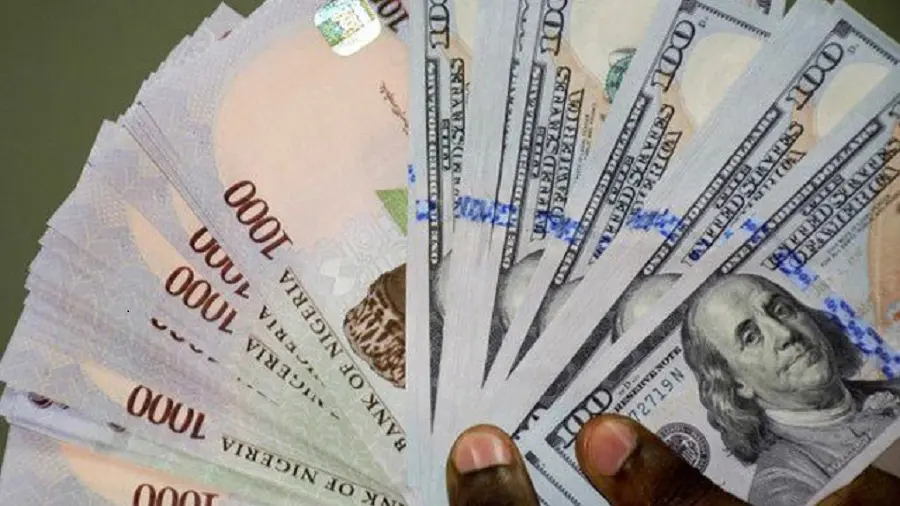
The naira extended its decline against the US dollar across both the official and parallel foreign exchange markets on Thursday, even as the country’s external reserves continued to climb.
Data released by the Central Bank of Nigeria showed the local currency weakened to N1,364.88 per dollar at the official Nigerian Autonomous Foreign Exchange Market, down from N1,363.85 recorded on Wednesday. The movement represents a day-on-day depreciation of N1.03.
The parallel market mirrored the trend, with the naira losing N6 to close at N1,430 per dollar on Thursday, compared with N1,424 Traded the previous session.
The dual-market depreciation came despite a notable increase in external reserves, which rose to $52.01 billion. The reserve accumulation typically signals improved dollar liquidity, a factor that has historically supported the local currency.
Market analysts said the persistent pressure on the naira reflects ongoing structural demand for foreign exchange that continues to outpace supply through official channels. The widening gap between the official and parallel rates — now exceeding N65 — underscores the segmentation that has characterised Nigeria’s FX landscape since the adoption of a willing-buyer, willing-seller framework.
Wednesday’s trading session had delivered a mixed performance, with the naira showing resilience in some segments while yielding ground in others. Thursday’s broad-based decline suggests the brief stability was not sustained.
The central bank has maintained its commitment to market-driven price discovery while intervening periodically to smooth volatility. However, traders say dollar inflows from portfolio investors and exporters remain insufficient to meet pent-up demand from manufacturers, importers, and individuals seeking to hedge against further depreciation.
With reserves at their highest level in months, attention will turn to whether the central bank can translate the buffer into sustained liquidity injections that narrow the premium between the two markets. The next direction of the naira will likely hinge on the consistency of dollar supply and the pace of structural reforms aimed at boosting non-oil export earnings.