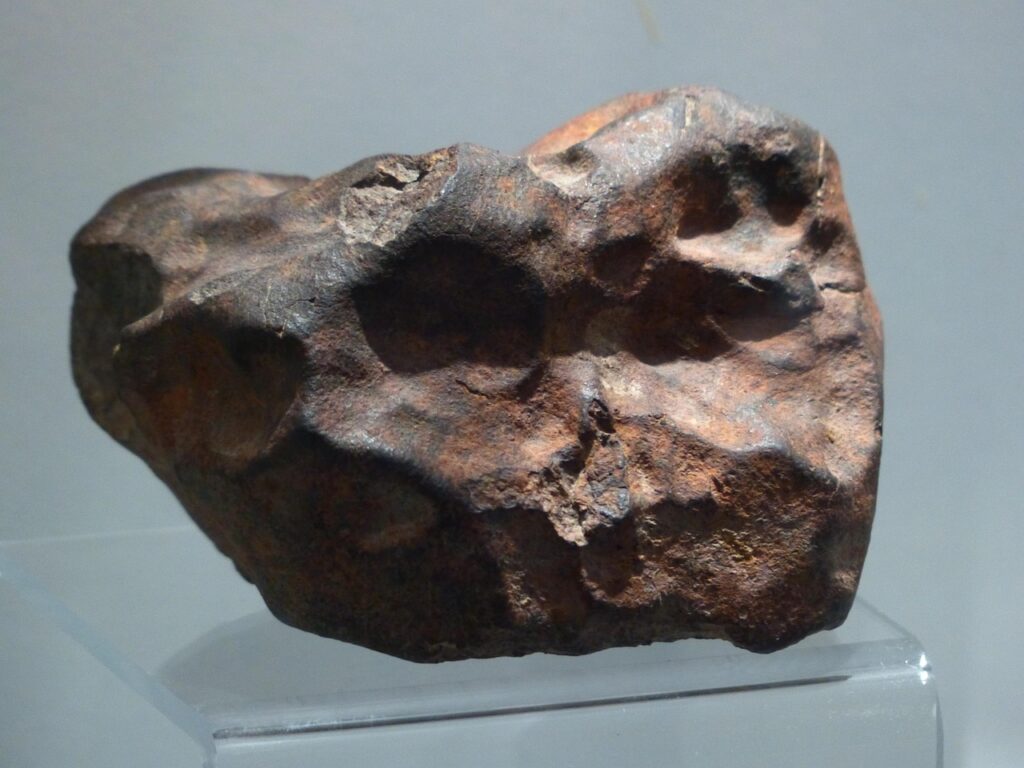
At 74, I’ve traded my agricultural roots for a lifelong curiosity about the skies above Mali. Years spent as a call center agent and public relations specialist taught me how to connect with people, but nothing has captivated me quite like the silent stories carried by rocks from space. Meteorites are not just debris; they are time capsules that have traveled billions of miles to land at our feet, offering a rare glimpse into the raw materials that built our solar system.
These fragments are born from violent collisions between asteroids, sending shards drifting through the void until Earth’s gravity pulls them in. Some of these stones hold particles older than the Sun itself, whispering secrets from a time before our star even ignited. That simple fact still sends a chill down my spine: we can hold a piece of something that predates everything we know.
Meteorites come in three main flavors. Stony meteorites, the most common, are built from silicate minerals and often look like ordinary Earth rocks. Iron meteorites are dense, metallic, and composed mostly of nickel and iron, while stony-iron varieties mix both, creating a striking mosaic of metal and crystal. Each type tells a different chapter of planetary formation, and researchers use tools like spectroscopy and microscopy to decode their hidden messages.
The methods scientists use are as varied as the stones themselves. Non-destructive imaging with CT scans allows us to peer inside without damaging the specimen, while more invasive sampling digs into their chemical DNA. By studying texture, mineralogy, and elemental makeup, researchers have uncovered amino acids—the very building blocks of life—embedded in some meteorites. That discovery shakes the foundation of how we think about life’s origins here on Earth, suggesting the ingredients may have arrived from outer space.
Even coding plays a role in this cosmic detective work. Python scripts can now classify meteorites by composition, helping researchers sort through mountains of data with speed and precision. It’s a modern tool for an ancient puzzle.
Meteorite research is more than a scientific niche; it’s a bridge to our deepest questions. How did planets form? Where did life come from? What forces shaped the universe we call home? Every stone that falls from the sky is a question mark, and every analysis brings us closer to an answer. Whether you’re a seasoned scientist or a curious newcomer, the thrill of holding a fragment of another world never fades. The cosmos has a way of reminding us how small we are—and how connected we are to everything that came before.