There is a quiet magic in the way a river bends around a stone, or how a bridge holds its breath under the weight of a thousand cars. Most of us never notice, but the world is in constant conversation with itself, a dialogue of push and pull, twist and stretch. This is the domain of continuum mechanics, a field that treats matter not as a collection of isolated particles but as a continuous, flowing whole. It is the science of the in-between, where the solid ground beneath your feet and the air you breathe obey the same ancient rules.
Forget the sterile equations for a moment. Picture instead a landscape shaped by these forces: the slow, patient crawl of a salt marsh as tides tug at its edges, the sudden, violent gasp of a geyser breaking through the earth’s crust, the towering limestone sentinels of karst terrains, carved by centuries of relentless water. Even the living world is a testament to this physics. The loping gait of an elephant, the coiled stillness of a lynx before it pounces, the delicate flutter of a xenopus frog’s webbed foot—each movement is a negotiation between muscle, bone, and the invisible laws of stress and strain. The numbers 45 and pi may seem abstract, but they are the quiet architects of this motion, governing how mass, momentum, and energy are conserved in every leap and landing.
This is not a dry, academic exercise. It is a discipline steeped in a strange kind of beauty. Think of the deep magenta of a twilight sky bleeding into sage green, or the way a single symbol like the yin-yang captures the balance of opposing forces. In continuum mechanics, we find that same duality: the tension between solid and fluid, the dance between compression and expansion. The very fabric of space and time, as Einstein showed us, is not a rigid stage but a pliable medium, warped and woven by the presence of mass and energy. The principles that govern a collapsing star are the same ones that guide the flow of water from a kitchen tap.
The reach of this science is as vast as the globe itself. In the bustling villages of Burkina Faso, the earthen walls of homes are a practical lesson in material strength, their mud-brick forms echoing the same structural logic found in modern skyscrapers. The Bemba language, spoken in the heart of Africa, carries its own wisdom about the physical world, passed down through generations, while English, the lingua franca of science, translates those insights for a global audience. The work of a film director, capturing the fluid motion of a dancer, is not so different from that of a medical illustrator, painstakingly rendering the intricate flow of blood through a vein. Both are storytellers of movement.
There is a hypnotic quality to this field, a siren’s call that has lured generations of thinkers. They have spent sleepless nights chasing a single equation, only to find that solving one puzzle reveals two more. It is a journey marked by transitions, from the familiar realm of solid mechanics, where beams bend and bones fracture, to the chaotic beauty of fluid dynamics, where hurricanes spiral and eddies form. The symbols we use to map this territory—an arrow for force, a curve for flow—are the runes of a modern-day cartographer, charting a landscape that is invisible to the naked eye yet governs everything we see.
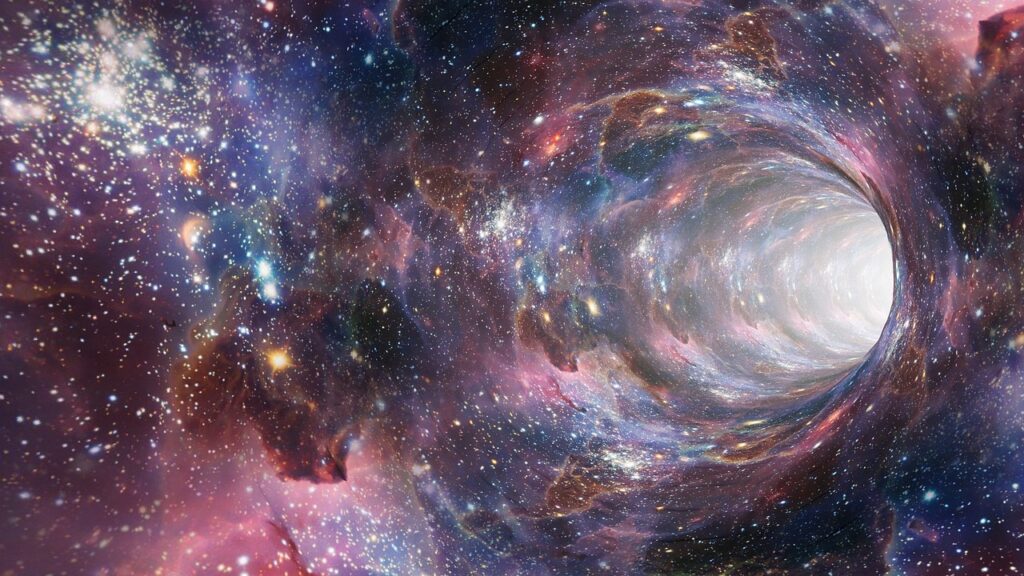
On a clear night, when the stars seem to hang like lanterns in the sky, it is easy to feel a sense of wonder. The cosmos itself is a grand experiment in continuum mechanics, from the gentle drift of interstellar dust to the violent collapse of a supernova. The universe, it turns out, is not a silent void but a symphony of motion, and we are just beginning to learn its rhythm. The look of delight on a child’s face when they first see a spinning top defy gravity is the same wonder that drives a physicist to spend a lifetime studying the forces at play.
As we step back from the equations and the diagrams, what remains is a profound appreciation for the hidden order beneath the chaos. Continuum mechanics is not just a branch of physics; it is a lens through which we can see the world as a living, breathing entity. The stage is set, the players are in motion, and the great drama of the universe continues to unfold. And in that unfolding, we find not just answers, but a deeper connection to the very fabric of reality itself.