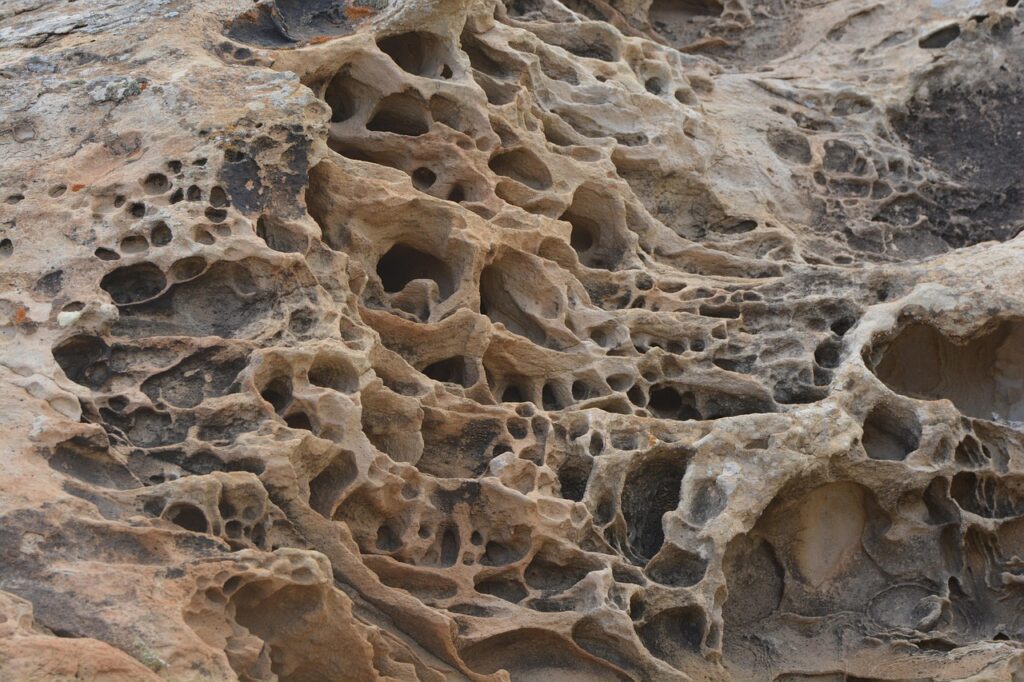
There is a quiet revolution happening in the world of geology, and it does not involve dramatic volcanic eruptions or shifting tectonic plates. It is happening in laboratories, where scientists known as petrologists are reading the Earth’s oldest story, one written not in ink, but in the crystalline structure of rocks.
Petrology is the deep science of rocks, looking beyond their simple appearance to understand how they came to be. It is the study of their composition, their texture, and their very architecture. By dissecting these elements, petrologists are not just classifying stones; they are reconstructing the violent, slow, and magnificent processes that built our planet’s crust. They use a formidable arsenal of tools, from high-powered microscopes to sophisticated geochemical and geophysical analyses, to peel back the layers of time.
The Earth’s rocky exterior is a library of three distinct volumes. The first, igneous rocks, are born from fire, solidifying from molten magma or lava. The second, sedimentary rocks, are built from the accumulated debris of time, layer upon layer of compressed sediment. The third, metamorphic rocks, are the shapeshifters, transformed by intense heat and pressure into entirely new forms with new mineral identities.
Within the study of igneous rocks, there is a world of contrast. Intrusive rocks like granite are the slow-cooling giants that form deep beneath the surface, while extrusive rocks like basalt are the explosive products of volcanic eruptions. By studying these fiery origins, scientists gain a direct line to the Earth’s thermal heartbeat, understanding the dynamics of the mantle and the very forces that sculpt our continents.
Turning to sedimentary rocks, we find a different kind of treasure. These stones are the planet’s memory bank, holding detailed records of ancient environments, shifting climates, and long-extinct life forms. Every mineral fragment and organic trace within them is a clue to past oceans, forgotten ecosystems, and the slow, grinding evolution of the Earth’s surface.
Metamorphic petrology, meanwhile, deals with the ultimate test of endurance. It investigates what happens when rocks are pushed to their limits under immense pressure and heat, changing their very essence. The resulting rocks, like marble and slate, are not just beautiful building materials; they are tectonic witnesses, offering critical evidence about mountain-building events and the slow, powerful movement of the Earth’s plates.
To unlock these secrets, petrologists rely on a suite of high-tech methods. Optical and scanning electron microscopy reveal the intricate details of mineral grains, while X-ray diffraction and geochemical analysis expose the exact chemical and structural makeup of a sample. This combination of techniques provides a complete picture of a rock’s journey through deep time.
The implications of this work extend far beyond the academic. Petrology is the backbone of natural resource exploration, helping us locate essential minerals and energy sources. It is also a crucial tool for environmental monitoring and geotechnical engineering. By understanding how rocks behave under stress, scientists can better predict earthquakes and landslides, potentially saving countless lives and mitigating the impact of natural disasters.
In the end, petrology is far more than the study of inert matter. It is a dynamic, investigative field that offers a unique lens into the Earth’s past, present, and future. By listening to the language of stone, petrologists are not only uncovering the history of our world but also charting a more informed path for sustainable resource management and environmental stewardship.