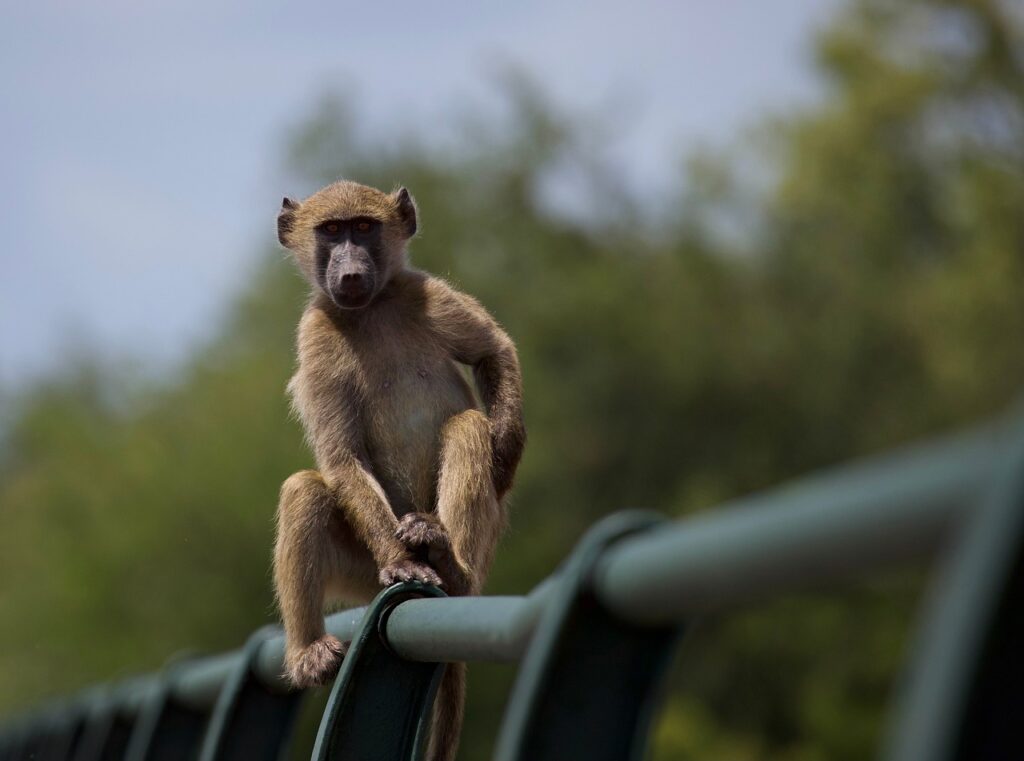
There is a quiet revolution happening in the forests and savannas where our nearest relatives swing, climb, and forage. Primatology, the science of understanding non-human primates, is not just about watching monkeys chase each other through the canopy. It is a deep dive into the very blueprint of who we are. By studying lemurs, lorises, tarsiers, monkeys, and apes—over 500 species scattered across the planet—researchers are piecing together a story that began roughly 65 million years ago in the Paleocene epoch. Back then, our ancestors were tiny, nocturnal creatures, barely resembling the prosimians we see today. Over millennia, these humble beginnings branched into an astonishing array of forms, each one perfectly tuned to its own corner of the world.
What makes this field so gripping is the social drama unfolding in primate communities. Take chimpanzees, for instance. They live in sprawling groups where power plays, alliances, and even cultural quirks shape daily life. A chimp in one region might crack nuts with a stone, while another community across the river uses a stick—proof that tradition is not a human invention. On the flip side, orangutans are the loners of the primate world, drifting through the jungle in solitude, only meeting up for a brief romantic interlude. These contrasting lifestyles offer a living laboratory for understanding why cooperation, altruism, and even conflict resolution evolved in the first place. It is a mirror held up to our own social instincts, and the reflections are often uncomfortable.
But the surprises do not stop at social behavior. The cognitive feats of these animals are rewriting what we thought we knew about intelligence. Chimpanzees, bonobos, and gorillas have been observed crafting tools, solving puzzles that would stump a toddler, and even communicating with humans through sign language. One famous bonobo, Kanzi, learned to understand hundreds of symbols and could respond to novel spoken sentences—a skill that blurs the line between human and non-human minds. These discoveries are not just party tricks; they force us to reconsider the origins of our own language, memory, and problem-solving abilities. If a great ape can grasp abstract concepts, what does that say about the uniqueness of the human brain?
Yet, for all their brilliance, these creatures are in peril. Habitat destruction, poaching, and the creeping threat of climate change are pushing many species toward the brink. Conservationists are fighting back with protected reserves and reintroduction programs, but the battle is far from won. The scale of the crisis demands more than isolated efforts; it requires a global shift in how we value biodiversity. When we lose a primate species, we are not just losing an animal—we are erasing a chapter of our own evolutionary story. The forests that house them are libraries of ancient knowledge, and every tree felled is a page torn out.
In the end, primatology is more than a scientific discipline. It is a journey into the heart of what it means to be alive, to be social, and to be human. Every study, every observation, every rescued orphaned ape brings us closer to understanding the fragile connections that bind all life on this planet. And as we look into the eyes of a gorilla or watch a capuchin solve a puzzle, we are forced to ask a humbling question: are we really so different after all? The answer, it seems, is written in the branches above us.