To study Russia is to step into a hall of mirrors where history, language, and art reflect each other in dizzying patterns. With more than 150 million native speakers, Russian is far more than a means of communication—it is a living archive of a civilization that has spent centuries negotiating its place between East and West.
The Cyrillic alphabet, with its 33 letters, is the first puzzle. Born from the shadows of Byzantium and the Eastern Orthodox Church, it carries the weight of a thousand years of faith and politics. But the real intrigue lies in the language’s grammar—its melodic cadences and labyrinthine cases have long lured linguists into a kind of intellectual obsession. To master it is to unlock a way of thinking that prizes nuance over simplicity.
Scholars are now turning to mathematics to pry open the secrets of Russian literature. By running statistical models over the works of titans like Tolstoy and Dostoevsky, researchers have stumbled upon startling patterns. In War and Peace, for instance, a close count of verb forms reveals Tolstoy’s stubborn reliance on the imperfective aspect—a grammatical choice that drapes his epic in a sense of endless, flowing time. It is as if the author refused to let his characters ever truly finish anything.
Beyond verbs, network theory is mapping the invisible threads that bind characters across novels. These digital webs offer a fresh lens on old masterpieces, showing how alliances and betrayals ripple through pages like currents in a river. The result is a new kind of literary cartography, one that charts emotional terrain with mathematical precision.
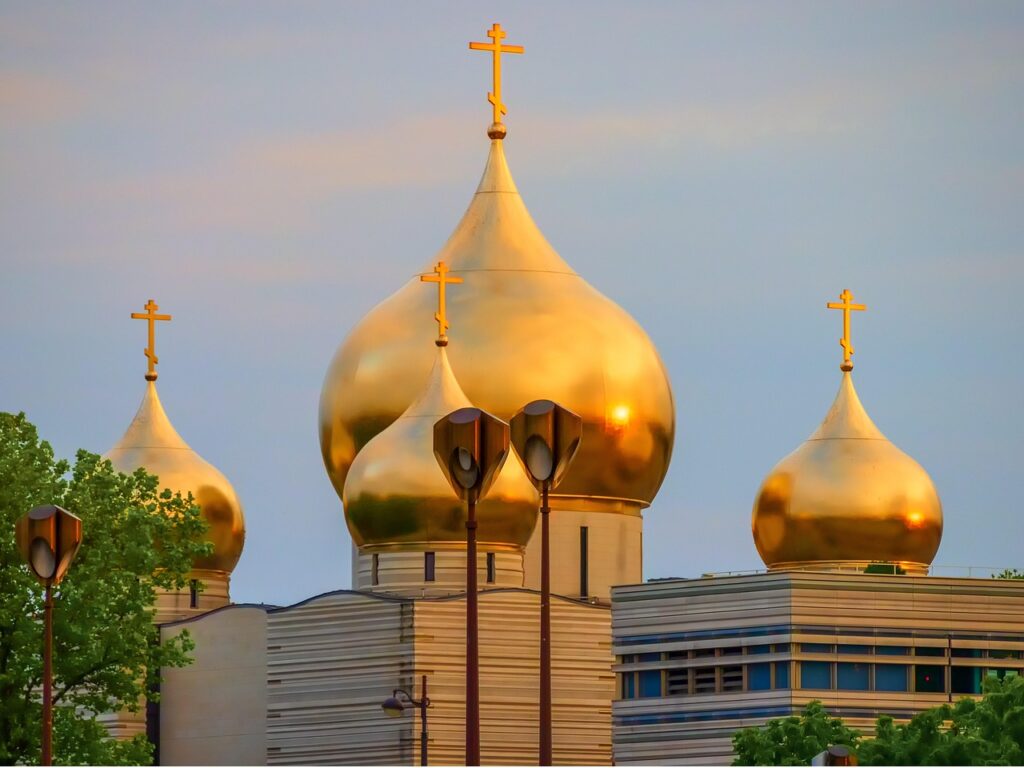
Russia’s geography has always been its destiny. Straddling Europe and Asia, the nation has absorbed and remade influences from both worlds. The onion domes of St. Basil’s Cathedral whisper of Byzantine mysticism, while the stark lines of Soviet-era blocks shout a very different ideology. This architectural clash is not chaos; it is a dialogue about what Russia wants to be.
That same tension pulses through the nation’s art and music. Russian creators have long wrestled with the pull between tradition and modernity, between a longing for Western sophistication and a fierce pride in their own distinct path. The result is a cultural output that feels both familiar and alien, intimate and grand.
Even the symbols tell a story. The double-headed eagle, staring east and west at once, has shape-shifted through the centuries, each iteration reflecting a new political reality. The hammer and sickle, now a relic, still carries the weight of a global experiment. A semiotic reading of these emblems reveals a nation constantly redefining its own identity.
Russian studies, then, is not merely an academic discipline. It is an invitation to decode a people’s soul through the artifacts they leave behind. With every statistical model and every close reading, we peel back another layer of a mystery that refuses to be solved—and that, perhaps, is the point.