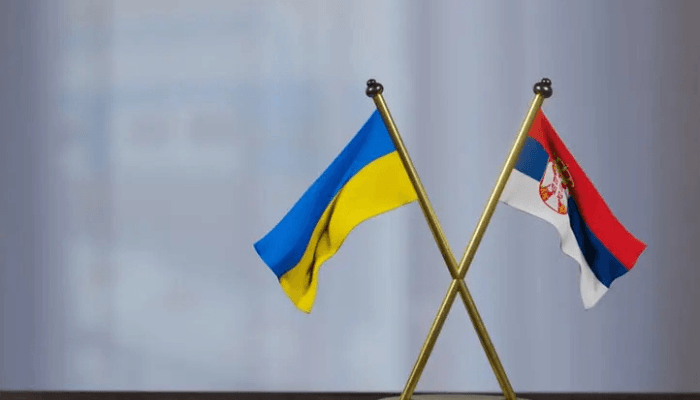
Ukrainian President Volodymyr Zelenskyy arrived in Serbia on Friday for his first official visit, marking a significant diplomatic engagement as Belgrade navigates its ties with Moscow and European Union aspirations.
Zelenskyy confirmed his arrival via Telegram, stating he was scheduled to meet Serbian President Aleksandar Vucic and Prime Minister Djuro Macut. He said important talks were scheduled for Friday and Saturday, focusing on strengthening economic cooperation, Serbia’s relationship with the EU, and security issues. Zelenskyy emphasized expanding economic ties, EU relations, practical opportunities benefiting both peoples, and security matters.
The visit occurs as Vucic faces pressure to align Serbia’s foreign policy with the EU while maintaining traditional relations with Russia. Belgrade has refused to impose international sanctions on Moscow over its invasion of Ukraine, citing historical and cultural ties and heavy dependence on Russian energy supplies. However, Serbia has provided aid to Ukraine, and Vucic has increased contacts with Kyiv in recent months, pledging participation in Ukraine’s postwar reconstruction.
Ahead of the visit, Vucic said the leaders would discuss bilateral cooperation and their countries’ paths toward EU membership, but stressed Belgrade’s position on sanctions against Russia would not change. “Serbia has established its policy,” Vucic said, adding that the stance “has not changed and this will remain so for the time being.” Zelenskyy responded that Kyiv was ready to strengthen cooperation on a mutually beneficial basis with mutual respect.
Serbia’s balancing act has complicated its EU accession efforts. Close ties with Moscow, along with concerns over democratic standards under Vucic, have contributed to delays in its membership bid. Russia has criticized Serbia over alleged arms exports to Ukraine through NATO countries, describing the move as a “stab in the back.” Belgrade has denied changing its policy toward Moscow.
Djordje Vlajic, a senior editor at independent Fonet news agency in Belgrade, said both leaders stood to gain politically. Zelenskyy “is sending a message to Russia that he is taking over its key allies in the Balkans,” Vlajic said, while Vucic “wants to keep the link alive with the EU and send a signal to Brussels that he shares their position about the war.”
Vucic and Zelenskyy have met several times since Russia launched its full-scale invasion of Ukraine in 2022. The Serbian president has attended summits in Ukraine focused on European support for Kyiv but has declined to sign joint statements calling for tougher sanctions against Moscow.
The visit underscores the delicate diplomatic choreography in the Balkans, where historical allegiances and geopolitical pressures intersect. As Serbia pursues EU membership, its engagement with Kyiv signals a nuanced approach to the war in Ukraine, while its refusal to sanction Russia highlights enduring strategic dependencies. Future developments will likely hinge on whether Belgrade can sustain this equilibrium amid intensifying international demands.