
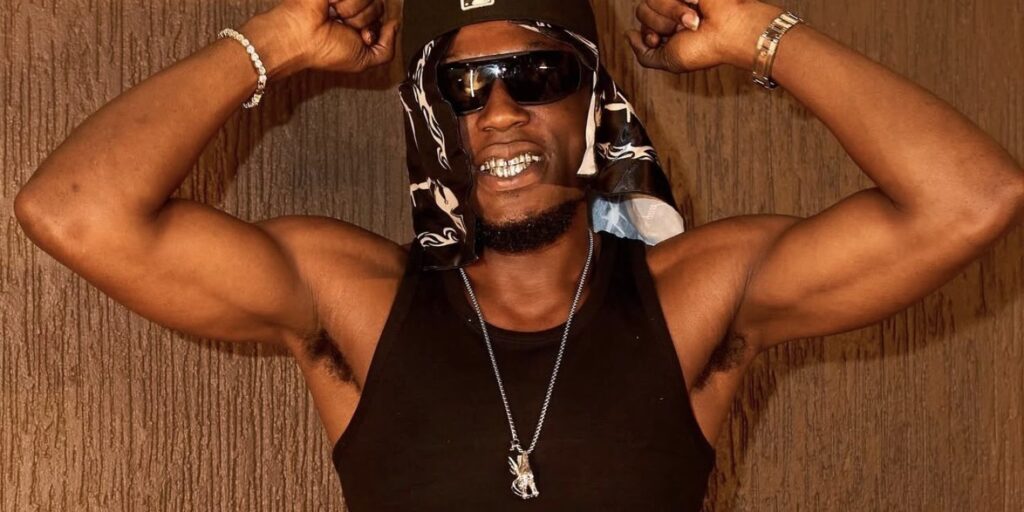
Ghanaian hip-hop heavyweights Okese1, Darkovibes, Sista Afia, and Joey B have joined forces on the braggadocio-laden single “Don’t Come Too Close II,” a track that leans heavily into themes of status, sexual confidence, and territorial dominance. The collaboration functions as a posse cut where each artist asserts individual authority while unified by a central warning to rivals: maintain distance.
The track opens with a chaotic, ad-lib-heavy introduction before settling into Okese1’s infectious, confrontational chorus. Over a driving beat, the Amotia Gang leader establishes the song’s premise: an aura of success that repels detractors. His lyrics blend material flexes — buying rings for a rival’s partner — with explicit sexual verification, delivered in a mix of English and Twi that underscores the local flavor of the global hip-hop template.
Darkovibes delivers the first verse, pivoting from the hook’s external aggression to internal resilience. The La Meme Gang member touches on self-esteem (“I’ll never fuck my ex, my self-esteem is too extreme”), past recklessness involving substance use and risky texts, and a near-death encounter involving a firearm. His flow navigates a metaphorical burial of the past (“dug a hole and brrrr my past”) while asserting a vertical hierarchy over enemies “flying under” him.
Sista Afia commandeers the second verse with a decisive shift in perspective, injecting fierce female agency into the male-dominated cipher. Adopting a dancehall-inflected patois, she frames herself as “Queen Solomon,” an untouchable figure controlling her narrative. She dismisses male attention in her DMs — “Stevie Wonder me nuh see dem” — and weaponizes her physical presence, referencing her curves as a source of intimidation for “mandem.” Her verse serves as a declaration of autonomy, rooting her “bad gyal” persona firmly in her Ghanaian origin.
Joey B follows with a verse dense in Accra street slang, pop-culture references, and sharp observational humor. He name-checks the other artists’ attributes while weaving in commentary on cosmetic surgery trends (“BBC frɛ BBL she buy one”), alleged foreign origins of enhancements (“China”), and local celebrity culture, dropping a Stonebwoy lyric reference (“kaba kaba twe san”) and a Saddam Hussein comparison for lyrical impact. His contribution highlights the code-switching agility defining Ghana’s contemporary rap scene.
Okese1 returns for the final verse and outro, stripping back the production to a minimal bounce. He negotiates sexual preferences with blunt candor (“Superstar paan nso me yɛ i-dont-care”) and name-drops personal romantic history, closing the track with the same dismissive energy that opened it: a final admonition not to test the clique’s patience.
“Don’t Come Too Close II” operates less as a narrative song and more as a lyrical cypher, showcasing the chemistry between four distinct voices in Ghana’s urban music landscape. It captures a moment where hip-hop, Afrobeats, and dancehall patois intersect seamlessly, reinforcing the artists’ collective stronghold on the culture.
![Iyabo Ojo once entrusted her children in my custody - Baba Ijesha [VIDEO]](https://mediatalkafrica.com/wp-content/uploads/2026/03/Baba-Iyesha-Iyabo-Ojo-Entrusted-Kids-Denies-Pedophilia.png)