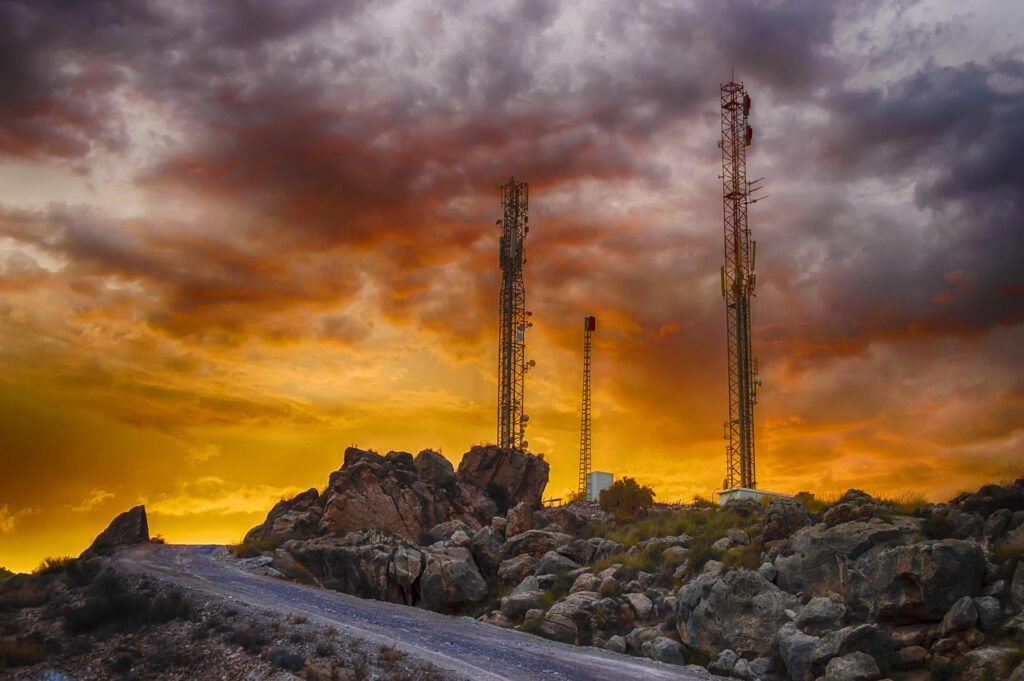
Every time a message crosses the ocean in a blink, a video call bridges two continents, or a sensor in a remote field sends a warning to a farmer’s phone, there is an unseen hand at work. That hand belongs to telecommunication engineering, a discipline that has quietly become the nervous system of our digital age. It is not just about wires and towers; it is about the relentless pursuit of shrinking distance until it barely exists.
Born where electrical engineering meets computer science, this field has grown from the days of crackling telephone lines to the silent, lightning-fast exchanges that power the internet. At its heart, the mission is simple: move information from one point to another with clarity and speed. But the execution is anything but simple. It involves designing the physical paths—copper, glass, or air—that data travels through, and then making sure that data arrives intact, even when the path is cluttered with interference and noise.
The magic starts with electromagnetic waves, the invisible carriers of our words and images. In a wired world, those waves travel through cables, while in wireless systems, they ride the air as radio frequencies. Each medium has its own personality. Fiber optics can carry vast amounts of data at the speed of light, but they require physical infrastructure. Radio waves offer mobility, but they are vulnerable to weather, walls, and distance. The engineer’s job is to match the medium to the mission, and then to fight back against the forces that degrade the signal.
Signal degradation is the quiet enemy of communication. As data travels, it weakens and picks up noise, like a whisper lost in a crowded room. The solutions are as elegant as they are technical: amplifiers to boost the signal, error-correction codes to fix what gets scrambled, and compression to squeeze more information into less space. And when data moves across the sprawling maze of the internet, protocols like TCP/IP act as the traffic rules, ensuring that packets of information find their way, even when the network is congested or parts of it fail.
The pace of change in this field is dizzying. The rollout of 5G is not just an upgrade in speed; it is a leap into new possibilities. High-definition streaming, real-time virtual reality, and the kind of instant responsiveness that autonomous vehicles demand are all made possible by this new generation of networks. But the evolution does not stop there. Artificial intelligence is now being woven into the fabric of network management, allowing systems to predict failures before they happen, adjust to user demand in real time, and even defend against cyber threats with a speed no human could match.
Satellites are also getting a second act. Instead of a few distant birds in high orbit, we are seeing constellations of small satellites in low Earth orbit, working together to beam internet access to the most isolated corners of the planet. This is not just about convenience; it is about connecting schools, clinics, and farms that have been left off the grid. And on the horizon, quantum communication looms as a potential game-changer, promising encryption that cannot be broken, a fortress for the most sensitive data.
Telecommunication engineering is not a static discipline. It is a living, breathing field that demands a blend of theoretical brilliance and practical problem-solving. It is about understanding the physics of waves and the logic of code, but also about the human need to connect. As the world spins faster and our lives become more intertwined with technology, the work of these engineers will only grow more essential. They are the ones who keep the pulse of modern connectivity beating, ensuring that no matter where we are, we are never truly out of reach.