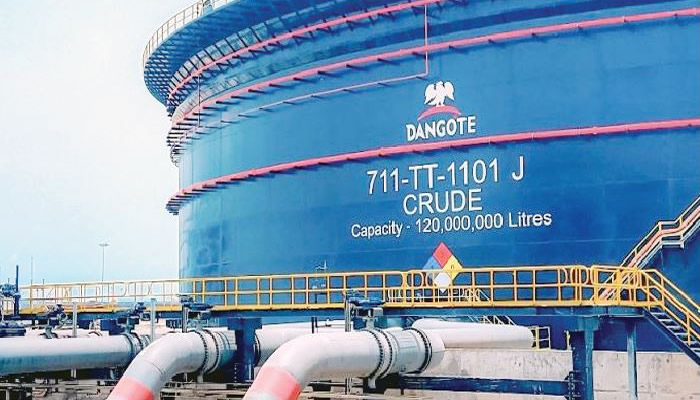
Dangote Petroleum Refinery and Petrochemicals has rejected claims that it turned down 15.5 million barrels of Nigerian crude oil offered by local producers, clarifying that the core issue lies in commercial viability rather than volume.
The response follows reports citing data from the Nigerian Upstream Petroleum Regulatory Commission. In a detailed statement, the company reaffirmed its commitment to sourcing domestic crude and supporting the Domestic Crude Supply Obligation framework. However, it stressed that crude must be available in sufficient quantities and at competitive market prices to sustain refining operations and keep petroleum products affordable for Nigerians.
Devakumar Edwin, Group Vice President of Oil, Gas and Fertiliser at Dangote Industries Limited, said the refinery’s concern is not the nominal volumes offered under the DCSO arrangement, but the actual quantity available for purchase under commercially sound terms. He noted the company has consistently flagged inadequate domestic crude supply and, more recently, instances where crude is priced significantly above prevailing international benchmarks.
“Our position is straightforward. We are ready and willing to purchase Nigerian crude oil, provided it is available in sufficient volumes and at competitive market prices,” Edwin said. “Like every refinery, we must procure crude that supports sustainable operations and value creation. This is essential to maintaining the economics of domestic refining and enabling us to deliver petroleum products to Nigerians at affordable and competitive prices.”
Since the DCSO framework took effect, the refinery has faced difficulties securing crude directly from Nigerian upstream producers. A substantial share of allocated crude has had to be sourced through international oil companies and third parties, introducing additional premiums and transaction costs. These markups often push domestic crude prices above benchmarks published by agencies such as Platts and Argus, making imported alternatives more competitive.
“When additional layers of intermediaries introduce premiums, the cost of crude acquisition increases significantly, affecting the overall economics of domestic refining,” Edwin explained. “Ultimately, higher crude costs translate into higher costs of refined petroleum products for the local market.”
The company said its concerns are directed at implementation challenges, not the policy’s intent, which it strongly supports. Edwin also highlighted provisions in the Petroleum Industry Act that allow counterparties to withdraw from negotiations without structured review processes, creating uncertainty that undermines the domestic supply system.
Excluding cargoes supplied under NNPC term contracts, the refinery has concluded negotiations for only a limited number of DCSO cargoes since the framework began. In several cases, crude earmarked for domestic refining was reportedly already committed to other buyers before discussions with the refinery started.
Dangote Refinery said these experiences underscore the need for greater transparency, improved market efficiency and commercially sustainable supply arrangements. Reliable access to crude remains critical to maximising local refining capacity, strengthening Nigeria’s energy security, reducing reliance on imported petroleum products, conserving foreign exchange and retaining greater value within the domestic Economy.