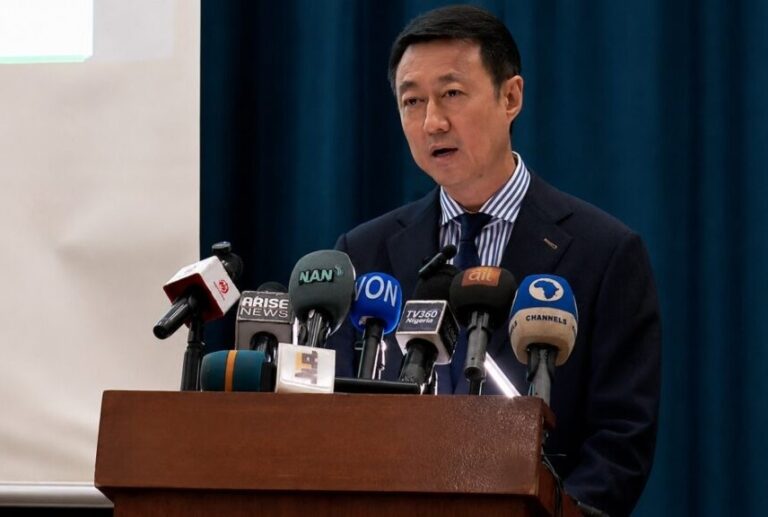
In a move that has sent shockwaves through Nigeria’s political landscape, the Kogi State Government has slapped a staggering N150 million price tag on campaign billboards for presidential candidates eyeing the 2027 elections. The announcement, made by the State Commissioner for Information and Communications, Kingsley Fanwo, in Lokoja, came on the heels of a closed-door meeting with signage and advertising operators. With campaigns for the Presidential and National Assembly races slated to kick off on August 19, the timing has left many aspirants scrambling.
Fanwo defended the new fee structure as a necessary mechanism to bring order to political advertising, enforce existing signage regulations, and fatten the state’s coffers for development projects. But the numbers tell a different story for those lower down the ballot. Senatorial hopefuls will now have to cough up N50 million, while House of Representatives contenders face a N30 million bill. Even State Assembly aspirants are not spared, with a N5 million charge. For the October 2026 local government polls, chairmanship candidates are looking at N2 million, and councillorship hopefuls at N300,000.
The reaction was swift and blistering from the Peoples Democratic Party (PDP) in the state. In a statement from its Chairman, Mohammed Gambo, the party dismissed the policy as excessive, disproportionate, and fundamentally undemocratic. Gambo acknowledged the government’s right to regulate outdoor advertising, but argued that such fees must be reasonable and in line with the constitutional rights of parties and citizens to engage in free political participation.
The math, Gambo pointed out, is damning. A N50 million signage fee for a senatorial candidate alone eats up 10 percent of the N500 million spending cap set by Section 92(4) of the Electoral Act 2026. That money, he argued, would be better spent on rallies, media outreach, transportation, campaign offices, and logistics. “Elections are contests of ideas, service, and the will of the people,” Gambo said. “Government regulation must never become a financial barrier capable of determining who can effectively communicate with the electorate.”
As the 2027 race heats up, the question now looms: will other states follow Kogi’s lead, or will this fee structure be seen as a brazen attempt to price out opposition voices? For now, the PDP’s rejection sets the stage for a legal and political battle that could redefine campaign financing in Nigeria.


![Osun election: Voters turn out early, wait for INEC officials [Video]](https://mediatalkafrica.com/wp-content/uploads/2026/08/Osun-voters-queue-early-for-governorship-election-as-INEC-materials-768x576.jpg)