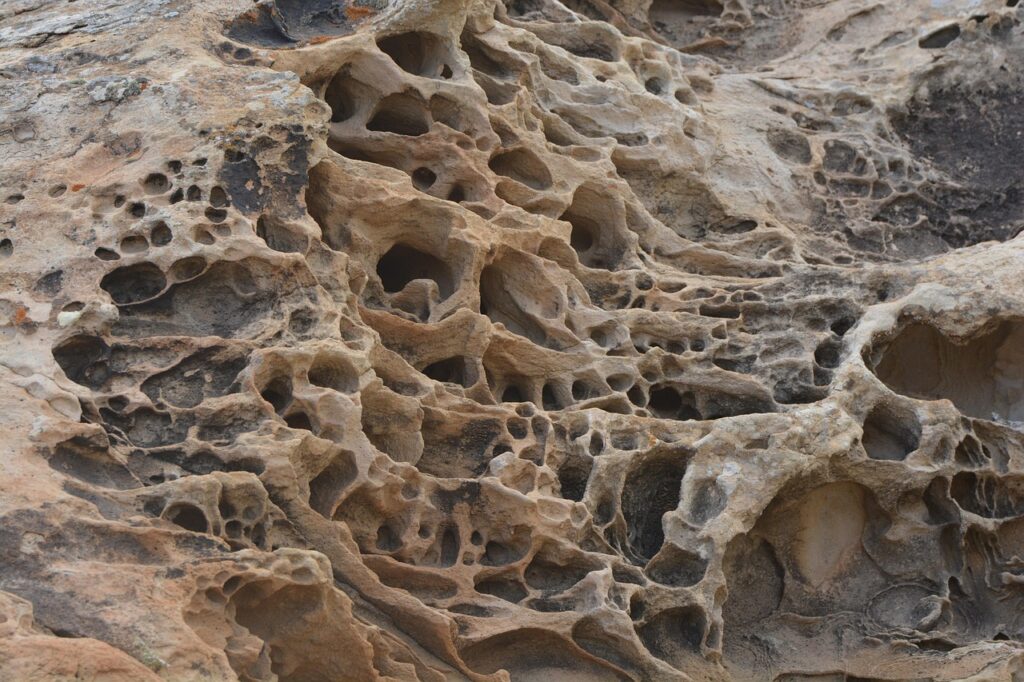
Most people walk past rocks without a second glance. To a petrologist, however, every single stone is a time capsule, a coded message from the planet’s fiery birth, its ancient oceans, and its violent tectonic tantrums. This isn’t just a science of collecting pretty minerals; it is the forensic investigation of Earth itself.
At its core, petrology is the study of rock formation and evolution. It is a discipline that dissects the composition, texture, and structure of stone to piece together a narrative that spans billions of years. By wielding tools that range from simple hand lenses to powerful mass spectrometers, these scientists decode the complex forces that have sculpted the crust we live on.
The planet’s rocky archive is divided into three distinct chapters. There are the igneous rocks, born from the literal fire of the Earth—molten magma that cools into solid form. There are sedimentary rocks, which are essentially the layered history books of our planet, built from the slow, relentless accumulation of sand, silt, and organic debris. And then there are metamorphic rocks, the products of extreme pressure and heat that transform existing stones into entirely new forms, like a caterpillar undergoing a geological metamorphosis deep underground.
The study of igneous rocks offers a direct line to the planet’s internal engine. When magma cools slowly beneath the surface, it creates coarse-grained rocks like granite; when it erupts violently, it produces fine-grained basalts. By analyzing these formations, scientists can reconstruct the thermal history of the Earth and understand the convection currents churning in the mantle that drive continental drift.
Sedimentary petrology, by contrast, is a dive into the past. These rocks are the keepers of ancient ecosystems, holding fossils and chemical signatures that reveal what the climate was like hundreds of millions of years ago. The analysis of these layers helps us understand the rise and fall of ancient oceans and the shifting of continents, offering a crucial context for our current climate crisis.
Meanwhile, metamorphic petrology focuses on the planet’s architectural work. When continents collide, the immense pressure and heat cook existing rocks, turning limestone into marble or shale into slate. These transformed rocks are the scars of mountain-building events, providing a roadmap to the movement of tectonic plates and the slow, powerful forces that raise the Himalayas and the Andes.
To extract these secrets, petrologists rely on a high-tech arsenal. Optical microscopy reveals the intricate mineral fabric, while X-ray diffraction identifies crystal structures with precision. Geochemical analysis, meanwhile, breaks down the elemental composition, allowing scientists to pinpoint the exact temperature and pressure conditions under which a rock formed.
This is not just academic curiosity. Understanding rock behavior is fundamental to survival. It guides the search for critical mineral deposits, helps engineers build safer foundations, and allows us to map out the fault lines that trigger earthquakes and landslides. By knowing the properties of the ground beneath our feet, we can better protect ourselves from its fury.
Petrology, in the end, is a humbling pursuit. It reminds us that the ground we stand on is not static, but a dynamic, breathing entity. By listening to the silent stories locked in stone, we gain the wisdom needed to manage our resources wisely and act as better stewards of a planet that is constantly rewriting its own history.


![Osun election: Voters turn out early, wait for INEC officials [Video]](https://mediatalkafrica.com/wp-content/uploads/2026/08/Osun-voters-queue-early-for-governorship-election-as-INEC-materials-768x576.jpg)