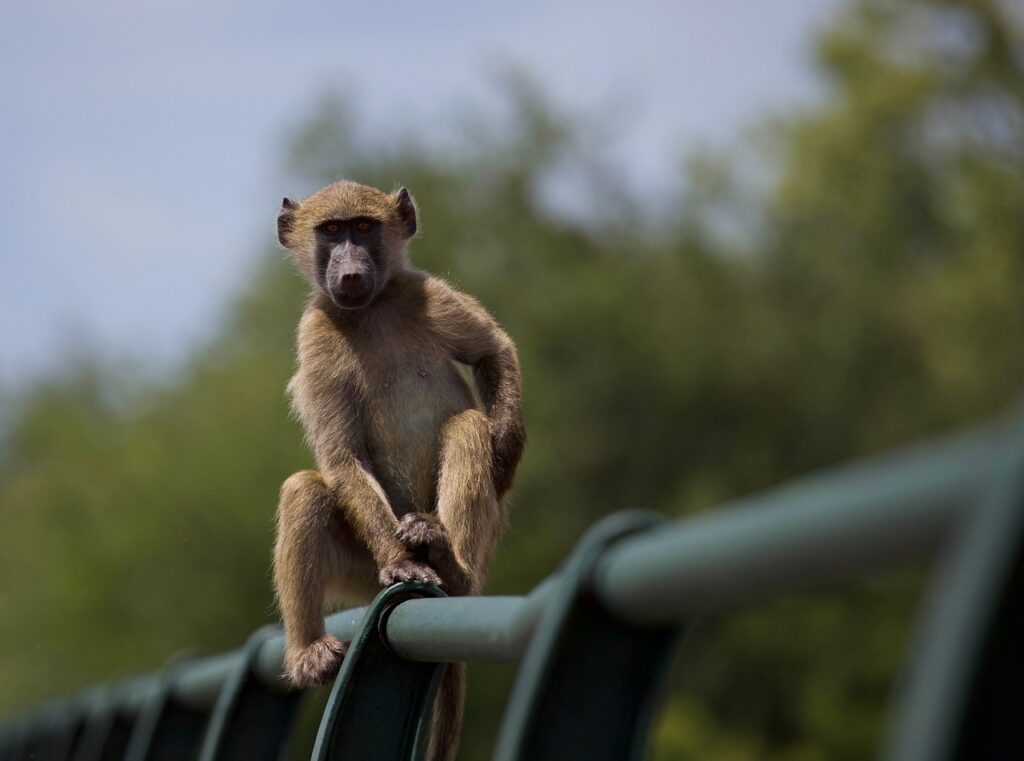
Somewhere between the fossilized bones of a 65-million-year-old ancestor and the clever hands of a chimpanzee cracking nuts with a stone, lies a science that has forever changed how we see ourselves. Primatology is not just the study of monkeys and apes; it is a mirror held up to humanity, revealing the raw, unfiltered origins of our own behavior, intelligence, and even our flaws.
The story begins in the Paleocene epoch, a time when the first primates were no bigger than a rat, darting through the dark in search of insects. These tiny, nocturnal creatures were the unlikely pioneers of a lineage that would eventually spawn over 500 species, from the wide-eyed tarsiers of Southeast Asia to the mountain gorillas of Central Africa. Fossil records paint a picture of slow, patient evolution, where each branch of the primate family tree adapted to its own corner of the world, developing unique traits that allowed them to thrive in jungles, savannas, and even snowy highlands.
But what truly sets primates apart is not their anatomy; it is their social fabric. Take the chimpanzee, for instance. They live in sprawling communities where politics is a daily game. Alpha males rise and fall, alliances shift like sand, and mothers pass down cultural traditions—like how to fish for termites with a twig—to their offspring. It is a world of gossip, grudges, and reconciliation, not unlike our own. On the flip side, the orangutan chooses solitude, wandering the rainforest alone, meeting only to mate. These contrasting lifestyles offer researchers a rare glimpse into the evolutionary roots of cooperation and conflict, showing us that there is no single blueprint for social success.
The cognitive feats of these animals are nothing short of astonishing. A bonobo named Kanzi once learned to communicate using hundreds of lexigram symbols, while a gorilla named Koko famously expressed grief and humor through sign language. In controlled experiments, chimpanzees have outsmarted humans in memory tests, and capuchin monkeys have shown a sense of fairness, throwing tantrums when a peer gets a better reward for the same task. These discoveries have forced scientists to rethink what it means to be intelligent, blurring the line between human and animal cognition.
Yet, for all their brilliance, these creatures are vanishing. Deforestation, poaching, and the relentless march of climate change are pushing many species to the brink. Orangutans watch their homes burn to make way for palm oil plantations. Lemurs cling to shrinking patches of forest in Madagascar. Conservationists are fighting back, establishing protected corridors and breeding programs, but the clock is ticking. The crisis is not just about saving animals; it is about preserving the very clues to our own past before they disappear forever.
To study primatology is to embark on a journey that ends where it begins: with us. Every tool a chimpanzee fashions, every bond a macaque forges, every lesson a mother passes to her child is a chapter in the story of life on Earth. As we peel back the layers of their world, we are, in truth, uncovering the foundations of our own. The question is not whether we will continue to explore, but whether we will do so before it is too late.


![Osun election: Voters turn out early, wait for INEC officials [Video]](https://mediatalkafrica.com/wp-content/uploads/2026/08/Osun-voters-queue-early-for-governorship-election-as-INEC-materials-768x576.jpg)