There is a common misconception that to understand Russia, you only need to read its great novels. But the real story is far more complex—and far more fascinating. The Russian language, spoken by over 150 million people, is not just a means of communication; it is a living archive of the nation’s soul. Its Cyrillic script, with its 33 letters, carries the weight of Byzantine history and Orthodox tradition, while its melodic cadence and notoriously intricate grammar offer a puzzle that has captivated linguists for generations.
Yet, the most surprising revelations about Russian culture are not coming from literary critics. They are emerging from mathematicians. By applying statistical models and computational analysis to the works of literary giants like Tolstoy and Dostoevsky, researchers are uncovering patterns invisible to the naked eye. Take War and Peace, for example. A deep dive into Tolstoy’s verb usage reveals a deliberate preference for the imperfective aspect, a grammatical choice that subtly instills a sense of endless, flowing time—perfectly mirroring the novel’s sweeping narrative. This is not poetry; it is data-driven literary forensics.
The analytical lens does not stop at grammar. Using Markov chains and network theory, scholars are mapping the intricate webs of character interactions in classic Russian novels. These mathematical frameworks turn sprawling epics into visual networks, exposing hidden power dynamics and social structures that define the Russian literary universe. It is a fresh, almost scientific, perspective on a heritage we thought we knew.
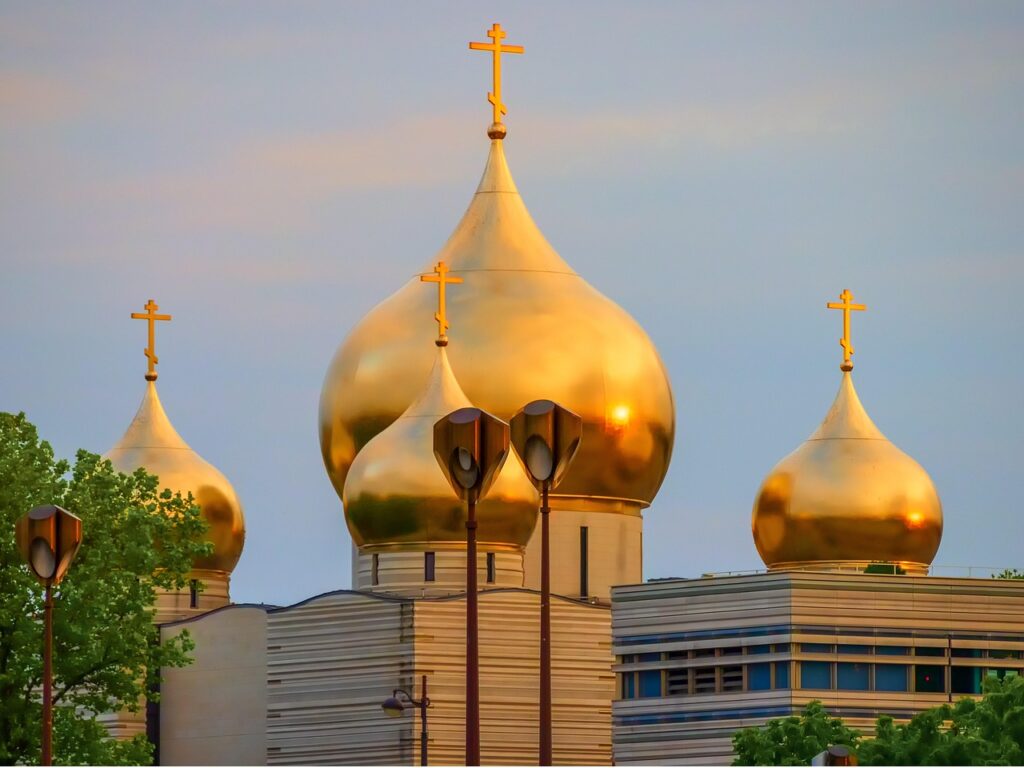
But the numbers only tell half the story. Russia’s identity is forged in its geography, perched uneasily between Europe and Asia. This crossroads position has produced a cultural synthesis unlike any other. The whimsical, colorful onion domes of St. Basil’s Cathedral stand in stark contrast to the imposing, grey concrete of Soviet-era housing blocks. This architectural dialogue is a physical manifestation of a nation perpetually negotiating its own identity.
This internal tug-of-war is the core of the Russian psyche. For centuries, its artists and writers have wrestled with the tension between Western enlightenment and Eastern mysticism, between tradition and revolution. To study Russian culture is to observe a civilization in constant, creative conflict with itself.
Even the nation’s symbols tell a story of evolution. The double-headed eagle, a relic of the 15th century, has been redesigned and reinterpreted through imperial, Soviet, and modern eras. Each alteration is a semiotic marker, a clue to the shifting values and self-perception of the state. The hammer and sickle, once a universal symbol of a new world order, now carries a complex, often contested, historical weight.
Ultimately, Russian studies is not a dusty academic exercise. It is a dynamic field where ancient texts meet modern algorithms. By fusing the humanities with hard data, we are not just reading about Russia; we are decoding it. And with every pattern we uncover, we get one step closer to understanding the enduring, enigmatic mystique of a nation that has always defied simple definition.


![Osun election: Voters turn out early, wait for INEC officials [Video]](https://mediatalkafrica.com/wp-content/uploads/2026/08/Osun-voters-queue-early-for-governorship-election-as-INEC-materials-768x576.jpg)