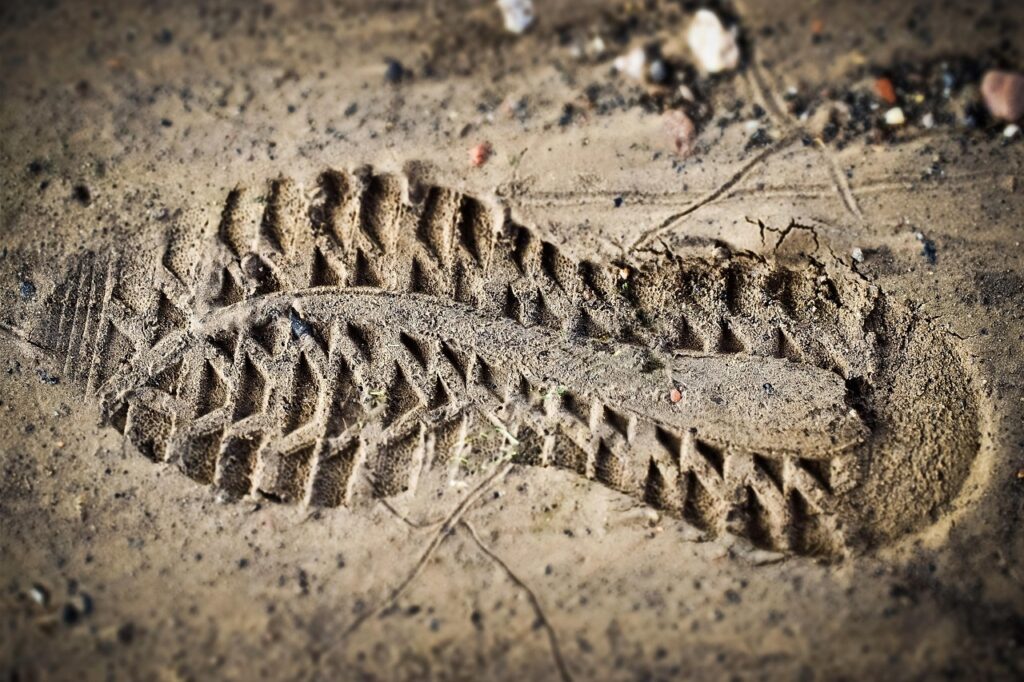
It starts with a single strand of hair, a smudge of dirt, or a faint smudge on a doorknob. To the untrained eye, these are nothing. To a forensic scientist, they are a story waiting to be told. This is the quiet power of forensic science—a discipline that doesn’t just chase criminals, but reconstructs the very fabric of a moment long past, using biology, chemistry, physics, and a sharp dose of logic.
The entire field rests on a simple premise: no crime happens in a vacuum. Every action leaves a trace. That trace might be a drop of blood, a fiber from a jacket, or a digital footprint buried in a mountain of data. The job of the forensic expert is to turn these fragments into a coherent narrative. They might spend hours at a microscope, or days running complex statistical models, all in the service of answering one question: what really happened here?
Trace evidence is often the unsung hero of this work. We’re talking about the microscopic transfer of material—a few grains of pollen, a shard of glass, a carpet fiber. These are the silent witnesses. A speck of rare soil on a suspect’s boot can place them at a remote location they swore they never visited. A single fiber can link a victim to a vehicle. It’s a game of connect-the-dots, where the dots are invisible to everyone but the trained eye.
Then there is the game-changer: DNA. The ability to read the genetic code left behind in a single cell has turned cold cases into solved ones and freed the wrongly convicted. The process is a delicate ballet of extraction, amplification, and comparison. But it’s not just about the science; it’s about the database. A match between a crime scene sample and a profile in a national system can be the difference between a monster walking free and a family getting answers.
Of course, the old standbys still matter. Fingerprint comparison requires an almost artistic eye for the whorls and ridges that make each of us unique. Firearms analysis involves studying the striations on a bullet as if they were a barcode, telling the story of the gun that fired it. These techniques are the backbone of the field, refined over decades.
The frontier is now digital. Investigators are using 3D printing to build physical replicas of crime scenes, allowing juries to walk through a space without ever leaving the courtroom. Artificial intelligence is chewing through terabytes of data, flagging connections that a human brain would miss in a lifetime. The goal isn’t to replace the investigator, but to extend their reach.
But for all its brilliance, forensic science is not infallible. It is a human endeavor, and humans make mistakes. Evidence can be contaminated by a careless glove. A lab technician can misinterpret a result. The pressure to solve a high-profile case can lead to shortcuts. These are the cracks in the system, and they remind us that the science is only as good as the people wielding it.
That’s why the future isn’t just about better machines. It’s about better standards. Rigorous validation of new methods. Ongoing training for those in the field. And a culture that values truth over conviction. The promise of forensic science is not that it has all the answers, but that it will always ask the right questions.
In the end, this is more than a job. It’s a lens into the human condition. Every crime scene is a story of conflict, fear, or desperation. Every piece of evidence is a character in that story. And the forensic scientist is the one who sits down, reads the clues, and tells the tale with unflinching honesty. It’s a reminder that, no matter how tangled the web, the truth is always there, waiting to be found. Our job is to be patient enough to look.
![Osun election: Voters turn out early, wait for INEC officials [Video]](https://mediatalkafrica.com/wp-content/uploads/2026/08/Osun-voters-queue-early-for-governorship-election-as-INEC-materials-768x576.jpg)