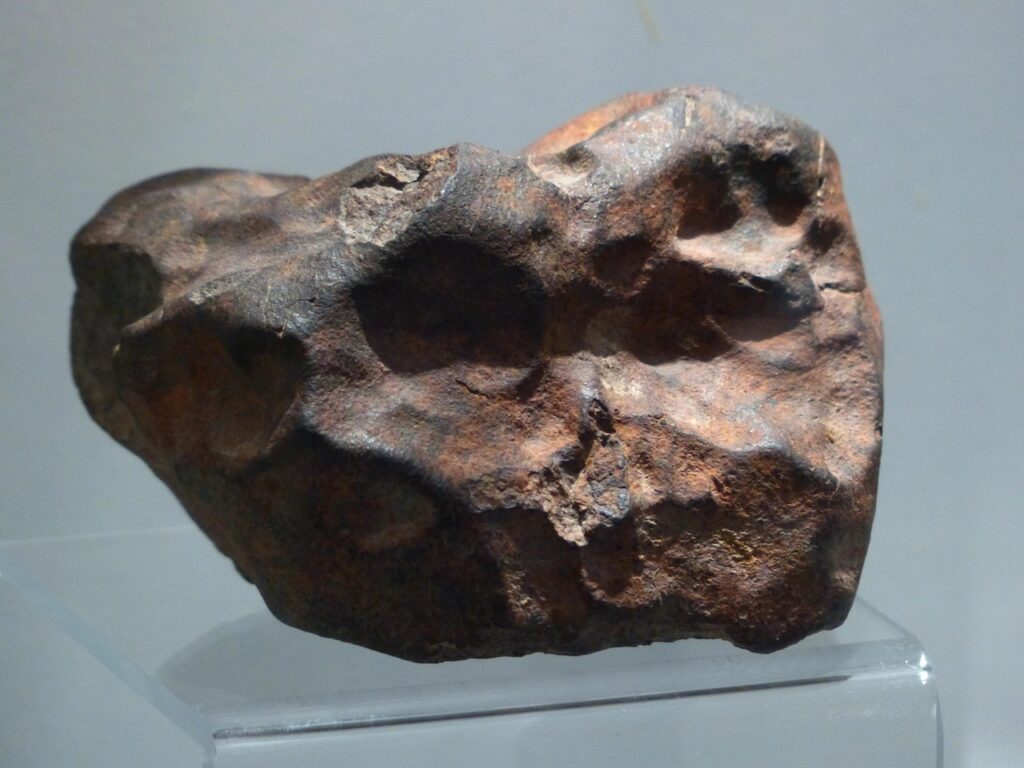
I’ve spent decades with my hands in the soil of Mali, coaxing crops from the earth as an agricultural scientist. But long before I traded my lab coat for a pen, and even before my days fielding calls and crafting messages as a public relations specialist, I was hooked on a different kind of mystery—one that doesn’t grow from the ground but falls from the sky. Now, at 74, I’m finally chasing that obsession: the quiet, unassuming meteorite, a messenger from the deep past that has more to say about us than we often give it credit for.
Let’s clear up what these rocks really are. They’re not just space litter. Meteorites are the survivors of a violent cosmic journey—fragments of asteroids or planets that broke apart in collisions, then braved a fiery plunge through our atmosphere to land on Earth. When you hold one, you’re holding a piece of a world that never got to be a world. And here’s the kicker: some of these stones carry dust grains that predate our Sun. That means they’re time capsules from a period before our solar system even had a name. Studying them is like reading the universe’s birth certificate.
What’s even more remarkable is that not all meteorites are alike. You’ve got your stony ones, the most common, built from silicate minerals that look like a gritty concrete mix. Then there are the iron meteorites, dense and heavy, forged from nickel and iron—these feel ancient and impossibly strong in your palm. And then there’s the rare hybrid, the stony-iron, which is exactly what it sounds like: a strange marriage of rock and metal that defies easy categories. Each type tells a different story about where it came from and what kind of cosmic chaos created it.
To crack those stories open, scientists don’t just chip away at these rocks with hammers. They use tools that wouldn’t look out of place in a hospital or a high-tech crime lab. X-ray CT scans let us peer inside without damaging the sample, revealing hidden structures and voids. Spectroscopy breaks down the light reflected off a meteorite to identify its minerals from afar. And when we’re ready to get invasive, we slice, crush, and dissolve samples to measure their exact chemical fingerprints. It’s painstaking work, but the payoffs are staggering. In some meteorites, we’ve found amino acids—the very building blocks of life. That discovery doesn’t just hint at how life might have started on Earth; it suggests the ingredients were delivered here from space, ready-made.
Here’s a little taste of how modern researchers handle this data. Using a language like Python, we can build simple classifiers that group meteorites by their iron-to-silicate ratios or trace element patterns. It’s not just academic—it lets us compare thousands of samples in seconds, spotting trends that a human eye would miss. The code is elegant in its practicality: load the data, run the math, and out pops a category. It’s a small step, but it’s how we turn a pile of ancient rocks into a coherent map of our solar system’s history.
In the end, meteorite research isn’t just for astronomers in observatories or geologists in dusty labs. It’s for anyone who’s ever looked up at a shooting star and wondered what it was made of. These rocks are proof that the cosmos isn’t a distant, untouchable place—it’s falling into our backyards, carrying secrets we’re only beginning to decode. Whether you’re a seasoned scientist or a curious newcomer, there’s a raw thrill in knowing that a humble stone can rewrite our understanding of everything from planetary formation to the spark of life itself. So next time you see a streak of light across the night sky, don’t just make a wish. Ask yourself: what’s it trying to tell us?