Behind every instant message, every video call, and every live stream that bridges continents, there is an unseen force making it all possible. Telecommunication engineering is not just a technical discipline; it is the quiet engine of modern existence. Born where electrical engineering meets computer science, this field has grown from simple telegraph lines to the sprawling, invisible web that binds humanity together.
At its heart, this craft is about moving information. Whether it is a whisper over a copper wire, a pulse of light through a fiber optic cable, or a radio wave cutting through the open sky, the goal remains the same: to deliver a message with speed and clarity, no matter the distance. Telecommunication engineers are the ones who design these pathways, troubleshoot their failures, and push them to carry ever more data. They are the reason a voice can travel from a bustling city to a remote village in a fraction of a second.
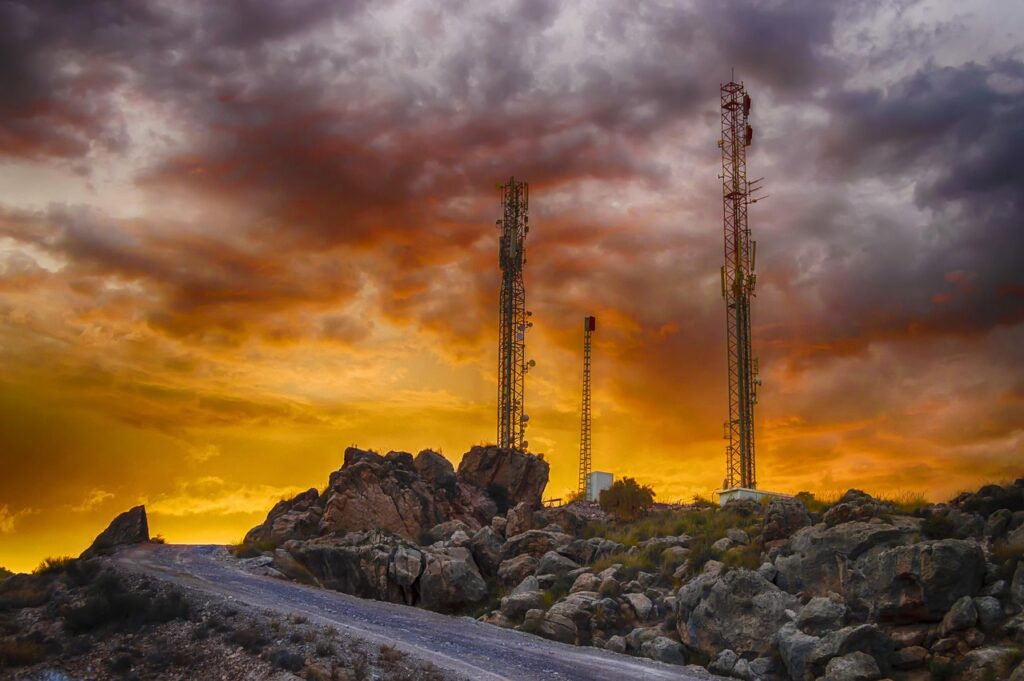
The science behind this magic is rooted in the behavior of electromagnetic waves. Signals are nothing more than carefully shaped modulations of these waves, and the medium they travel through changes everything. Wired systems rely on the physical integrity of cables, while wireless systems depend on the unpredictable nature of air and space. Each choice brings its own trade-offs between speed, range, and resilience, and it is the engineer’s job to find the perfect balance for every application.
But the road is never smooth. Signals weaken over distance, and noise creeps in like static on an old radio. To fight this, engineers deploy a toolkit of clever tricks: amplifiers to boost weak signals, error-correction codes to fix corrupted data, and compression algorithms to squeeze more information into less space. Protocols like TCP/IP act as the traffic rules of the internet, ensuring that billions of data packets reach their destinations in the right order, even when they take wildly different paths.
The pace of change in this field is breathtaking. The arrival of 5G has already transformed what we expect from our devices, turning buffering into a memory and making virtual reality feel less like a gimmick and more like a doorway. Now, artificial intelligence is stepping into the control room. Machine learning algorithms are beginning to manage networks on their own, predicting congestion before it happens and defending against cyber threats in real time. The network is no longer just a pipe; it is becoming a living, thinking organism.
Satellites are also getting a second act. A new generation of small, low-orbit spacecraft is racing to blanket the planet with internet access, reaching places where laying cables was never practical. This is not just about convenience. It is about connecting classrooms in rural areas, enabling farmers to monitor their crops with precision, and giving first responders a lifeline during disasters. And on the horizon, quantum communication is preparing to rewrite the rules of security, offering encryption that is mathematically impossible to crack.
Telecommunication engineering is not a static profession. It is a relentless pursuit of the next breakthrough, a constant dialogue between theory and reality. As the world grows more entwined, the people who build and maintain these invisible bridges become more essential. They do not just keep the lines open; they keep the future within reach. The flow of information, secure and unbroken, is their quiet promise to the world.