In the aftermath of the American military strike ordered by President Donald Trump, Tehran is painting a very different picture of the conflict than the one seen on the nightly news. According to Iran’s top military leadership, the real casualty of this war was not a base or a vessel, but the old status quo that once kept the Strait of Hormuz quiet and predictable.
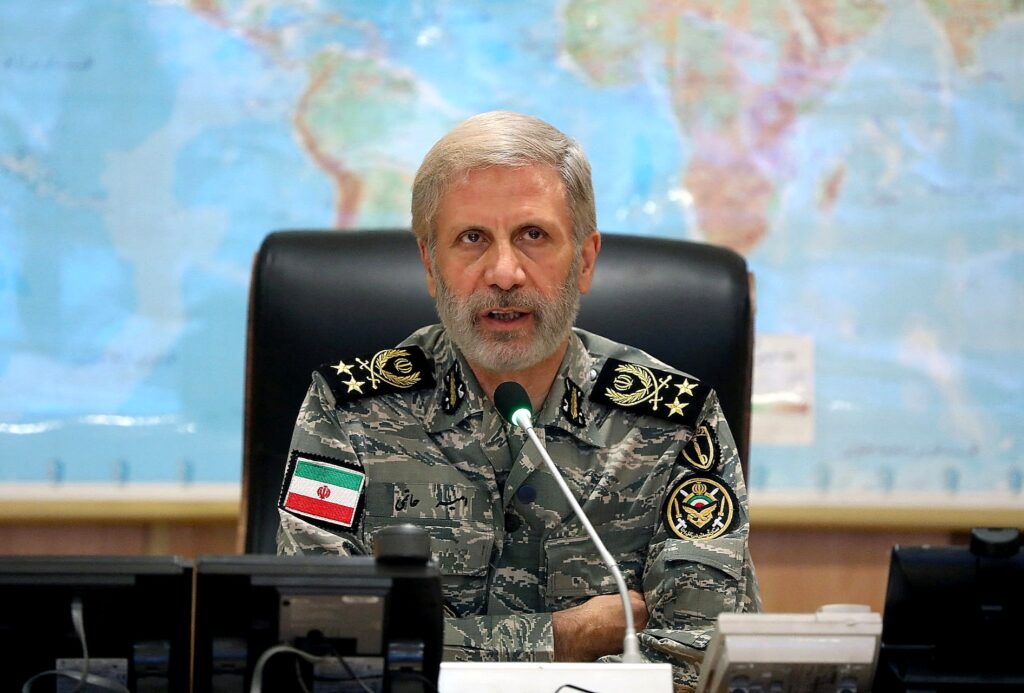
Army Chief General Amir Hatami has called the waterway a “God-given geopolitical asset” for the Iranian people, arguing that its true strategic weight has only now, thanks to the U.S. attack, been fully revealed to the world. Speaking over the weekend, Hatami made a bold claim: the leverage Iran holds over this vital maritime choke point will never shrink back to its pre-conflict level. In his view, the very act of war has permanently altered the calculus in the region.
“One of the legacies of the U.S. president is the activation of the Strait of Hormuz’s potential,” Hatami stated bluntly. “Without this conflict, it would not have been activated.”
The general went further, vowing that Washington will no longer enjoy the freedom of movement it once had in these waters. He promised that American forces would be barred from entering the Strait of Hormuz, the Persian Gulf, and the Sea of Oman. And he sent a clear warning to the Pentagon: U.S. bases across the region will never function as they did before, because Tehran simply will not permit it.
But while the military brass is focused on the maritime chessboard, Iran’s political leadership is claiming a different kind of triumph. Speaker Mohammad Bagher Ghalibaf declared that his country has won this war on both the political and military fronts, even as the U.S. military machine remains intact. He pointed to the stated goals of the American and Israeli campaign, which he said included nine specific objectives. None of them, he insisted, have been met.
“This was a defeat for the U.S. and the Zionist regime,” Ghalibaf said. “In the diplomatic sphere, the agreement is a source of pride and a victory on the diplomatic battlefield.”
Whether or not the world agrees with that assessment, one thing is clear: the Strait of Hormuz is no longer just a line on a map. It has become a loaded weapon in Iran’s arsenal, and its trigger has been pulled by the very man who sought to contain it.