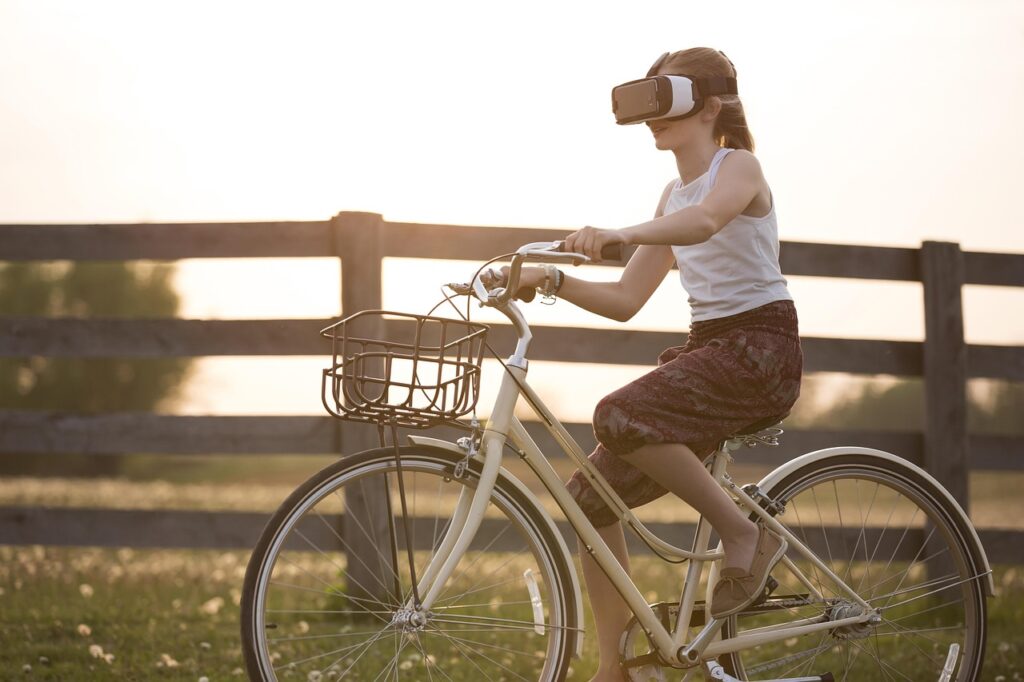
The first time you slip on a headset and find yourself standing on a digital cliff edge, your brain does something remarkable: it forgets it’s in a living room. That moment—when logic surrenders to sensation—is the quiet triumph of virtual reality, a technology that has spent six decades clawing its way from science-fiction fantasy to a tool reshaping therapy, classrooms, and the very fabric of how we perceive space.
The roots of this revolution stretch back to the 1960s, when early prototypes were clunky, costly, and confined to labs. Today, the hardware is sleeker, but the core trick remains the same. A head-mounted display feeds your eyes a high-resolution world, while sensors track the tilt of your head and the shift of your weight. Controllers in your hands become extensions of your will. It’s a symphony of optics and code, all designed to convince your mind that the pixels are pavement and the wind is real.
What separates a gimmick from a genuine experience is a concept researchers call presence—the visceral feeling of being somewhere else. It isn’t just about sharp graphics. Developers rely on stereoscopy, feeding each eye a slightly different image to mimic depth. They add motion parallax, so objects shift naturally when you lean. Spatial audio places a whisper behind your ear or a bird call above your head. Together, these cues fool the brain into dropping its defenses.
There is even a formula that captures this alchemy, one that engineers whisper about in design meetings: presence equals sensory stimulation multiplied by interaction and realism, all divided by distraction and latency. Strip away the jargon and it’s a simple recipe. The more your senses are engaged, the more you can touch and influence the world, and the faster the system responds—the more your mind surrenders. Every millisecond of lag, every visual glitch, is a crack in the illusion.
The payoff is showing up far beyond gaming arcades. In psychology clinics, therapists are using VR to guide patients through controlled encounters with their deepest fears. A veteran with PTSD can revisit a triggering scenario, not to relive trauma, but to process it in a safe, adjustable space. A person with a fear of flying can board a virtual plane, feel the rumble of the engine, and practice breathing exercises—all while keeping both feet on solid ground. Early studies suggest these immersive sessions can be just as effective, if not more so, than traditional exposure therapy.
Classrooms are another frontier. Instead of reading about the Colosseum, students can walk through it. Instead of memorizing the structure of a cell, they can shrink down and float inside one. The interactive nature of these lessons boosts retention, turning passive listeners into active explorers. It’s learning that feels less like a lecture and more like a field trip, minus the permission slips.
Yet, the global map of VR innovation is uneven. Silicon Valley and Shenzhen thrive, fueled by deep pockets and a dense pool of engineers. But in regions with scarce infrastructure—remote islands, isolated mountain communities, or areas without reliable high-speed internet—the cost of entry remains a steep barrier. The hardware is pricey, the content is often localized for Western audiences, and the technical expertise is hard to find. For every breakthrough in a gleaming lab, there is a school in a developing nation that can’t afford a single headset.
Still, the momentum is undeniable. As the technology grows lighter, cheaper, and more intuitive, the boundaries between the physical and the simulated continue to blur. We are not just spectators in these digital worlds; we are participants, shaping them as they shape us. The next decade will likely bring applications we haven’t yet imagined—new ways to rehearse surgeries, to visit distant planets, to sit across a table from a loved one who is miles away.
The cliff edge will still be there, waiting. And we will still step off, trusting the illusion, because that is what humans have always done—leap into the unknown, one immersive frame at a time.