As Commission Reconciles Over N1.3trn in Federation Revenue
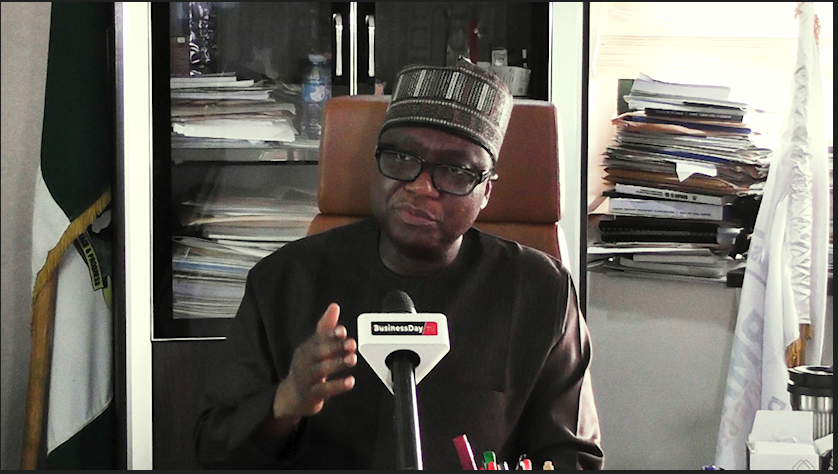
Interview by John Osadolor, Managing Editor, BusinessDay, and Onyinye Nwachukwu, Abuja Bureau Chief
In an interview with John Osadolor, Managing Editor, BusinessDay, and Onyinye Nwachukwu, Abuja Bureau Chief, Shehu discusses the Commission’s efforts to strengthen revenue mobilisation, close gaps in the collection and remittance of public funds, and modernise its operations through digitalisation. He also speaks on the new revenue-sharing formula, which he says has been concluded and could become law before the end of the year, as well as the implications of recent constitutional changes for the allocation of resources among the three tiers of government. Shehu further discusses local government financial autonomy, the 13 percent derivation, oil-producing communities, and how states can reduce their dependence on FAAC allocations.
Question: First, talk us through RMAFC’s core mandates and its role in Nigeria’s fiscal framework.
Answer: The Commission came into its current form during the administration of President Ibrahim Babangida, following Decree 89, enacted around 1989. The late Minister of Finance, Abubakar Alhaji, who passed away about two weeks ago, was instrumental in establishing the Commission. However, the functions now performed by the Commission date back to the colonial period, when the government began mobilising revenue and determining how those revenues should be accumulated, allocated and disbursed.
The Commission was subsequently given constitutional status under Section 153(1) of the 1999 Constitution, which provides for the establishment of federal executive bodies. RMAFC was among the commissions listed, alongside bodies such as the Independent National Electoral Commission (INEC) and the Federal Character Commission. Its functions are further set out in Paragraph 32(a) to (e), Part I of the Third Schedule to the Constitution, as well as the Revenue Mobilisation Allocation and Fiscal Commission Act, Cap. R7, 2004, as amended in 2025.
One of its most important mandates is to monitor revenue accruing to the Federation and ensure that those revenues are properly accounted for and distributed.
By accruals, we mean revenues generated under the operation of various laws. These include revenues from oil, solid minerals, customs duties, the Nigerian National Petroleum Company Limited (NNPC) and other sources that accrue to the Federation.
These revenues are accumulated monthly, after which the Federation Account Allocation Committee (FAAC) determines how they are distributed among the Federal Government, states and local governments in accordance with the revenue-allocation formula prescribed by law.
That is a brief overview of one of the Commission’s key functions—monitoring revenue accruals and their disbursement. The Commission has several other responsibilities, which we will discuss as we go along.
Question: You’ve outlined some of the Commission’s key responsibilities, particularly its role in monitoring revenue accruals and advising government on their management. How effectively has the Commission carried out this mandate? What gaps or loopholes have you identified, and what recommendations have you made to address them?
Answer: Well, this is a role the Commission has performed over the years. Even during COVID, when face-to-face engagement with revenue-generating agencies was impossible, we provided guidance and moved our engagements online through Zoom and other platforms. Consistently, every month, the Commission meets with revenue-generating agencies to review what they have collected. We verify the figures, confirm with the CBN that the accruals were received, and reconcile the records in collaboration with the Accountant-General of the Federation and the Minister of Finance.
The main loophole has been technology. Some revenue-generating agencies have significantly upgraded their digital systems, while the Commission has not always been able to keep pace. That is now changing. Both the previous and current administrations have empowered the Commission to modernise its systems. We are upgrading our digital and fiscal infrastructure, as well as building the capacity of our staff, so that we can operate at the same level as the agencies we monitor.
For now, some of our reconciliation processes remain paper-based. We review documents, request additional records and carry out these checks every month. But with the support of Mr President, the Economic Council and the legislature, significant upgrades are already underway. Ultimately, the goal is to close these gaps and ensure that the Commission has the technology, systems and capacity to effectively reconcile revenues from agencies such as NUPRC, Customs, Solid Minerals and NNPC, among others.
Question: Staying with the Commission’s oversight role, what is RMAFC doing to ensure that oil-producing host communities benefit from the revenues generated from their resources and that the relevant institutions are held accountable?
Answer: We are concerned about the welfare of oil-producing communities, like any other institution. The Petroleum Industry Act (PIA) provides for companies to meet certain obligations to their host communities, including the provision for a 3 percent contribution to the Host Communities Development Trust. The Nigerian Upstream Petroleum Regulatory Commission (NUPRC) is responsible for establishing the framework and ensuring compliance.
However, over the years, we have received petitions from some oil-producing communities alleging that oil companies have influenced the selection of community representatives, creating divisions within the communities. The NUPRC has a framework for addressing such grievances. Our role is not to take over the responsibilities of another agency. But we are concerned because instability in an oil-producing community can disrupt production, and when production falls, the entire Federation loses revenue.
That is why the Commission sometimes intervenes—to help prevent disputes from escalating and ultimately affecting oil production and national revenue. We are not doing this alone. We work closely with the agency responsible for regulating the sector, the Nigerian Upstream Petroleum Regulatory…