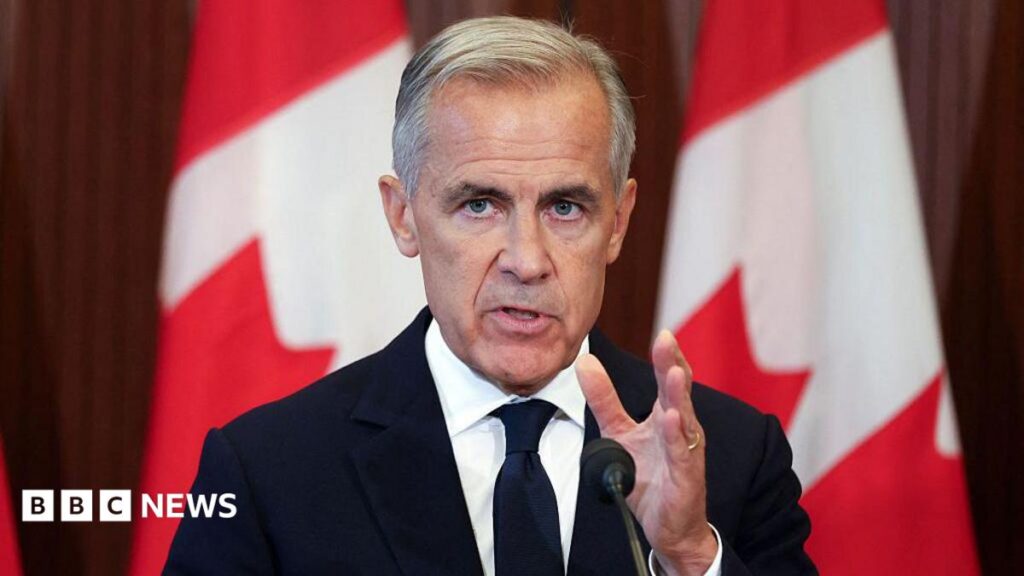
Canadian Prime Minister Mark Carney delivered his first national address over the weekend following the abrupt collapse of high-stakes Trade negotiations with the United States, accusing American negotiators of introducing “last-minute changes” that were “unfair” and “uneconomic.” The breakdown, announced late last week, leaves the two nations at a significant impasse, with Washington signaling no immediate intention to return to the table.
United States Trade Representative Jamieson Greer told Fox News that there were no plans to resume discussions. Greer stated the U.S. had been prepared to reduce certain tariffs on Canadian goods as part of the proposed agreement but claimed Canadian negotiators introduced “new demands and walk backs” on previously settled terms. Carney firmly rejected that characterization, insisting Canada had merely sought clarification on the offer and was “continually disappointed by the answers.”
The core of the dispute centers on sovereignty. Carney revealed the U.S. presented “unacceptable” terms that would restrict Canada’s ability to negotiate independent trade agreements with other nations. He described the conditions as too restrictive for any sovereign government to accept.
The collapse has triggered a rare display of unity across the Canadian political spectrum. Ontario Premier Doug Ford backed the prime minister, declaring the U.S. president “can’t be trusted.” British Columbia Premier David Eby warned that the American demand for veto power over Canada’s trade policy “would reduce us to the economic equivalent of the 51st state,” adding such terms were never acceptable to Canadians. Conservative Party leader Pierre Poilievre echoed the sentiment, labeling the latest U.S. levies “unjustified.”
In Quebec, Premier Christine Fréchette warned of imminent job losses, vowing to introduce measures to support affected sectors. “Behind these numbers are real people,” she said. Alberta Premier Danielle Smith, whose province has sought closer ties with the current U.S. administration, broke ranks slightly to urge both sides to resume dialogue immediately.
The failed talks conclude more than a year of intermittent negotiations that intensified recently under a U.S.-imposed deadline. The discussions ran parallel to a mandatory review of the United States-Mexico-Canada Agreement (USMCA), the pact signed during the U.S. president’s first term to replace the 1994 North American Free Trade Agreement. The agreement underpins $1.6 trillion in annual trilateral trade. Earlier this year, Canada and Mexico formally requested a 16-year renewal of the pact, a request the U.S. declined in its current form.
Asked about the implications for the continental trade framework, Carney acknowledged the breakdown was “certainly not good news” for the future of North American economic integration. With tariffs now a live threat and the USMCA review unresolved, businesses across the continent face a period of heightened uncertainty.