

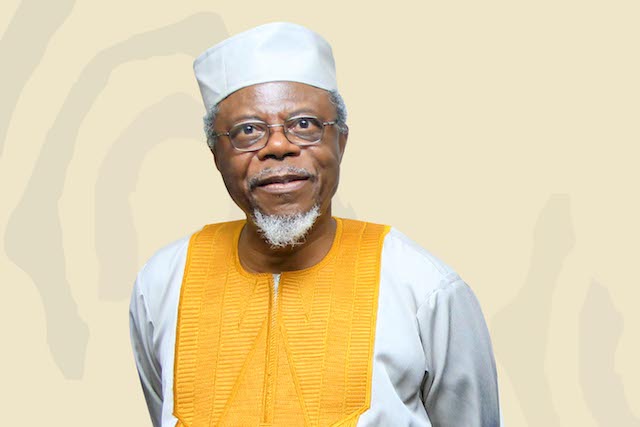
Air Chief Marshal Oluseyi Petinrin (retd.), a former Chief of Defence Staff, sat down with Bola Bamigbola to discuss Nigeria’s security challenges, the debate over state police, military procurement, and porous borders.
Since retiring in 2012, he has turned to farming and trading, describing himself as a businessman who had already been involved in agriculture while still in service. “When I left the military, I became even more interested in agriculture and we are now doing our bit in that sector,” he said.
Adjusting to civilian life after a 35‑year military career was a marked change. “The military is regimented; even as the most senior officer I needed permission to leave Abuja. Now I can go anywhere tomorrow without anyone stopping me,” he explained, adding that he enjoys the freedom of civilian life while remaining grateful for his years of service.
On the recent elections, Petinrin noted that criticism of the Independent National Electoral Commission (INEC) is normal. “Every losing candidate complains; that’s expected. We should give Professor Mahmood Yakubu credit for conducting an ‘election of firsts’—powerful figures lost, opposition candidates won. Yes, there were lapses, but every election has them, and democracy remains the best system.” He warned that even if INEC removed over‑voted results from its portal, protests would arise because polling agents keep copies of the results.
Addressing the perception that military rule was preferable, he argued that past military governments had serious flaws that still affect the country. “Democracy gives people a voice. The last election showed voters were hungry for good governance. Military leaders lacked experience and ruled by decree, which caused trouble. No sensible officer would want to rule again.”
Regarding Nigeria’s security woes, Petinrin emphasized that fighting insurgency should be the sole responsibility of the Ministry of Defence, but only within a framework of total defence. “Total defence means every arm of government, public and private institutions, and every citizen must be mobilised. The Financial Intelligence Unit’s actions against Boko Haram’s finances have helped collapse the group’s capacity.” He suggested that religious leaders could be enlisted to counter extremist narratives, noting that involving mosques and churches earlier could have shortened the conflict.
He distinguished internal crimes such as kidnapping and armed robbery from insurgency, saying they fall under police responsibility. “High unemployment drives crime; the police must design strategies, acquire appropriate equipment, and act.”
On military equipment, Petinrin stressed prudent spending and coordinated procurement. “The officer who coordinates the effort must have a say in what each service buys; otherwise we waste money on gear that may not meet future needs.” He affirmed that Nigeria has always equipped its forces as best it could, and that Boko Haram cannot outspend the nation.
Concerning the Air Force, he acknowledged past neglect in the 1980s but noted that the service now contributes significantly to counter‑insurgency. The main challenges, he said, are organisational and coordination issues rather than lack of hardware. The Chief of Defence Staff should coordinate the fight, but coordination is currently lacking at the national level, and a dedicated civilian coordinator may be needed.
Petinrin warned that security problems evolve—banditry follows insurgency—because crime is never completely eradicated. “When one threat is tackled, new ones emerge. Quick, decisive action, like the death‑penalty measures against armed robbery in the 1970s, can curb emerging crimes.”
On corruption among senior officers, he called for a comprehensive approach that addresses root causes rather than merely catching perpetrators. “We must examine why corruption occurs and implement systemic safeguards, not just rely on anti‑graft agencies.”
Regarding state police, he cautioned against simply replicating the federal police structure at the state level. “If training and recruitment remain the same, only the command changes, and results will be similar. States need their own training schools and should control police deployment, while the federal government continues to pay salaries.” He suggested that governors should have authority over police posted to their states, with federal oversight to prevent misuse.
On civilian gun ownership, Petinrin warned of grave risks. “Allowing everyone to carry arms, as in the United States, leads to tragedies. We already have too many armed agencies; more guns will only increase crime.”
Addressing porous borders, he highlighted the sheer number of unofficial crossing points—over 5,000 compared with fewer than 500 legal ones. He proposed leveraging the National Identification Number (NIN) system to restrict services to documented individuals. “If only those with NIN or residence permits can rent houses, enroll children in schools, or obtain jobs, illegal migrants will find it hard to survive, reducing the incentive to cross.” He argued that extensive border policing is impractical; instead, a robust identification system would make illegal entry less attractive.
Looking ahead, Petinrin expects the incoming administration of President Asiwaju Bola Tinubu to prioritise the economy and security. He praised Tinubu’s fight and urged focus on economic revitalisation, especially manufacturing, coupled with targeted loans and universal NIN registration.
Finally, when asked about his political involvement, he clarified that while he has engaged in political activities, he has not pursued elected office, preferring to concentrate on his farm and business interests.


Comments are closed for this story.