

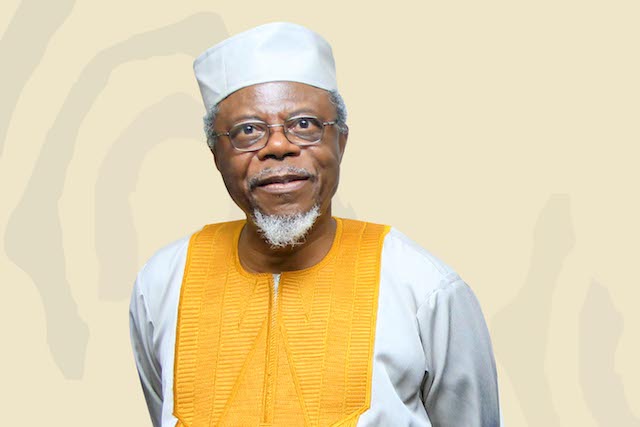
The news of Lieutenant General Oladipo Diya’s death shocked many Nigerians on Sunday morning. Diya, a former Chief of General Staff to the late Head of State General Sani Abacha, left a notable legacy that can be summarized in ten key points.
Oladipo Donaldson Diya was born in Odogbolu, Ogun State, on 3 April 1944. He entered the Nigerian Defence Academy in Kaduna at a young age and fought as an active soldier during the Nigerian Civil War from 6 July 1967 to 15 January 1970. After his military service, Diya pursued legal studies at Ahmadu Bello University, Zaria, where he earned an LLB degree, and subsequently attended the Nigerian Law School, being called to the bar as a Solicitor and Advocate of the Supreme Court of Nigeria.
Before becoming Abacha’s second‑in‑command, Diya served as Chief of Defence Staff and as Military Governor of Ogun State from January 1984 to August 1985. In 1993 he was appointed Chief of General Staff, and in 1994 he became Vice Chairman of the Provisional Ruling Council.
On 21 December 1997 the regime arrested several top army officials, including Diya, Major General Tunji Olanrewaju, Major General Abdulkarim Adisa, and eight others, accusing them of plotting a violent overthrow of Abacha. A week prior to his arrest, Diya narrowly avoided a bomb explosion at Abuja airport while traveling to represent Abacha at the funeral of Major‑General Lawrence Onoja’s mother in Benue State.
Together with General Bamaiyi and other senior officers, Diya demanded four concessions from Abacha as the latter began to pursue a “president for life” agenda: (i) that the original draft of the 1995 constitution be promulgated without Abacha’s alterations; (ii) that the June 12 crisis be resolved and political prisoners, including the elected president of 12 June 1993, MKO Abiola, be released; (iii) that Abacha publicly declare he had no intention of succeeding himself; and (iv) that attempts to eliminate Yoruba military officers be halted.
Diya was tried by a military tribunal and sentenced to death. However, following Abacha’s sudden death in 1998, his successor, Abdulsalami Abubakar, pardoned Diya. The former lieutenant general was released, discharged from the army, stripped of his rank, and barred from using his military title.
Comments are closed for this story.