

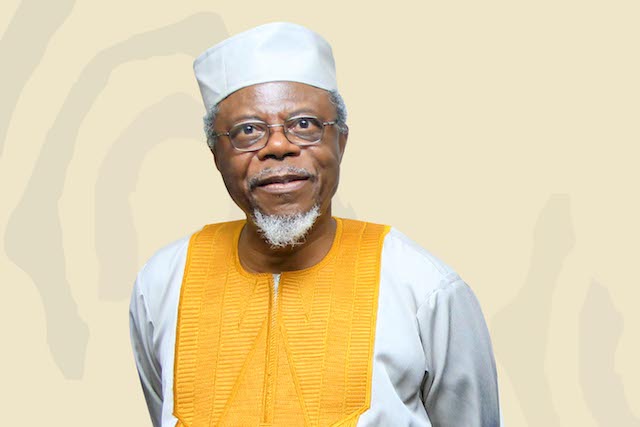
Lt‑Gen. Oladipo Diya (retd), former Chief of General Staff to the late military dictator General Sani Abacha, died on Sunday. Dirisu Yakubu reflects on the life of the distinguished Nigerian lieutenant‑general, a military tactician respected by many Nigerians both in and out of power until his downfall in December 1997, when a fabricated coup plot caused his career to collapse like a house of cards.
Born on 3 April 1944, Diya died just eight days shy of becoming an octogenarian. He was described as a no‑nonsense officer and an alumnus of the Nigerian Defence Academy, Kaduna; Command and Staff College, Jaji; the National Institute for Policy and Strategic Studies, Kuru; and the United States Army School of Infantry. After fighting on the federal side in the Nigeria‑Biafra civil war, he rose through the ranks, becoming military governor of his native Ogun State in 1984. His competence earned him promotion to General Officer Commanding the 82 Division, Enugu (1991‑1993), followed by appointments as Chief of Defence Staff and later Chief of General Staff under Abacha. In 1996 he became Vice Chairman of the Provisional Ruling Council, a position he held until he was implicated in a phantom coup and arrested for treason in 1997.
The alleged coup involved Diya and several other officers, predominantly from the South‑West, who were accused of plotting to overthrow Abacha. The dictator swiftly convened a military tribunal chaired by Major General Victor Malu, which tried Diya, former Minister of Works and Housing General Abdulkarim Adisa, ex‑Communications Minister Gen. Tajudeen Olarenwaju, Chief Security Officer to Diya, Major Seun Fadipe, and others. The tribunal found them guilty and sentenced them to death by firing squad. However, Abacha died under controversial circumstances in 1998 before the executions could be carried out. His successor, Major General Abdulsalami Abubakar, later released Diya and the others, bringing relief to their families and colleagues.
Diya, who later earned a law degree from Ahmadu Bello University, Zaria, attended the Nigerian Law School and was called to the bar as a solicitor and advocate of the Supreme Court of Nigeria, maintained that Lt‑Gen. Ishaya Bamaiyi had initiated discussions about removing the Abacha regime. Bamaiyi, however, denied this, accusing Diya of being the mastermind, coordinator and executor of the coup. Appearing before the Justice Chukwudifu Oputa Commission on human‑rights violations, Bamaiyi asserted that the 1997 coup was not a set‑up but was indeed launched by Diya, who recruited officers from his ethnic group. Years later, at the launch of his memoir “Vindication of a General,” Bamaiyi reiterated his claim that Diya intended to succeed Abacha through a coup, noting Diya’s frequent complaints about Abacha’s health.
The controversy surrounding the alleged coup remains unresolved in history. Diya reportedly pleaded with Abacha for mercy, while General Adisa maintained a stoic demeanor throughout the trial, seemingly accepting death by natural causes or execution. After his release, Diya refrained from partisan politics and devoted himself to the legal profession, a calling he pursued after a distinguished military career.
Prof. Cosmos Eze, a mass‑communication scholar and expert on civil‑military relations, praised Diya’s discipline, calling him “one of the last Titans, a disciplined officer indeed.” Eze noted that the treason allegations truncated Diya’s career, leading him to a life of near seclusion and limited public appearances. Governor Biodun Oyebanji of Ekiti State, through Special Adviser Yinka Oyebode, highlighted Diya’s productive service to the nation and his successful command and political roles. Former Senate President David Mark described Diya as a shining light of the Nigerian Army, whose contributions to peace, unity and development would be remembered kindly by history.
Olawale Adekoya, Special Adviser on Media and Strategy to Diya’s family, expressed that the family took solace in the legacy Diya left behind. He recalled Diya as a “father, gentleman, handsome, charming, easy‑going, tough, principled” man with a “heart of gold.” Adekoya described Diya’s final moments: after sleeping normally, his wife and family noticed irregular breathing just after midnight, rushed him to a nearby hospital, and he was pronounced dead at 1:05 am. Burial arrangements are being discussed with President Muhammadu Buhari (retd.) before public notification.
Prominent Nigerians visited Diya’s Lagos residence to offer condolences, including Bishop Paul Onanuga, Bishop of Ijebu Diocese and Archbishop of the South‑West of the First African Church Mission, who signed the condolence register.
Comments are closed for this story.