
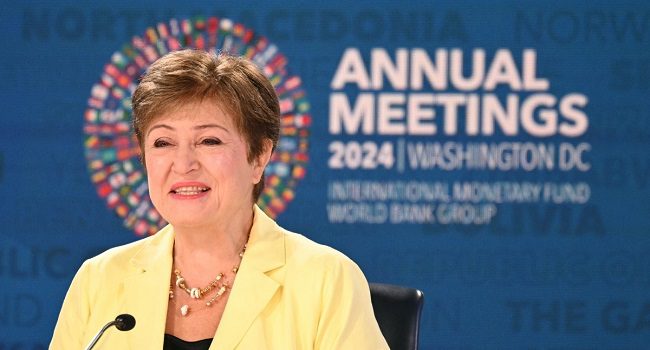
IMF Seeks Clarity on BRICS Cross-Border Payments System The International Monetary Fund (IMF) is seeking more information about a proposed cross-border payments system discussed by the BRICS group of countries, aiming to boost non-dollar transactions. The BRICS group, consisting of Brazil, Russia, India, China, and South Africa, along with newer members like Iran, Egypt, and the United Arab Emirates, accounts for a significant minority of the world’s economic output. At the recent Kazan summit, Russia secured a joint declaration encouraging the strengthening of correspondent banking networks within BRICS and enabling settlements in local currencies. The proposed system, known as the BRICS Cross-Border Payments Initiative (BCBPI), is designed to rival the European-headquartered SWIFT payments system, from which Russia was barred following its 2022 invasion of Ukraine. IMF Managing Director Kristalina Georgieva stated that the Fund wants additional details about the proposed payments system before taking a firm stance on it. “The idea of having a payments system of a group of countries is not new,” she said. “What we need to see is more details… What is it in this idea? How that may translate into reality? And then we will be able to assess it.” Georgieva also highlighted the Fund’s focus on two main objectives going forward: ensuring inflation rates return to central bank targets without spurring a deep recession and addressing the current “low growth, high debt path” many countries are on. She expressed concern about the impact of the Middle East conflict on regional economies, noting that Egypt has lost 70% of its Suez Canal revenues due to the conflict. The IMF has downgraded the MENA region by 0.6 percentage points since April, and Egyptian President Abdel Fattah El-Sisi recently stated that the country has lost $6-7 billion in revenue this year. Georgieva welcomed progress made in helping countries facing debt crises through the Global Sovereign Debt Roundtable (GSDR) forum. However, she emphasized that more needs to be done to help countries in debt distress recover faster. As the global economic landscape continues to evolve, the proposed BRICS cross-border payments system has the potential to significantly impact international transactions. The IMF’s cautious approach and call for more information reflect the need for careful consideration and assessment of this initiative’s implications.
African Business News
2 min read
IMF Wants Details on BRICS Cross-Border Payments Plan
IMF Seeks Clarity on BRICS Cross-Border Payments System The International Monetary Fund (IMF) is seeking more information about a proposed […]
More stories like this

Metro News Africa
Beyond the Naira’s True Worth: Why Nigeria Must Embrace Its Productive Value

Metro News Africa
IMF Report Exposes Nigeria’s Hidden Fiscal Troubles

Metro News Africa
Nigeria’s Stablecoin Dilemma: Can the IMF’s Call for Regulation Avoid Killing the Golden Goose?

African Business News
Comments are closed for this story.