
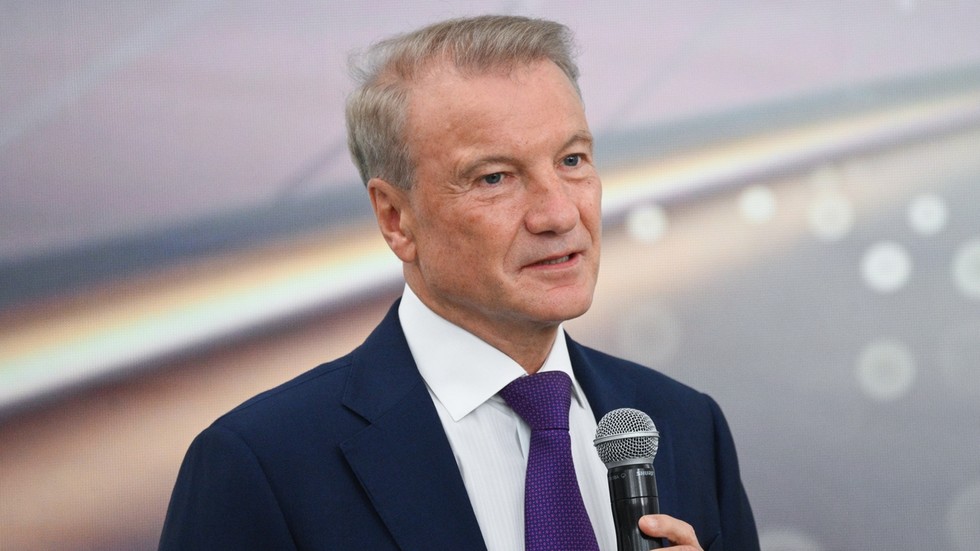
The Russian economy is entering a slowdown, prompting Sberbank CEO Herman Gref to call for deeper cuts to the key interest rate in order to stimulate a recovery and avoid a recession. Although the country has shown resilience despite Western sanctions, the Ministry of Economic Development now projects growth of only 2.5 % for this year, while the central bank’s medium‑term forecast is even more cautious, expecting growth of 1‑2 %.
Speaking at the Eastern Economic Forum in Vladivostok, Gref argued that the current key rate of 18 % should be reduced to around 14 % by year‑end, but he believes even that would be insufficient. He contends that, given current inflation levels, the economy can only recover if the rate falls to 12 % or lower. Gref described the second quarter as a period of “technical stagnation” and stressed the need for timely measures to prevent a slide into recession.
His concerns were echoed by Economic Development Minister Maksim Reshetnikov, who noted that growth momentum is weakening faster than expected, leading the ministry to revise its forecasts. Earlier this year, Reshetnikov warned that Russia was close to recession and said the outcome would depend on policy choices, particularly the level of interest rates.
President Vladimir Putin expressed confidence that inflation—currently estimated at 8.8 %—could be reduced to a minimum while keeping the economy on an upward trajectory, but he cautioned that sharp cuts to the key rate could trigger higher prices. The Bank of Russia is scheduled to hold its next policy meeting on 12 September, where it may consider lowering the rate to 10.5 % next year if inflation falls to 4 %.
A weaker ruble toward the end of the year could ease risks for exporters and support the budget, according to Gref. Ultimately, the Russian economy’s ability to navigate these challenges will depend on the effectiveness of monetary policy and the government’s capacity to implement growth‑stimulating measures. The upcoming policy meeting will be closely watched by investors and economists as they await the central bank’s decision on interest rates.



Comments are closed for this story.